

Approximately 1.2 million Jamaicans were employed as of April 2021, a 3.2 per cent drop over the corresponding period in 2019, according to data from the Statistical Institute of Jamaica’s (STATIN) Labour Force Survey for that month.
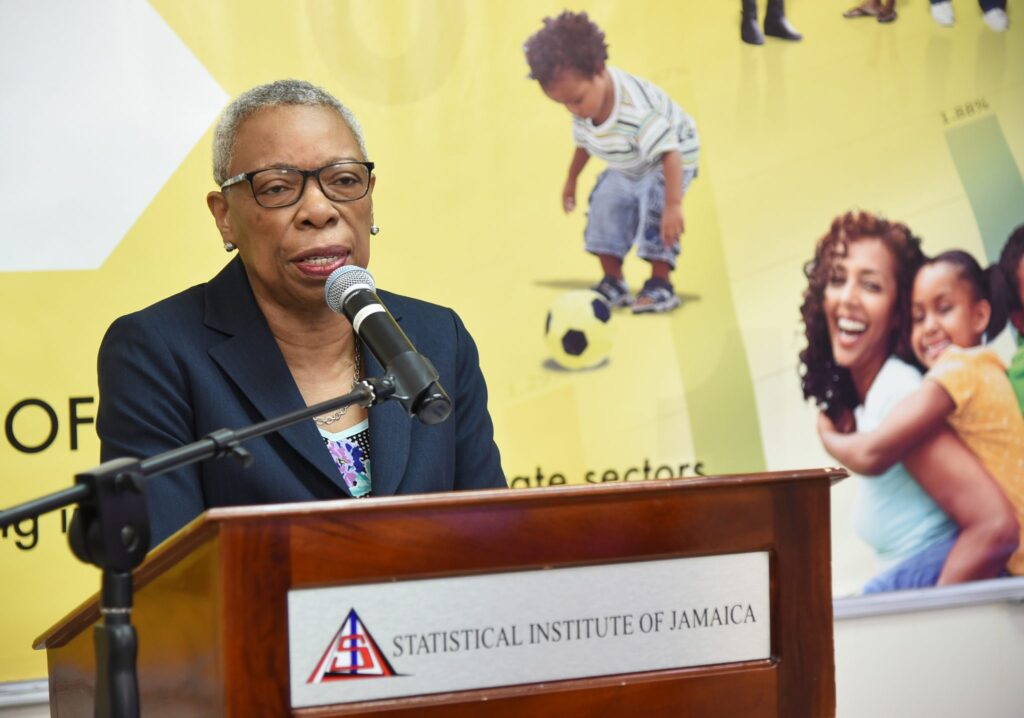
Carol Coy, director general of STATIN, noted during a digitil quarterly briefing on Thursday (July 15) that no survey was conducted in April 2020, due to the coronavirus pandemic.
According to STATIN, the unemployment rate rose marginally by 0.1 percentage point to nine per cent in April 2021 when compared to January.
The out-turns recorded in this category over the last 18 months were January 2020 – 7.3 per cent, July 2020 – 12.6 per cent, October 2020 – 10.7 per cent, and January 2021 – 8.9 per cent.
Coy said that, based on the April survey, the number of employed males decreased by 30,600 persons or 4.4 per cent to 661,900, while the corresponding figure for females fell by 9,900 or 1.8 per cent, to 544,100.
She also advised that the number of unemployed persons increased by 14,200 or 13.5 per cent, to 119,400.
Coy said the number of unemployed males rose by 34.2 per cent to 53,400, while the female equivalent increased to 66,000, up from 65,400 in April 2019.
She added that the overall male unemployment rate was 7.5 per cent, while the female out-turn totalled 10.8 per cent.
Coy said the unemployment rate for youth, 14-24 years, was 24 per cent, some 4.6 percentage points higher than the 19.4 per cent recorded in April 2019.
“In April 2021, the unemployment rate for male youth was 21.1 per cent, and for females the rate was 28 per cent,” she added.
The size of the overall labour force decreased by 26,300 persons, or 1.9 per cent, to 1,325,400, with the number of males totalling 715,300, and females, 610,100.
“Compared to April 2019, the male labour force declined by 17,000 [or 2.3 per cent] and the female labour force, by 9,300 [or 1.5 per cent],” Coy said.
The total number of persons classified as being outside the labour force in April 2021 was 769,000.
This was 30,900 persons, or 4.2 per cent more, compared to April 2019.
“There were 312,700 males and 456,300 females outside the labour force [representing] an increase of 19,300 [or 6.6 per cent] males and 11,600 [or 2.6 per cent] females, relative to April 2019,” Coy said.





Comments