Why are NCB executives so quiet on no dividend storm?

Al Edwards / Our Today
administrator
The decision by NCB Financial Group not to pay dividends over the last three years has ignited a firestorm, with shareholders aiming their ire at the man who bought the bank over twenty years ago, Michael Lee-Chin.
It has been a testing time for NCB following the COVID pandemic, rising interest rates, having to content with fair value losses and the impact of Basel III and IFRS 17.
Falling profits
Unaudited accounts for the six-months period, ended March 31, 2023, reveal operating income fell by 12 per cent to J$61.2 billion when compared to the same period last year (J$69.3 billion) spelling an $8.1 billion drop.
Consolidated net profit attributable to stockholders totalled $4.2 billion, a decrease of $6.2 billion or 59 per cent from the same period of the prior year.
Net revenues from the insurance activities declined by $7.7 billion, or $8.2 billion less than the same period last year.
Of particular concern to shareholders is NCB’s falling share price. In 2019, it’s share price was $230, today it has plummeted to $67.
Having to watch Scotia’s comeback
There is much work to be done by NCB’s management team to reverse the steady stream of bad news. What puts this into context is that Scotia Group, who NCB supplanted for the top position, is growing from strength to strength under the leadership of a past NCB executive Audrey Tugwell Henry.
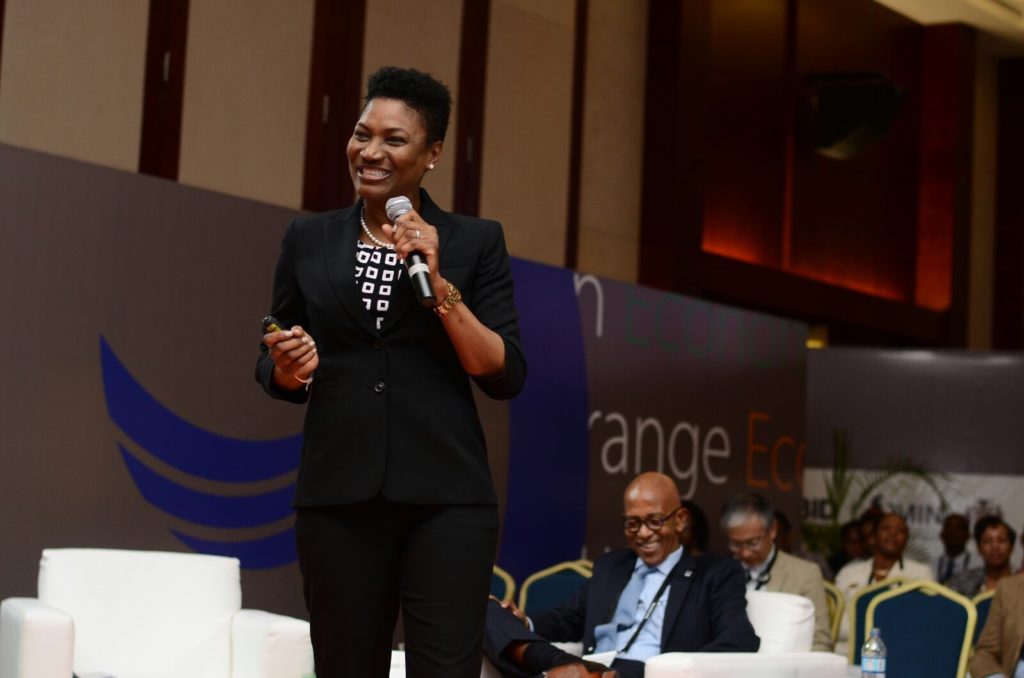
For the half-year period ended April 30, 2023, Scotia reported net income of J$7.6 billion, representing an increase of J$4.0 billion or 108.4 per cent over the comparative period in 2022. Based on published data, this is the highest profitability for the period for a banking group in Jamaica.
The two other major banking groups in Jamaica, NCB Financial Group and Sagicor, have not performed so well as Scotia in terms of profitability. In the case of NCB, the entity lost profitability for the half year ended March 2023 with profitability shrinking to J$6.3 billion.
This is a 59 per cent or J$8.9 billion decline from the prior year. While Sagicor has not yet reported on its half-year performance, the first quarter performance saw investment income of J$4.16 billion in fees and other income from non-insurance segments.
Scotia Group consistently pays dividends.
Lee-Chin out there in the arena by himself
Of late, NCB’s majority shareholder Michael Lee-Chin, has been doing the media rounds, explaining its dividend position and the performance of the group.
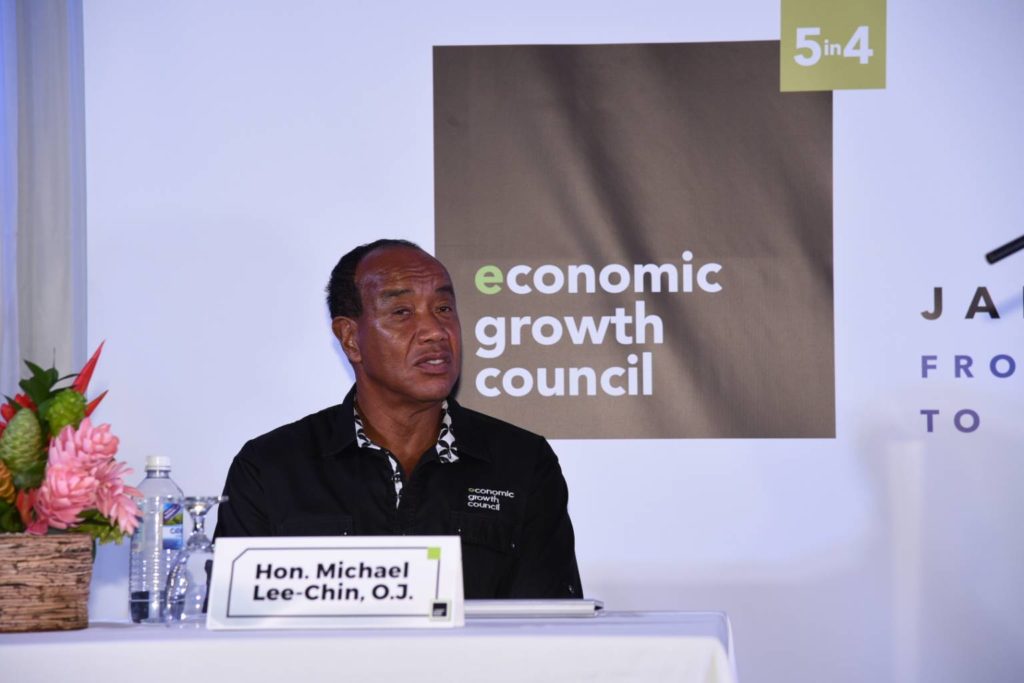
He is front and centre but there appears to be little support from the senior executive team and Communications Department, whose silence on this is conspicuous.
Lee-Chin is taking a hiatus from his chairmanship duties and the responsibility for the performance of NCB lies with its management and not its majority shareholder and chairman.
It is incumbent on them to come out and explain why dividends are not being paid and the predicament the Group now finds itself in.
Their first responsibility and loyalty should be to the institution they represent and work for. With NCB suffering slings and arrows, they need to pull their shields up and inspire confidence.
When times were good, you took the applause and glory, when fortunes diminish and things are not going so well, you explain and endeavour to do better, you hold yourself accountable.
On loyalty, it is instructive what J.P. Morgan’s CEO, Jamie Dimon has to say: “While I deeply believe in loyalty, it often is misused. Loyalty should be to the principles for which someone stands and to the institution: Loyalty to an individual frequently is another form of cronyism. Leaders demand a lot from their employees and should be loyal to them-but loyalty and mutual respect are two way streets.”
It is bizarre that NCB’s top management elect to remain mum on what is going on with the Group and leave all that to the majority shareholder and a chairman who technically is in hiatus. They must demonstrate a united front and all acknowledge culpability.
No dividends
The question of no dividends has upset many, with those out there saying NCB is proving to be a bad bet. That is not the case for an institution that has proven to be the most successful local finance house in recent years.

The decision not to pay dividends is one for the board and the rationale behind that bears thinking about.
A cursory look at NCB’s recent annual reports reveals that over the COVID years, NCB’s cumulative net income came to $60.6 billion but shareholders only received dividends of $6.6 billion with shareholder equity increasing by $1.9 billion.
Why?
With the group impacted by the pandemic, then rising interest rates and inflation, one would have thought it prudent that senior managers take a pay cut for a while, at the same time making good with the shareholders with dividends.
It would have been a temporary move but that did not transpire. During that period before last year the two most senior executive directors were paid $9.8 billion, 148 per cent of dividends.
Last year, 2022, NCB realised net income of $27.3 billion with shareholders not receiving a dividend, yet the two most senior executives took home $3.6 billion.
Executive compensation
It is apparent that with falling income, NCB is focused on paying its senior executives and not dividends and this no doubt is sanctioned by the Board.
Compare this approach with that of J.P. Morgan who didn’t award its CEO with any special award and kept his compensation at the same level as the previous year.
Last year, Jamie Dimon got paid a base salary of US$1.5 million and performance-based incentive pay of US$33 million taking him to US$34.5 million a year.
The J.P. Morgan directors said it based the pay decision on the bank’s performance in 2022 as it navigated “significant challenges of strong competition, growing geopolitical tensions, global economic uncertainty, mounting inflation and higher rates, and the lingering impact of COVID-19.”
This, with J.P. Morgan’s profits declining by 20 per cent to US$37.7 billion.
In a January 2023 Fortune.com article, one sees a different rationale from that employed by NCB.
When times are bad and conditions tighten, you take home less. Your pay is commensurate with the institution’s performance. You can’t be the fat cat that drinks all the cream when the bank is underperforming and you are not paying dividends.
The article reads in part: “The slowing economy has prompted investors in a number of companies to call for lower executive pay. And, feeling the pressure, some businesses have acquiesced.
“The latest to earn less is JPMorgan Chase CEO Jamie Dimon, who will take home the same base pay in 2023 as he did in the previous year, but get no additional “special award.” He’ll receive total compensation of $34.5 million—a $1.5 million salary plus a bonus of $33 million, JPMorgan Chase said in regulatory filings on Thursday [January 19].
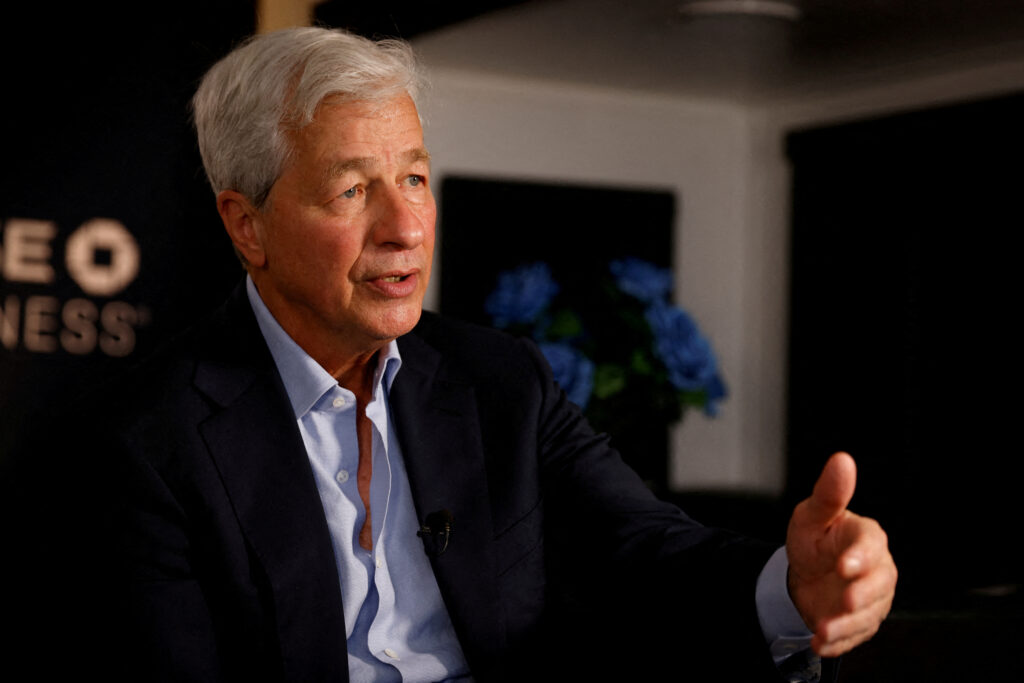
“Last year, the bank had granted Dimon, who has been CEO since 2006, a special award that added $50 million to his total compensation. But shareholders complained about the extra pay, which the company’s board has decided to scrap this year and has “committed to not grant any special awards to him in the future.
“In May 2022, shareholders of the bank had rejected an options bonus for Dimon following his take-home pay of $84.4 million in 2021, which included a $52.6 million special award.
“Over the past year, JPMorgan’s profits have tumbled by nearly a quarter while its shares have declined about 17 per cent.”
There is merit in what “As you Sow’s” Rosanna Landis Weaver says.
“When there’s a downturn and investors suffer and employees suffer, the calls to have top executives share some of that pain only increase.
“The mantra that CEOs are going to be paid based on what they do is becoming increasingly hollow. Investors might say that it is not the CEO’s fault when stock prices are down. But after a few years of growing disconnect between pay and performance, shareholders start to have enough.”
It is clear that NCB did not use the common metric to determine senior executive pay, which is:
- Calculating CEO pay against shareholder returns for the year
- The percentage of shareholders voting against CEO pay packages
- The ratio of the CEO’s pay compared to median worker compensation at the company
On the surface it is hard to square the level of compensation paid to the two leading executives with the dividends last paid to NCB shareholders.
It seems incongruous with what pertains with the leading companies in the world, but the optics would suggest it is unjust and a level of corporate governance will have to prevail here.


Comments