Jamaican engineering company leads on Africa’s first lunar analog habitat project

/ Our Today
administrator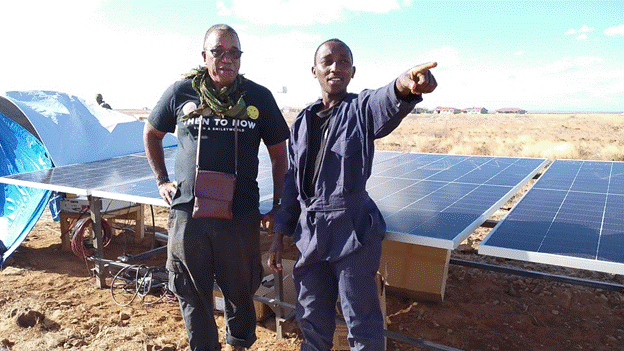
Jamaican engineering company, LeeCorp Ltd, has helped to create a historic first for Africa and Jamaica by partnering with Mwezi One, Africa’s first-ever analogue lunar mission and the only African entry in the World’s Biggest Analogue (WBA), a global initiative showcasing the most ambitious space habitat simulations on Earth.
In doing so, LeeCorp was instrumental in placing Africa on the global space research map, not as an observer, but as a contributor and innovator.
Mwezi One is the inaugural lunar mission of the OPEN AFRIKA Space Exploration Analogue Simulation Experiment (OASEAS), which aims to advance African leadership in space science, futures literacy and planetary stewardship through analogue missions, design laboratories, and culture. The hands-on construction phase of the project took place in late 2025.
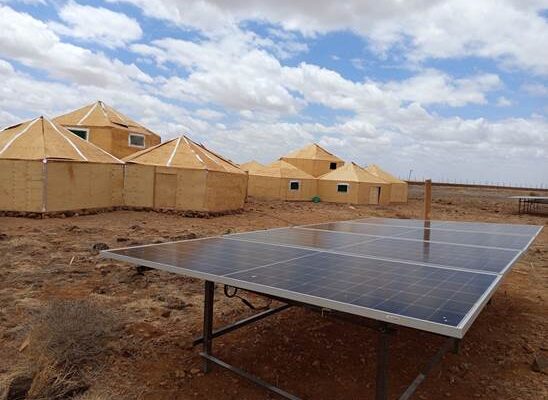
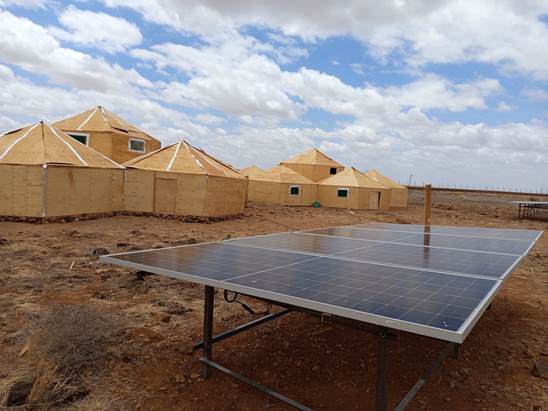
The final outcome was the delivery of an off-grid solar power system that enabled Africa’s first analogue habitat to operate fully in one of the continent’s most remote regions.
Through its role in the project, LeeCorp offered technical leadership, cash sponsorship, and hands-on engineering mentorship to students of Machakos University. Following mission completion, LeeCorp has donated the entire solar energy system to the host institution, ensuring continued learning and long-term community benefit, enabling students to pursue a new major initiative, the proposed Main Energy System for the Luban Workshop at Machakos University, a critical facility within the institution.
Chief Executive Officer of LeeCorp, Francois Lee states, “This ground-breaking research facility was built off-grid on a school campus in a remote region, underscoring the project’s deeper purpose of demonstrating that world-class space research can emerge from and directly benefit remote communities”.
Mwezi One was hosted on the grounds of Tiigo Elementary School, a community institution in North Horr County, Marsabit, near Kenya’s northern frontier along the Ethiopian border, over a 14-day period. The surrounding Chalbi Desert is known for its extreme heat, aridity, isolation, and profound night-time darkness, conditions that closely resemble lunar and Martian environments.
LeeCorp’s involvement began after Lee met Dr Claire A Nelson, Founder of Open Afrika Space Ungana and Director of the Mwezi One Mission, in May 2025. What began as an invitation to serve as a sponsor for the mission’s energy system quickly evolved into a deeply collaborative engagement.
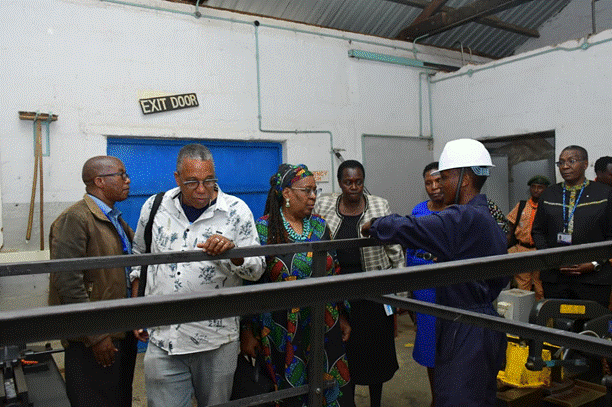
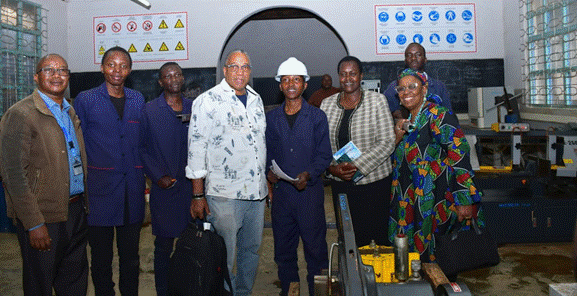
Rather than supporting from afar, Lee travelled to Kenya to be both technical advisor and mentor, working closely with electrical engineering students from Machakos University, who were tasked with designing and deploying a robust off-grid solar power system for the mission.
Together, the team engineered a system capable of powering a twin, seven-celled Hexayurt complex comprising:
- The Analogue Astronaut Habitat
- A fully operational Mission Control Centre
“The system performed flawlessly, enabling uninterrupted mission operations and providing reliable electricity for communications infrastructure, laptops and scientific research equipment, and essential interior and exterior lighting required for long Marsabit nights,” Lee said.
He continues, “Engineering solutions only matter when they serve people and purpose.
On reflection, for Lee, the project represented far more than an opportunity to visit Kenya. He says, “This was a chance to be more than a tourist.” It was an opportunity to apply engineering in a real-world context, mentor young talent, and help build something that truly matters. Working alongside students to design and implement this off-grid system reminded me that ambitious projects often begin with uncertainty but with trust, mentorship, and collaboration, they can exceed expectations.”
Lee has since expressed strong interest in continued collaboration with Machakos University to support students in advancing expertise in off-grid renewable energy systems, skills increasingly vital for both climate resilience on Earth and future space missions.
The collaboration left a profound impact on the student engineers involved. Evans Ngundi, an electrical engineering student, reflected: “Connecting with Lee of LeeCorp Ltd. while working on the OASEAS project has truly been a blessing in my life. From mentorship in designing the 4.96 kWp, 10 kWh off-grid solar energy system to financing and hands-on support during implementation, his impact has been invaluable. This experience marked my first real-world technical project aligned with my training, and it will remain an important anchor of reflection in my future.”
According to Dr Claire A Nelson, founder of Open Afrika Space Ungana and Global Space Awards Finalist, “You cannot call something the world’s biggest if Africa is not on the map. Mwezi One proves that Africa belongs, and that partnerships across the Global South and its diaspora can power the future.”
“The success of MWEZI ONE demonstrates that transformative space research does not require billion-dollar budgets or centralised space agencies. It requires vision,” Lee said.




Comments