
OT Equity Analysis | Apple at the Crossroads: A Giant in Transition

/ Our Today
administrator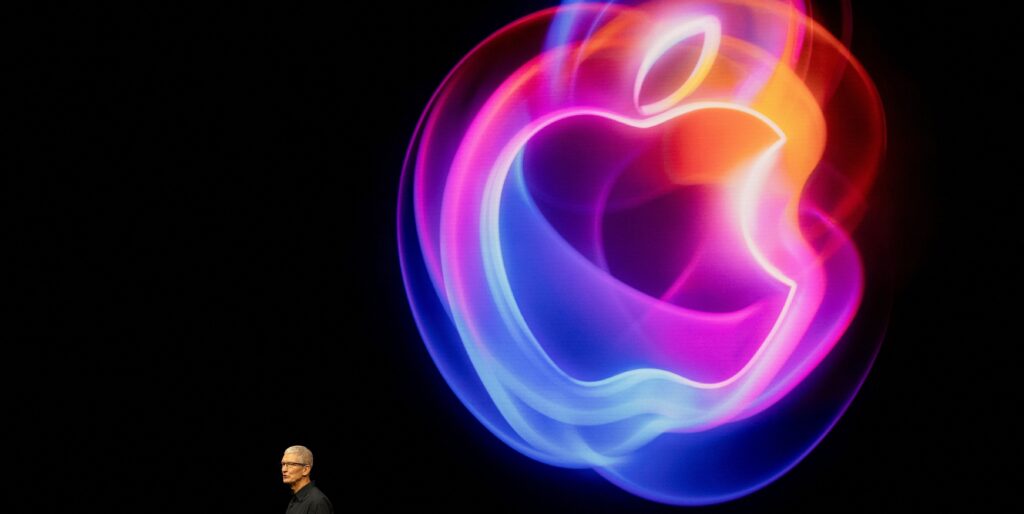
Prepared for Our Today | Capital Markets & Investments Desk
Apple has always been more than a stock; it is a referendum on the future. So when the company announced this week that Tim Cook, the architect of one of the most remarkable corporate runs in modern history, will step down as CEO in September, handing the reins to hardware engineering chief John Ternus, investors were right to pause, not in panic, but in proper reckoning.
The numbers heading into this moment are, by any standard, exceptional. Apple’s Q1 FY2026 results delivered record revenue of US$143.8 billion a 16% year-over-year increase, alongside an EPS of $2.84 that beat analyst expectations by more than six per cent. iPhone revenue surged 23% to US$85.3 billion. China, a market that had been a persistent concern, jumped 38% to US$25.5 billion. And the Services segment, Apple’s highest-margin business and the engine of its long-term thesis, crossed US$30 billion for the first time. These are not the numbers of a company in trouble.
And yet, the stock sits roughly five per cent below where it began the year, trading near US$266 as at April 23, 2026. That gap between operational excellence and market sentiment tells you everything about the complexity of the moment.
| Apple delivered record Q1 FY2026 revenue of US$143.8 billion up 16% year-on-year while the next eight months may be the most catalyst-rich period in the stock’s recent history. |

The Leadership Question
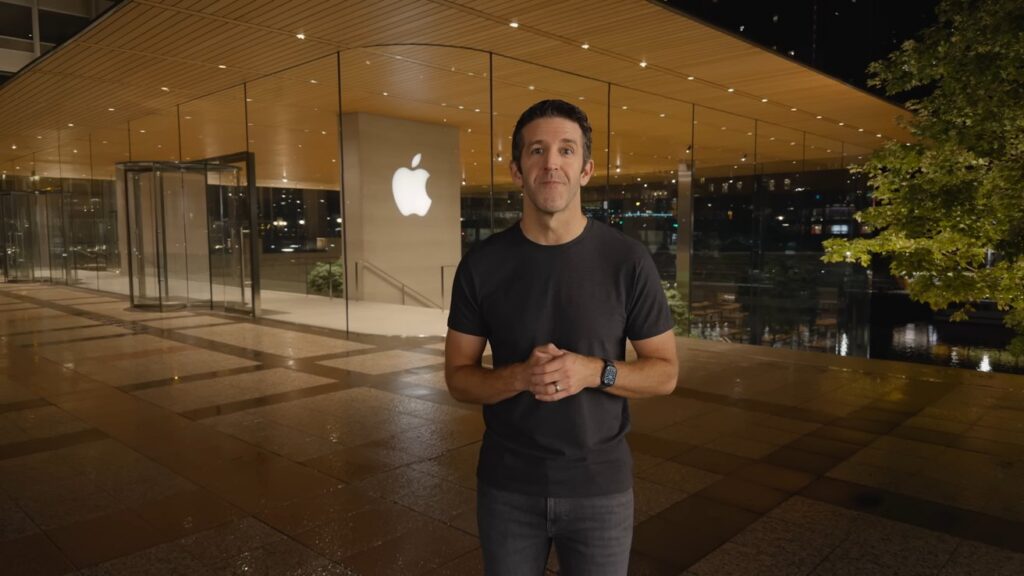
John Ternus is not an unknown quantity. He has been at Apple since 2001 and has presided over some of the most consequential hardware decisions of the past decade, including the transition to Apple Silicon a move that fundamentally reshaped Apple’s competitive position in personal computing and handed the company best-in-class performance per watt ratios that no competitor has yet matched. Tim Cook moves to executive chairman. This is not a departure. It is a planned succession, and the market, once it processes the signal properly, should price it as continuity rather than disruption.
Bloomberg has reported that Ternus has already begun overhauling Apple’s internal operations using artificial intelligence tools, signalling that the new leadership era will be hardware-first but AI-accelerated. The transition also clears a question that has hung over Apple’s valuation for years: who leads the company into its next chapter. That question now has an answer.
| KEY STAT | Apple’s Q1 FY2026 EPS of $2.84 beat consensus estimates of $2.67 by 6.4%. With 29 analysts holding a Buy consensus and an average 12-month price target of $299, the market sees roughly 12% upside from current levels. |
The Macro Overhang
The bear case is real and should not be dismissed. Approximately 90% of iPhones are assembled in China, and tariff uncertainty has rattled the broader technology sector throughout 2026. Some analysts have modelled potential retail price increases of nearly 80% on the iPhone if tariffs are passed fully to consumers a scenario that remains unlikely given Apple’s historical preference for margin compression over consumer price shock, but one that creates a genuine cloud over the near-term earnings outlook.
Valuation compounds the concern. At roughly 32 to 35 times trailing earnings, Apple trades well above its five-year average. That premium is defensible only if Apple can demonstrate genuine AI monetisation if Services margins continue to expand, if Siri 2.0 drives platform stickiness, and if Apple Intelligence becomes infrastructure that third-party developers build upon rather than a feature consumers ignore. The market has not yet made up its mind, and the evidence will begin to arrive shortly.
The Catalyst Stack
The forward calendar for Apple is unusually dense. Q2 FY2026 earnings arrive on April 30, offering the first look at whether the momentum from Q1 held through the March quarter. WWDC 2026 runs June 8 through 12, where a Gemini-powered Siri overhaul and an expanded Apple Intelligence platform are expected. The iPhone 18 cycle approaches in the fall. And persistent whispers of an iPhone Fold Apple’s long-rumoured entry into the foldable category, designed to compete directly with Samsung and Huawei have continued to build. Morgan Stanley surveys are reportedly showing record iPhone upgrade intent heading into the autumn release.
For a company with 1.5 billion iPhones in active use and 2.5 billion total iOS devices in the installed base, even modest upgrade rate acceleration translates into tens of billions of dollars in hardware revenue. This is the compounding arithmetic of ecosystem lock-in, and it is Apple’s most durable competitive advantage.
| Tim Cook built a $4 trillion machine. The question now is whether John Ternus can teach it to think and whether the market will reward Apple before or after it finds the answer. |
Four Things to Watch
First: April 30 earnings. If Services revenue continues its run toward US$32–34 billion and gross margins hold near the guided 48–49% range, the bull case gains significant credibility. A miss would do serious damage to a stock where the valuation premium already requires execution near perfection.
Second: WWDC on June 8. The market has been pricing Apple as an AI story without demanding proof. WWDC is where proof must materialise. A credible Siri 2.0 demonstration with third-party developer APIs would validate the Services expansion thesis. A shallow update would be punished.
Third: The tariff resolution timeline. Any credible reduction in US-China trade tension, or evidence that Apple has secured a manufacturing carve-out, as it has historically been able to negotiate would immediately re-rate the stock toward analyst targets in the $299–$350 range.
Fourth: The iPhone Fold confirmation. A confirmed launch of a foldable iPhone would open Apple’s first genuinely new hardware category since the Apple Watch and would be a significant positive catalyst, both for direct device revenue and for the accessories and accessories ecosystem that typically amplifies flagship hardware launches.

The Verdict: A Thesis, Not a Trade
For investors in the Caribbean and across the wider emerging market diaspora who hold US equity positions whether through brokerage accounts, pension funds, or index-tracking instruments, Apple remains one of the most consequential single-name exposures in any diversified portfolio. At US$266, the stock sits near 78% of its 52-week range. The risk-reward begins to look constructive for patient capital in the $240–$265 band, though the next eight weeks will do much to clarify whether the transition premium is warranted.
Apple is not a trade right now. It is a thesis. The thesis holds: ecosystem lock-in, a Services engine with structural margin expansion, the deepest hardware supply chain in consumer technology, and a brand that commands premium pricing in every market it enters. What is being repriced is the pace and form of Apple’s AI chapter, and the question of whether Ternus can accelerate what Cook built.
One thing is certain: whatever Apple does next, the world will be watching. That, in itself, is a kind of moat.





Comments