
ANALYSIS OF THE 2022 FAVOURITES (Part I): Why Brazil are the favourites to win a record 6th World title

/ Our Today
administrator
Tony Morrison/Contributor
Brazil enters this World Cup as both popular favourite and the number one ranked team by FIFA, with good reason.
The Seleção qualified this year with the most points (45) in South American qualifying history, six points and 13 goals clear of the second-placed Argentina, unbeaten in 17 straight games, with 40 goals, 14 wins, three draws, six clean sheets, and only five goals conceded, making them best in both attack and defence.
In keeping with their arch-rival status, the last team to beat Brazil was 2nd favourite Argentina, by one goal to nil in a hard-fought Copa America final in July 2021, but Brazil is also the last team to beat the Albiceleste, in a dominant two-nil Copa America victory in 2019 with a team without Neymar and several of Brazil’s current starlets.
THE BURDEN OF BEING BRAZIL
Every other team gets credit for doing well in World Cups and reaching quarter and semi-finals, but not Brazil.
Brazil and Germany are the two most consistent teams in World Cups, but only Germany gets any credit for it. On the other hand, four-time champion Italy, since last winning in 2006, dropped out in the first round of the next two World Cups and now, for the fourth time overall, has failed to even make the tournament for the second time straight, but nobody cares.
In addition to a record five titles, Brazil, in 109 games with 73 wins, 18 draws and 18 losses, has more World Cup goals (229) than any other nation. Brazil is also the ONLY country to qualify for EVERY single World Cup, and in the last six, Brazil has reached at least the quarter finals every time, plus making it to one semi-final and two finals, winning one, but by its critics and detractors as well as its own fans, Brazil’s success in World Cups is judged on one thing only – winning the cup!
Fortunately for the players, it is a burden they are very used to, and does not compare to the crushing pressure of playing at home.
WHAT WENT WRONG IN 2018?
The young and limited 2018 team played well to get as far as the quarter finals, where a close loss to a good Belgium team was facilitated, in part (in addition to the now familiar heroics of goalkeeper Courtois and by Brazil being robbed of a penalty), by the absence of Casemiro on suspension, and by coach Tite, who was still guilty of sometimes not picking his best team, mistakenly leaving Marquinhos on the bench.
The pace of Marquinhos was needed to cope with the speed of the Belgium attack instead of Miranda, and Casemiro would not have allowed De Bruyne the space he enjoyed in scoring the winning goal. It was also Casemiro’s replacement, Fernandinho, who chose an unfortunate time to have a bad game, which included gifting Belgium the lead with a bizarre own goal.
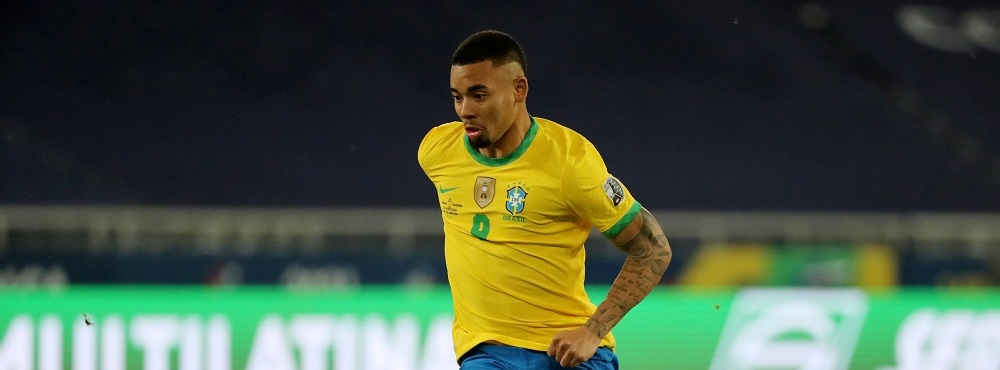
Generally, the 2018 team also had limited firepower. The young Gabriel Jesus was an impotent up front, Willian was inconsistent, and the more consistent Douglas Costa was hampered with an injury. There was no Dani Alves to launch a rear-guard action from the right flank, which left the burden of Brazil’s offence to Marcello on the left, Coutinho just learning to take over the role of playmaker,and an overburdened and unsettled Neymar recovering from a long injury layoff who entered the tournament rusty and lacking match sharpness.
A big reason why Brazil are favourites this year is that this team is not only much better than the fairly good 2018 version, but also arguably the most balanced and all-round talented team in the world.
A GOOD COACH
The 2018 World Cup was a practice run for Brazil’s coach, Tite, and now, as he hopes to go all the way to the trophy four years later, he is a better and more experienced coach, with a team that is not perfect or unbeatable, but good enough to win a World Cup and deserves to do so.
This time, Tite now knows that he must either employ the pace of Marquinhos and Militao together in central defence or always use one of them to partner the vastly proficient and experienced but slower Thiago Silva. Tite has won 58, drawn 13 and lost only five of his 76 games in charge of Brazil, but perhaps more important than any result, since he took over in 2016 ( in contrast to the dark ages of bad coaching since 2006), Brazil LOOKS like Brazil again.
The team is disciplined, yet skilful, creative, and have fun playing, the way Brazilian football is supposed to look. Tite successfully employs the modern tactics perfected by top European clubs. In taking a page from the books of coaches like Klopp and Guardiola, as South American football expert Tim Vickery puts it, “They press the opposition more than any Brazilian side has pressed the opposition before.”
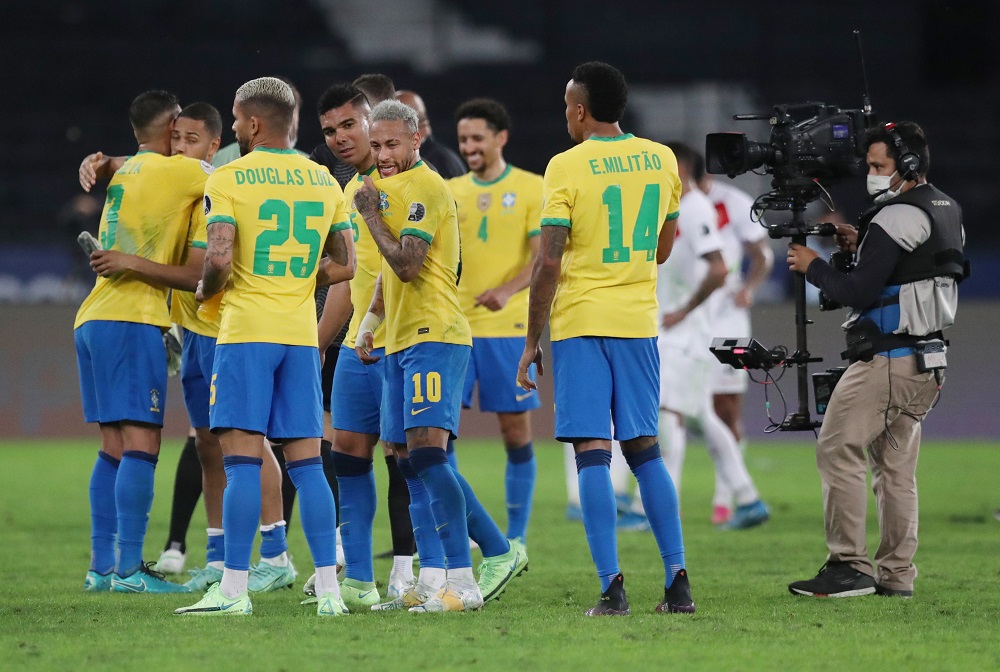
There is also a spine of steel under Tite. Some teams from yesteryear fell apart under pressure. On his watch, Brazil have consistently shown the patience to slowly break down stubborn teams and the calm resolve to fight back and overcome the few teams who manage to score against them first, all without ever looking frantic.
It is rumoured that in the star-studded winning team of 2002, Ronaldo and Rivaldo barely spoke to each other, and that success came to that team purely based on the abundance of talent. With a team full of upcoming youngsters and no abundance of superstar egos, Tite has wisely placed a strong emphasis on team unity, and has successfully created a tr family atmosphere. They look like they enjoy playing together.
The last South American club to win the Club World Cup was Brazil’s Corinthians in 2012. Four European teams, Italy, Spain, Germany, and France have taken home the World Cup in the last 20 years.

Brazil and Argentina enter Qatar as first and second favourites to not only win, but to break the European stranglehold on global football. Whenever a South American team can match the best of Europe with a solid and disciplined defensive foundation and sound tactics to facilitate a swift and seamless transition between defence and attack, then the superior level of individual skill and audacious flair should provide a winning edge
BEST DEFENSIVE MIDFIELD IN THE WORLD
Casemiro, arguably the best defensive midfielder in the world, is back to masterfully marshall that position as he once did for Real Madrid and is already doing for Manchester United. This time he has much better help.
He should ideally be partnered by debutant Bruno Guimaraes of Newcastle, who has been an absolute revelation in the Premiere League this season, and who is already the favourite to succeed the veteran Casemiro as Brazil’s leader in this position. Both are expert in not only protecting the backline, but also in leading the transition from defence to attack, and neither are shy about joining the attack or scoring goals as well.
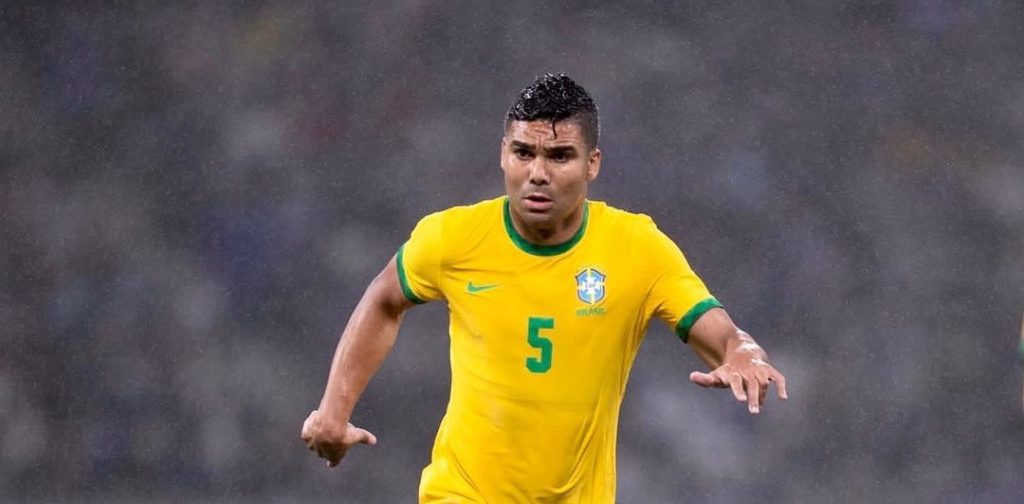
Brazil will hope that Casemiro is available to start all seven games, but if not, the combination of Liverpool’s Fabinho as his cover with Guimaraes would still be one of the best defensive midfield combinations in the world. If Tite needs to rest Guimaraes, then bringing on the improving Fred to partner Casemiro is a viable third option, especially since Casemiro and Fred now have the additional chemistry of playing together at Old Trafford.
THE BEST COLLECTION OF WINGERS IN THE WORLD
A HUGE difference for Brazil this time is the fact that they have an enviable arsenal of the best young wingers in the world.
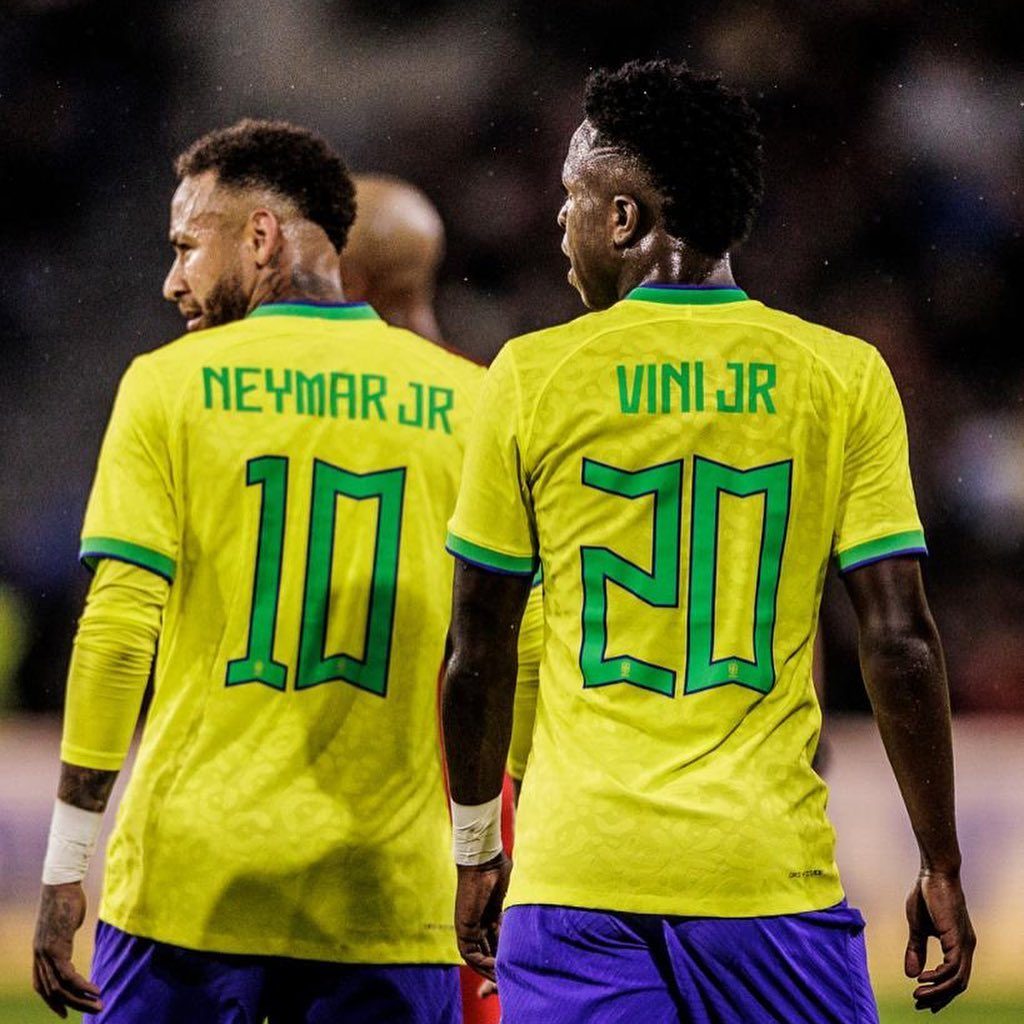
Displacing Neymar from his former home on the left flank is the fearsome pace of the irrepressible Vinicius Jr, who in the last two seasons has blossomed to become the most exciting player in a star-studded Real Madrid line-up. It is his goal that won the latest Champions League title for Madrid, and with 10 goals and four assists in 20 games for Real Madrid this season, Vinicius is yet to fully turn his sparkling Los Blancos form to the yellow jersey. What better place to do so than at a World Cup? It is Vinicius, with 14, who joins Neymar (16) on the top 10 list of players with the most assists for club and country in 2022.
Apart from France, only Brazil has two or more on that list. As Roberto Carlos once did as left back for both Madrid and Brazil, Vinicius is guaranteed to keep his opposing right back busy and frustrated for the entire 90 minutes.
On the right flank, Barcelona’s Raphinha appears calm and collected but with a bit more experience can be even more deadly as he showed with a brace in a recent 5-1 trouncing of Tunisia. Raphinha also balances Vinicius on the left to ensure that Brazil’s offence is not lop-sided and overly dependent on any one flank, as it has been at times in the past.
The talent of these two is best demonstrated by who they are keeping out of the starting 11. The backup to Vinicius on the left is Arsenal’s Gabriel Martinelli, who is perhaps lucky to make the squad but is undeniably a major young talent who can more than hold his own in that position and has already demonstrated in previous games that he is very comfortable in the national team.
Competing with Raphinha on the left is the audacious and phenomenal talent of Antony, formerly of Ajax and now Manchester United. It’s always good for a team to have an extra weapon coming off the bench, and with his youthful pace, skilful audacity, and good eye for either goal or assist, Antony should be the perfect option to bring off the bench deep into the second half to torment the tired legs of the opposition.
As if these four formidable wingers weren’t more than enough, there is also young Rodrygo, Vinicius Jr.’s supremely talented teammate at Real Madrid. Although he usually operates from the right, the beauty of Rodrygo is that he is comfortable on either flank or can even fill in as a centre forward if those selected for that position start stuttering.
THE MOST DANGEROUS PLAYMAKER IN THE WORLD
In addition to all this precocious young talent, Brazil still has Neymar.
He is the third best player of his generation, but unlike the slightly older and more decorated Lionel Messi and Cristiano Ronaldo, Neymar seems more at peace with losing his youthful pace, and more settled into his new role as mentor and central attacking playmaker at the top of midfield. He also has a stronger team in which to function in.
Despite the distraction of his hairstyles and the over reacting to being fouled, most critics missed that Neymar delivered a solid performance in Russia, despite being badly out of form.
In his first four games of World Cup 2018, in addition to two goals, Neymar had more shots (23) and more shots on target (12) than anyone else in the World Cup. The 16 chances he created at that point was also more than any other player in Russia.
This time around, Neymar is in the best form of his life since his rampaging days at Santos and Barcelona, albeit without the pace he once possessed. He is an overall better and smarter player.
In 19 games for PSG this season in all competitions, Neymar has 13 goals and 11 assists, two goals ahead of and three assists behind Messi, and six goals behind Mbappe, who only has five assists. In domestic competition, in terms of goal contributions (goals and assists combined) – Neymar, with 20, is second in all of Europe only bested by the phenomenal Erling Haaland of Manchester City, who has 21.
Neymar is ahead of Messi and Mbappé, leads the French league in shots on target, chances created, assists, and key passes. In his career-best 2015/16 season at Barcelona when he registered 24 goals and 16 assists in 34 domestic appearances, Neymar averaged a goal contribution every 76 minutes. So far this season at PSG, he’s averaged a goal or assist every 38 minutes.
In Brazil’s qualifying campaign, he has an even eight goals and eight assists in 10 games, now needing only three more goals to overtake Pele’s 77-goal Brazilian record.
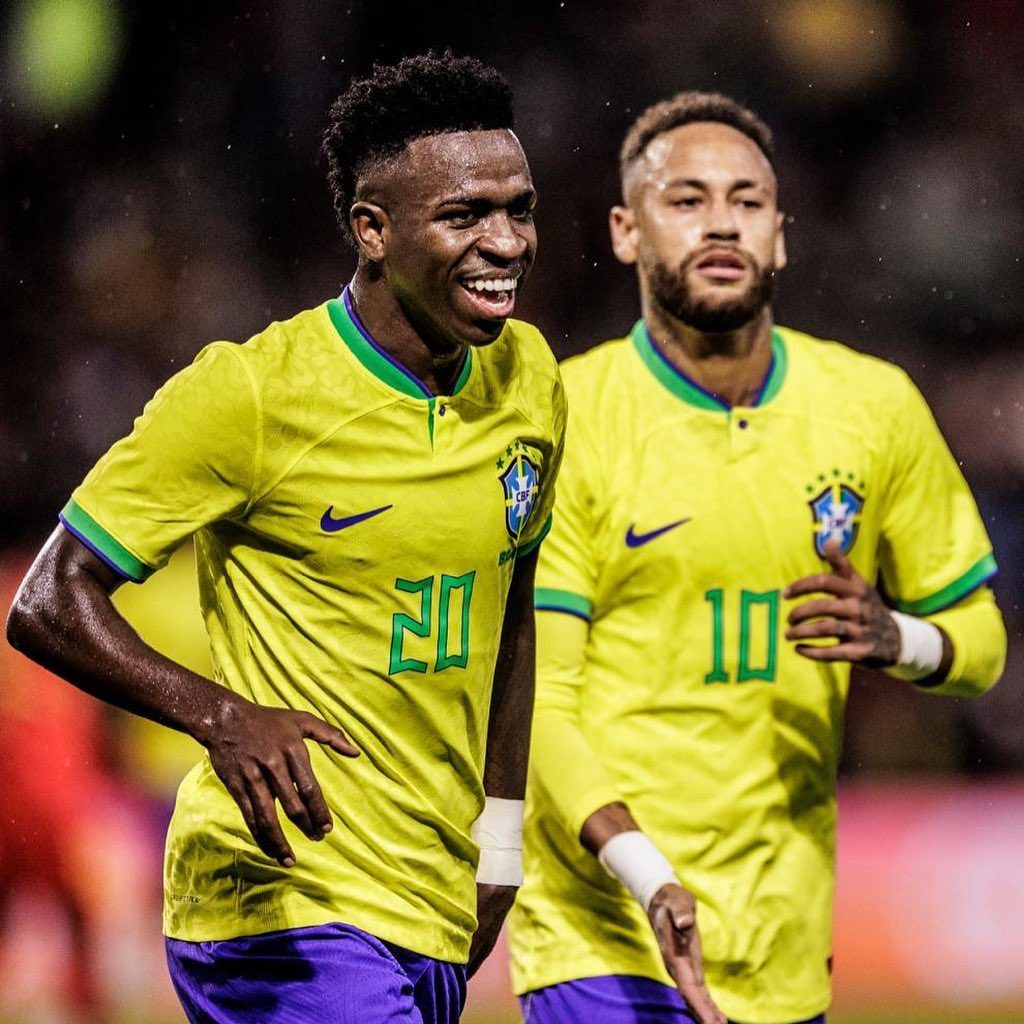
Neymar now operates with the benefit of less pressure, because while he is still the team’s leader and best player, Brazil is no longer a team that desperately depends on him, which they proved by winning the 2019 Copa America in his absence.
This means those around Neymar are more confident in their own abilities, making his job easier. It also makes life harder for the opposition, since trying to stifle Neymar with any additional man markers will likely backfire when the talented youngsters around him exploit the extra space provided.
Brazil’s increased firepower this time around is demonstrated by the fact that in posting identical 4-0 scorelines in its last three qualifying matches against Paraguay, Chile, and Bolivia in successive games, nine different players scored the 12 goals in the three games.
Pulling the strings of a striker and two wingers before surging forward with them is a role ideally suited to the very experienced and still outrageously talented Neymar. In addition to still being one of the top goalscoring threats on the planet, he is also one of the very best passers of the ball in today’s game.
Only Messi can claim to be a bit more accurate, but Neymar can often be more dangerous than Messi, because, in true Brazilian fashion, he will sometimes attempt the audacious.
A DECENT AND IMPROVING STRIKER
Brazil’s one weak link, remains the central striker position, but it is still a significant improvement over 2018. Tottenham’s Richarlison, (like a young Thierry Henry) tends to need too many attempts to score.
Despite his skill, strength, and admirable work rate, Richarlison struggles to gain acceptance by lofty Brazilian standards – after all, Brazil is renown for producing the best strikers in the world. By any stretch of the imagination, Richarlison is a more than competent striker who can hold his own and has recently become a reliable goal scorer for Brazil, averaging a goal a game and one assist in Brazil’s last four friendlies, with a double against Ghana in September.
The 2021 Olympic gold medal winner has also performed well enough to earn a strong comfort level in a team whose all-round talent will make his job easier. In addition to a direct approach to goal, Richarlison’s size and strength also gives him the ability to play with his back to goal, as the perfect foil for Neymar to unleash the wingers around him and rush forward to join them.
Richarlison’s back up is last World Cup’s failure, the talented but unlucky Gabriel Jesus, who earns a merciful and fortunate recall due to his recent impressive rebirth at Arteta’s Arsenal. He is unlikely to start but will likely get a chance as a substitute. When he does, to bury his demons and maintain his chances of ever playing for Brazil again, he had better score.
WORLD CLASS DEFENCE
Brazil’s midfield and forward looks very good, but like a pretty woman with a well-shaped derriere, the team looks just as good from behind.
Attacking players get the credit, but World Cup triumphs are usually built on solid defences. France somehow managed to win in 2018 after conceding six, including three in one game against Argentina. In the seven World Cups before that, dating back to Brazil’s 1994 win, no winning team conceded more than four goals across the seven games.
With Liverpool’s Alisson Becker and Manchester City’s Ederson, Brazil’s defence starts with two of the very best goalkeepers in the world. The team will usually play with two central defenders, and as already revealed, it has three of the very best in the world to choose from – Real Madrid’s Eder Militao, PSG’s Marquinhos, and Chelsea’s Thiago Silva, plus the talented young Bremer of Juventus as backup.
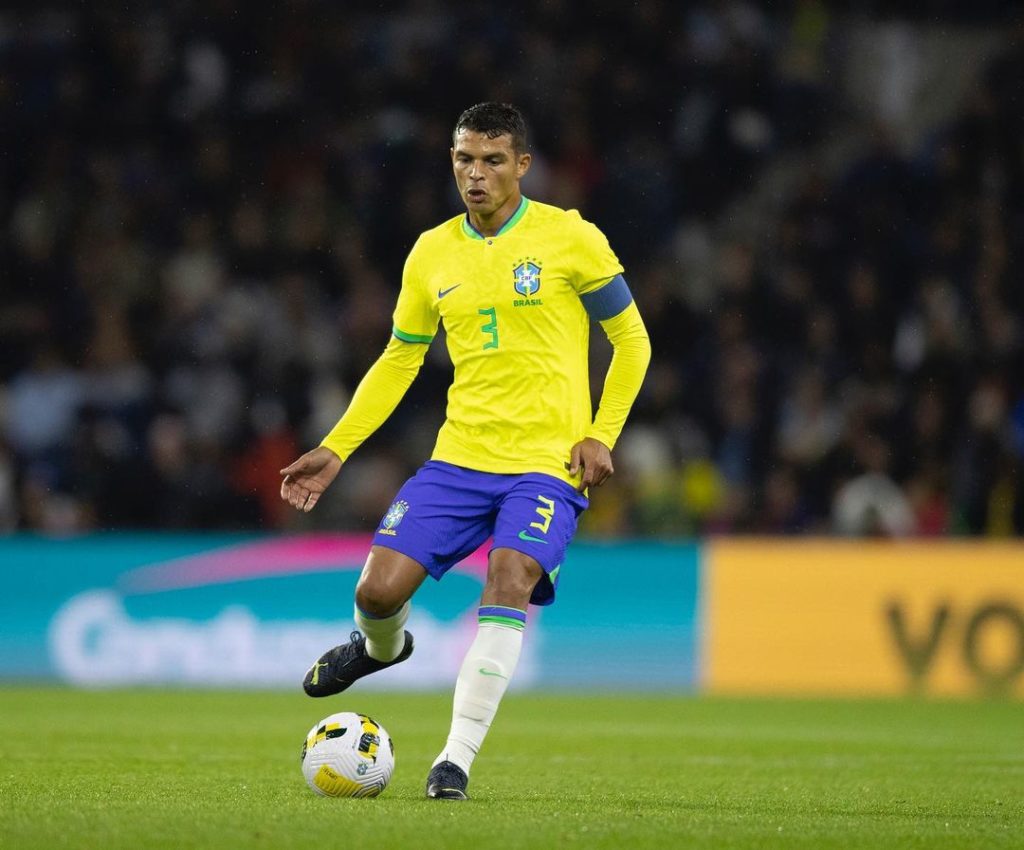
Prior to the rise of Virgil van Dijk at Liverpool, it was Silva who was for years ranked as the best central defender in the world, and his performance at Chelsea still makes him a contender for that title despite his age. The supremely talented Marquinhos, his former understudy at PSG, is not far behind, and neither is the athletic Militao.
Some critics see it as a weakness that Brazil no longer has the adventurous flying wing backs of old, discounting that relying on flying wingbacks was a defensive weakness that Brazil did not always address. More traditional fullbacks makes the team tighter in defence, forgoing excitement for safe and solid.
The team loses nothing offensively, as with such outrageously flamboyant young talent on the wings, there is no urgent requirement for fullbacks to play a major attacking role. For the most part, although they will press high and come forward at times, they will operate more like a flat back four and instead of always rushing forward to ignite the attack, they will instead support it more steadily in the build-up.
The starters there are likely to be either Sevilla’s Alex Tellez or Alex Sandro of Juventus on the left and Sandro’s Juventus teammate Danilo on the right. Interestingly, the veteran Dani Alves, one of the best right backs of all time, is in the squad. Despite his age, like Thiago Silva, he would not be there if he was not fit, so Tite still has the option to use him as a substitute to add extra punch on the right flank if he so desires. Using him in tandem with young Antony could make for a spectacular second half show.
A DEEP AND BALANCED TEAM
In a 4-2-3-1 formation, Brazil’s preferred starting 11 should therefore be:
Goal: Alisson Becker (Liverpool)
Left Back: Alex Sandro (Juventus)
Right Back: Danilo (Juventus)
Centre Back: Marquinhos (PSG), Thiago Silva (Chelsea)
Defensive Midfield: Casemiro (Manchester United), Bruno Guimaraes (Newcastle United)
Left Wing: Vinicius Jr. (Real Madrid)
Right Wing: Raphinha (Barcelona)
Striker: Richarlison (Tottenham Hotspur)
With such a deep squad, Tite has additional options open to him if he wants to get a bit adventurous. With a 3-4-3 formation instead, he could play his star central defenders together in a back three, still use the protection of two defensive midfielders, but instead of Neymar alone behind the striker and the wingers, he could add creativity by partnering Neymar with the versatility of West Ham’s Lucas Paqueta, Neymar’s backup in the playmaker position. He could even add the extra attacking punch of Flamengo’s Everton Ribeiro.
Several other Brazil teams have entered World Cups as favourites and failed to win, but in most cases, clear deficiencies could be pointed out.
The ridiculously gifted but naïve 1982 team simply did not know how to defend and needed a better striker. The presence of Romario could have rescued the team in 1998 after Ronaldo’s mysterious illness. The star-studded 2006 team was a bit too old, had peaked a year too early, and entered the tournament tired and distracted from sponsor obligations.
There is no major inherent problem or deficiency with this team, and although a couple of players like Firmino were unfortunate to miss the cut, nobody critical is left out. On paper and on the pitch, this is a team that is more than capable of lifting the trophy for a record sixth time. It must be said, if Brazil is to triumph, they will really have to earn it.
A LOT LEFT TO PROVE
One question mark beside Brazil is that thanks to the UEFA Nations League keeping European teams too busy for regular international friendlies, this Brazil team has not been tested against European opposition since beating the Czech Republic 3-1 in Prague in March 2019.
Interestingly, Gabriel Jesus scored twice in that game. Across the last two World Cups, Brazil won seven, drew two, lost three of the 12 games played. The three defeats were all against European opposition – Germany in a semi-final, Netherlands in the subsequent 3rd place playoff, and Belgium in a quarter final.
If all the top teams perform as expected, then after surviving a dangerous Serbia, a stubborn Switzerland, and an unpredictable Cameroon in the group stage, Brazil will then meet either Uruguay or Portugal in the second round, Spain or Germany in the quarter final, and arch-rival and second favourite Argentina in the semi-final.
After all that, World Cup nemesis and defending champion France should be waiting in the final, unless Germany or Portugal can stop them.
If Brazil does pull this off this time, going through the best of both Europe and South America, there can be no doubt whatsoever about which is the best team in the world.
– Tony Morrison is a communications consultant and award-winning journalist who is an ardent student of the beautiful game.




Comments