Roshane Reid-Koomson | Beyond Awareness: Strengthening Childhood Cancer Care in Jamaica

/ Our Today
administrator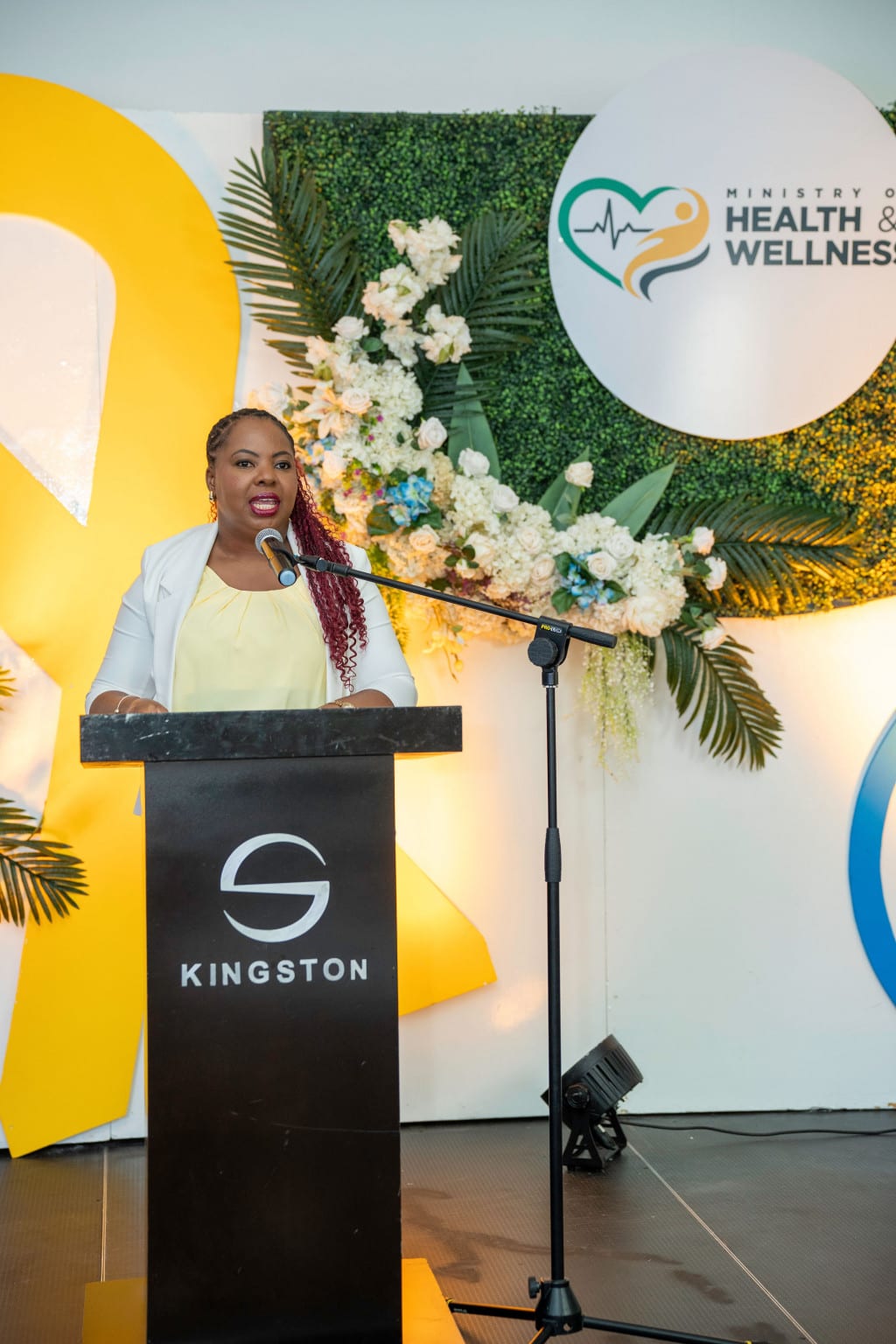
The stories shared at the Childhood Cancer Forum brought Jamaica’s progress, challenges and responsibilities into sharp focus.
On Monday, June 1, 2026, I attended the Ministry of Health and Wellness’ Childhood Cancer Forum, held under the theme “From Awareness to Action: Strengthening Childhood Cancer Care.” The forum gave meaningful substance to that theme. It deepened public understanding, highlighted the progress already being made and identified the practical steps needed to strengthen childhood cancer care across Jamaica.
The presenters spoke with honesty, evidence and compassion. Their contributions showed both how far Jamaica has come and where greater coordination, investment and support are still needed.
As Executive Director of the Jamaica Cancer Society, I was invited to deliver remarks on the Society’s role in supporting the national response to cancer. Our mandate centres on cancer prevention, public education, advocacy, screening and support services, with our core screening programmes focused primarily on breast, cervical and prostate cancer. While childhood cancer falls outside the main scope of these screening services, it remains closely connected to our broader responsibility to promote cancer awareness, strengthen support for affected families and advocate for improved cancer care across Jamaica.
Cancer in a child affects every part of a family, and every child deserves the best possible chance at life. Globally, childhood cancer remains one of the most significant health inequities of our time. The World Health Organisation (WHO) estimates that approximately 400,000 children and adolescents up to age 19 develop cancer each year. In high-income countries, more than 80 per cent of children with cancer are cured. In many low- and middle-income countries, fewer than 30 per cent survive.
This difference does not exist because some children are more deserving of survival than others. It reflects unequal access to timely diagnosis, medicines, technology, specialist care, supportive services and adequate health financing.
In Latin America and the Caribbean, PAHO estimates that around 30,000 children and adolescents under 19 are affected by cancer each year. Almost 10,000 die from the disease. These are not just statistics. These are children who should be in school, playing, growing, laughing and dreaming.
Most children with cancer in Jamaica are seen at the Bustamante Hospital for Children. Some are also seen at the Cornwall Regional Hospital and the University Hospital of the West Indies. Jamaica has come a long way in children’s health. I must pay homage to Shaggy and Friends for the work they have done over the years in providing essential equipment, medical supplies and refurbished spaces at the Bustamante Hospital for Children.
As a mother of two children, ages 13 and 11, I have utilised the Bustamante Hospital for Children on several occasions, especially with one of my sons who is asthmatic. I have personally seen improvements over time in triage, the physical environment and access to treatment. My story, thankfully, has been a good one. Sadly, not every family has had that experience.
From time to time, we see stories in the media that remind us of the needs still facing families. These include access to specialist doctors, medicines that are not available locally, and scans and diagnostic tests, some of which can only be done overseas. It is difficult to see the photos and hear the appeals from parents whose children have been diagnosed with rare cancers. It is even harder when the appeal is not only for financial assistance, but for hope.
No parent should have to become a full-time fundraiser to keep a child alive. No child’s chance of survival should depend on who their parents know, how viral a video becomes, which artiste reposts a plea, or whether friends and relatives abroad can contribute in time.
At the forum, Dr Sharon McLean-Salmon, Consultant Paediatric Oncologist at the Bustamante Hospital for Children, and Dr Antoinette Sealy, Paediatrician at Cornwall Regional Hospital, spoke frankly about accomplishments and challenges in childhood cancer care. Their presentations confirmed that progress has been made, but the system remains under pressure. Several areas require urgent attention.
The most urgent need is reliable access to essential cancer medicines. Blinatumomab, used in the treatment of some forms of acute lymphoblastic leukaemia, is included on the WHO Model List of Essential Medicines for Children. Yet, it is not available locally. Other chemotherapy and supportive medicines are also not always available when needed. Cancer treatment is time-sensitive. When treatment is delayed, interrupted or substituted because the preferred drug is unavailable, the child’s chance of survival can be affected.
Another major gap is diagnostic capacity. Some critical tests, including immunohistochemistry, flow cytometry and molecular studies, may need to be done overseas. This adds time, cost and uncertainty for families. In some cases, a diagnosis is delayed for weeks. For cancer, weeks matter. Delayed diagnosis can mean more advanced disease, more aggressive treatment, higher cost and poorer outcomes.
Just as important is the need for more trained personnel. Jamaica has a shortage of paediatric oncology nurses and specialist doctors, including surgical oncologists and other professionals needed for multidisciplinary care. The departure of Cuban doctors has widened gaps in some areas. Childhood cancer care requires a team, including paediatric oncologists, surgeons, nurses, pathologists, radiologists, radiation oncologists, pharmacists, social workers, psychologists, nutritionists and palliative care specialists. No one discipline, no one hospital can carry this burden alone. This is why the planned Portia Simpson Miller Children’s Hospital in western Jamaica is such an important development, but it must be supported by the necessary human, technical and financial resources to deliver the level of care that children with cancer or other illnesses require.
Supportive care must also be treated as essential, not optional. Children need access to blood products, infection control, pain relief, nutrition support, counselling, social work, palliative care and survivorship support. Many families are frightened, overwhelmed and financially stretched. Some delay care because of fear, cultural beliefs, mistrust, cost or lack of understanding. Structured counselling must be built into the continuum of care to adequately support families.
The cost of scans and other tests is another burden families should not have to carry alone. The Kingston Public Hospital is one of the few public-sector options for CT scans in the South-East Regional Health Authority. In the private sector, the cost can be difficult for ordinary families. When I checked with a private provider, an abdominal CT scan was quoted at $65,000 when referred from a public institution and $75,000 if referred from a private institution. Whether the patient is a child or an adult, that is a heavy burden.
Finally, Jamaica needs stronger national coordination. The country should continue moving toward a stronger childhood cancer pathway, with clearer referral systems, better data collection, treatment tracking, multidisciplinary care, regional support, and stronger links between hospitals, social services and civil society.
The WHO Global Initiative for Childhood Cancer aims to reach at least 60 per cent survival for children with cancer by 2030. PAHO’s CureAll Americas initiative supports that goal in Latin America and the Caribbean by promoting multi-stakeholder action, stronger health systems and better care for children and adolescents with cancer. Jamaica should be fully aligned with this direction. This is where awareness must become action.
The Government cannot do it alone. Doctors cannot do it alone. Families cannot do it alone. Civil society, corporate Jamaica, foundations, diaspora groups, service clubs, churches, schools, media houses and community organisations all have a role to play.
There are also immediate opportunities for Jamaicans to turn concern into tangible support. RAYZ for Life, organised by the Jamaica Energy Partners Group, will be held on Saturday, July 18, 2026, at 6:30 a.m., at Norbrook Circle, Shortwood Teachers’ College, with registration closing on Wednesday, July 15, 2026. This event contributes directly to the Oncology Unit at the Bustamante Hospital for Children.
Also, Come Alive, a gospel concert and national call to worship, will be held on Saturday, August 1, 2026, on the King’s House East Lawn, with net proceeds going toward the Bustamante Hospital for Children, among other beneficiaries. I encourage Jamaicans, corporate partners, churches, service clubs and community groups to support these activities. Both offer practical ways to assist the Bustamante Hospital for Children and strengthen the care available to children and families affected by cancer.
We need a dedicated national push for childhood cancer care. We need investment in diagnostics, medicines, specialist training, counselling, social support, palliative care and family assistance. We need funding mechanisms that prevent families from being left on their own when a child needs a test, a drug, a scan or treatment overseas. We need public education so parents and primary care providers can recognise warning signs earlier. We need to support our paediatric oncology teams before compassion fatigue and resource constraints wear them down.
May is observed as Childhood Cancer Awareness Month. Notwithstanding, childhood cancer cannot be placed on the national agenda for one month and then put aside. Every month, families receive life-changing news. Every month, a child’s future depends on whether the system can respond quickly and fully.
As I stated at the forum in my remarks, childhood cancer is not only a health issue. It is a family issue. It is a social issue. It is a national issue.
As a mother, this tugs at my heart, but at the same time, as the head of a cancer-focused NGO, it also sharpens my sense of responsibility.
Jamaica has done difficult things before. We have improved hospitals. We have mobilised communities. We have raised funds. We have trained professionals. We have built partnerships. We have shown that when the cause is clear and the country is moved, we can act. We must act now for children with cancer.
Roshane Reid-Koomson is Executive Director, Jamaica Cancer Society, [email protected]


Comments