Archaeologists make massive Neoindian grave discovery in Guadeloupe

Gavin Riley / Our Today
administrator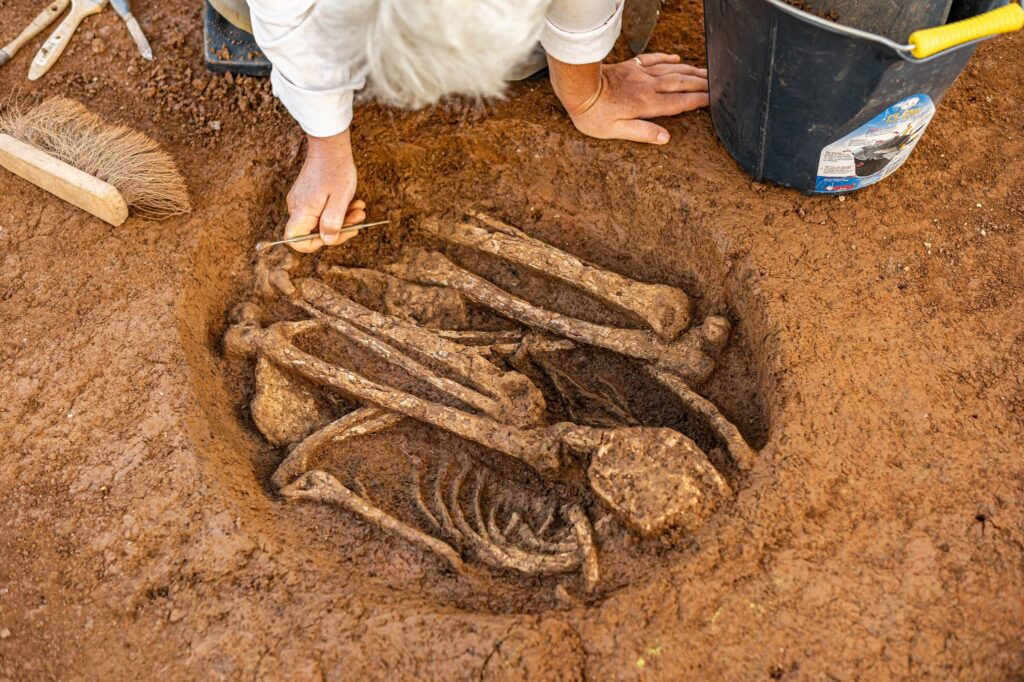
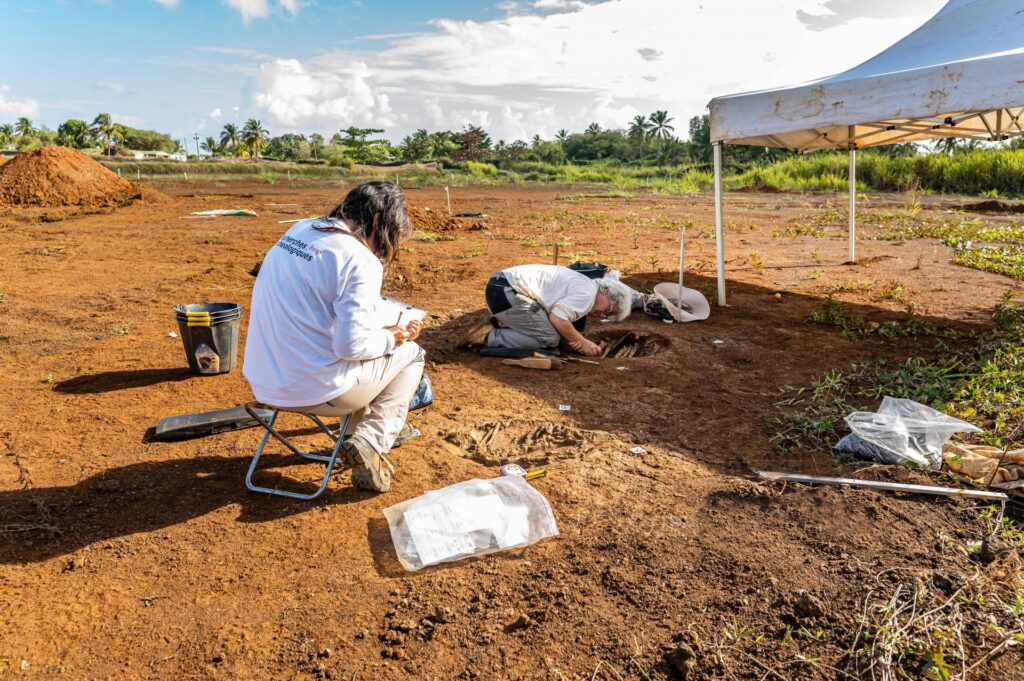
A team of French archaeologists—hoping to get some insight into the lives of indigenous peoples on the island of Guadeloupe before the arrival of Christopher Columbus—made a major discovery of 113 pre-colonial graves this week.
In a statement on Tuesday (April 27), the Institut national de recherches archéologiques préventives (Inrap) said it was approached by State officials to excavate a section of the heavily populated Les Abymes commune.
The excavation site, located west of Grande Terre in the Petit-Pérou area, is just upstream of the construction of a housing estate, Inrap added.
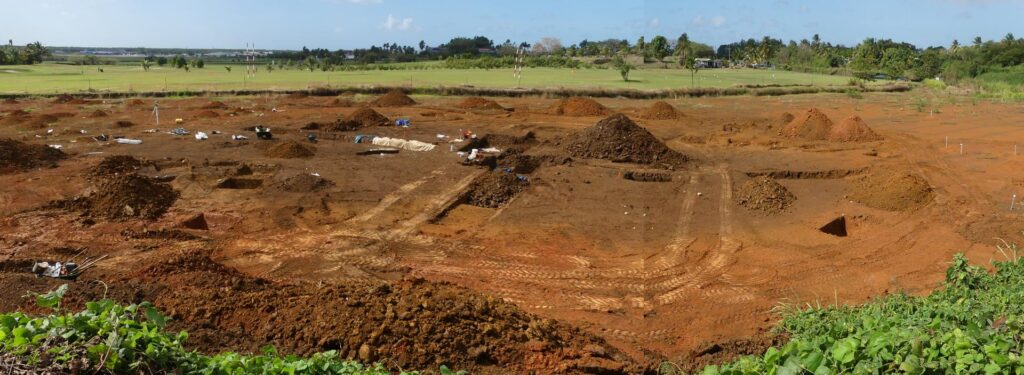
During the first phase of the excavation, archaeologists unearthed a high density of human remains consisting of pits, post holes and burials.
Inrap disclosed that the remains likely reflected several phases of occupation by pre-Columbian (before Columbus era) populations during the 11th and 13th centuries AD.
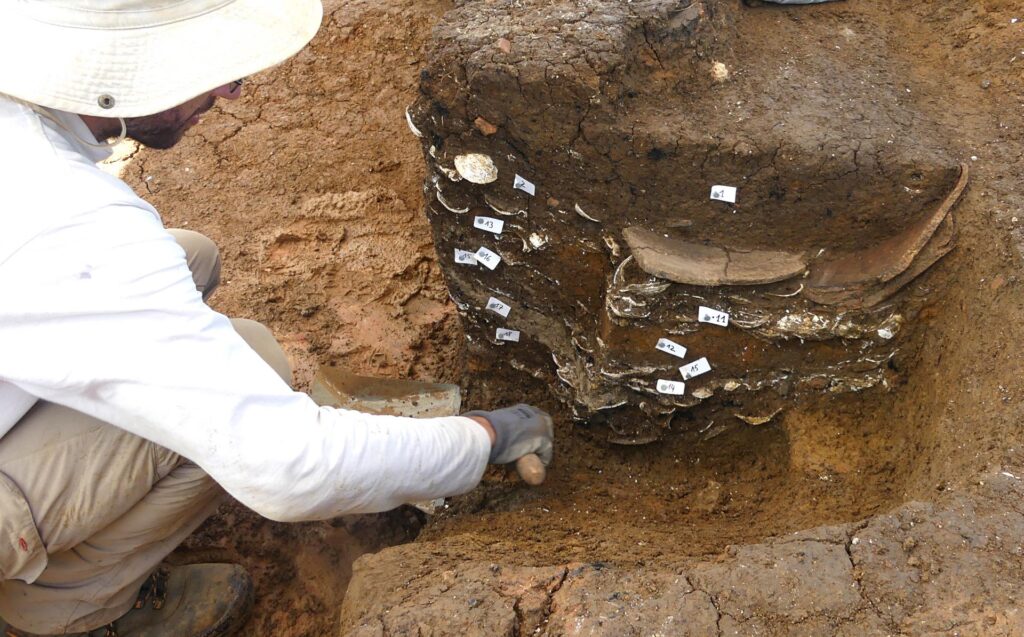
“A few hundred post holes correspond to habitat structures and around fifty pits are linked to domestic activities. The filling of certain pits yielded numerous shards of pottery, stone tools, heated blocks, the bones of rodents, reptiles, birds and the remains of crabs and shells, rejected after consumption. These domestic remains are associated with 113 burials, a figure hitherto unparalleled in Guadeloupe,” Inrap explained.
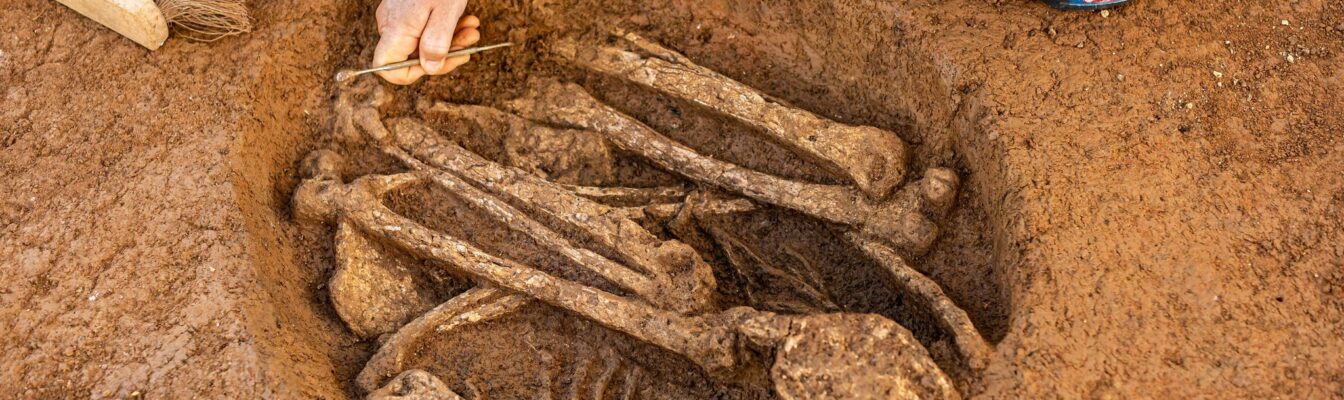
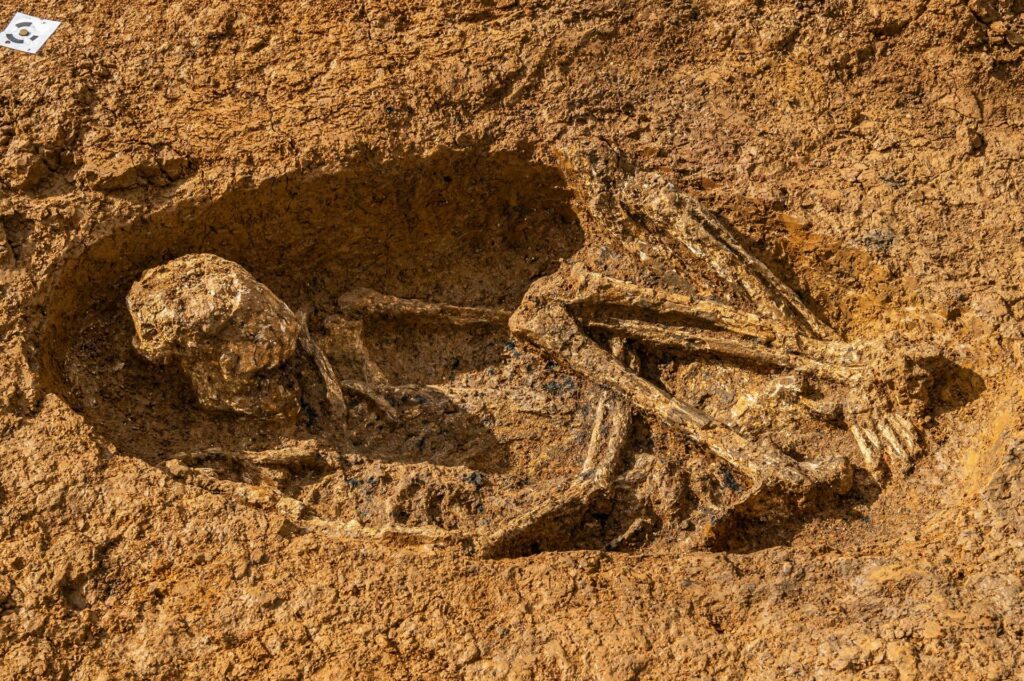
On closer inspection, archaeologists found that burials plots concerned both children and adults—having the deceased arranged on their backs, semi-seated, fully sat or positioned on either side.
“The bodies were buried folded up on themselves: the arms often bent, on the abdomen or thorax, the legs compressed on the forearms, elbows or thorax. Ties or bags guarantee this position. Manipulations after burial are noticeable,” the institute added.
Inrap also discovered colonial-era artefacts just west of the Neoindian excavation site.
Nearly 200 structures were unearthed, revealing the presence of agrarian developments, several buildings on posts and a masonry building.
“The cultivation of cane and the production of sugar seem to have been the main activities, as evidenced by the ceramic furniture consisting mainly of sugar forms and molasses pots,” Inrap observed.
The team further indicated that the remains are related to housing-candy ‘Hope’ or ‘Mamiel’, which operated in the 18th and 19th centuries—still preserved in elevation.
Inrap said it would continue to go over the numerous data collected from the pre-Columbian graves and run tests on the ancient human DNA samples.
The archaeological team added that their analyses will help confirm: different phases of [land] occupation; spatial organisation [of the burial ground]; health status of the buried population and their familial ties; if burials took place in a village context; and whether living and dead Neoindians cohabited or were burials specific to the back of the habitat.




Comments