Audrey Hinchcliffe | Lest we forget! COVID-19 pandemic in Jamaica

/ Our Today
administrator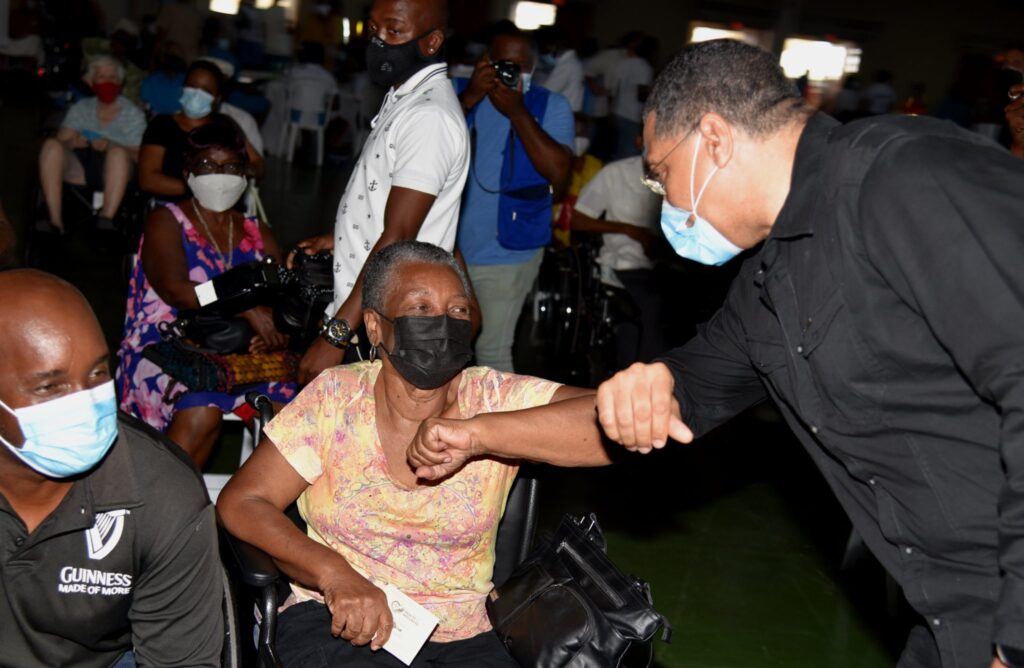
On March 10, 2020, over four years ago, a stranger arrived on our doorsteps.
Who was that stranger? We should never forget that it was the virus SARS-CoV-2 (novel coronavirus) and the resultant disease COVID-19.
Background
Communication from the University Hospital of the West Indies at that time stated, “The University Hospital of the West Indies (UHWI) confirmed its first coronavirus (COVID-19) case on March 10, 2020″.
The patient, a young female travelled from London to Jamaica on March 4, developed symptoms compatible with COVID-19 on March 7, and visited the Accident & Emergency department of the UHWI on March 9. She was confirmed to be COVID-19 positive on March 10.
The patient has been isolated, and all efforts put in place by the hospital to manage and treat and keep the staff and other patients safe.
UHWI, in close collaboration with the Ministry of Health and Wellness (MOHW) is putting efforts in place to keep the public informed as more information becomes available.” Ref. University Hospital of the West Indies – uhwi.gov.jm (Google archive)
Fast forward to 2024:
Confirmed cases 156,869
—COVID-19 update – February 27 – March 1, 2024 | Ministry of Health and Wellness
Recovered 150,532
Deaths 3,756
We must never forget the impact of COVID-19 on Jamaica.
Here we are, two years since restrictions were lifted in March 2022 and COVID-19 is still with us; and what have we learned?

Reference is made to my book ‘A Time Like No Other – The Covid-19 Pandemic; Perspectives on Jamaica’s Experience‘, in which Gary Allen, former CEO of the RJRGleaner Communications Group, wrote in a statement: “As COVID-19 continues to linger, this publication is not only timely but will prove a valuable keepsake for individuals, policymakers, researchers among others. It is a reminder, lest we forget.”
Yet the fourth anniversary has come and gone with not even “a whisper” about COVID-19.
In the same book, in the section ‘Praise For a Time Like No Other‘, Jamaican Minister of Health and Wellness, Dr Christopher Tufton, wrote, “On reflection, it was the worst of times – our country faced the greatest threat in its post-independence history. The lives lost and economic damage has been greater than the devastation recorded following Hurricane Gilbert, but hurricanes only last for a few days at most, and even though the damage is long-lasting it is finite and measurable. When the pandemic hit and we were forced to restrict movement and shut down the country, hundreds of thousands of Jamaicans lost their livelihoods. It was a journey into the unknown as information about the virus was continuously evolving.”

Minister Tufton goes on to say, “We do not write or document enough as a country and, too often, run the risk of not learning from experience.”
Well said, minister. Yet March 10 has come and gone, I hope we have not forgotten.
Other contributors to ‘A Time Like No Other‘ have captured the essence of the impact of COVID-19 on Jamaica and lessons learned that we must never forget.
Dr Peter Figueroa, professor of public health, Epidemiology and HIV/AIDS, at the University of the West Indies, Mona, writes “The COVID-19 pandemic was a once-in-a-lifetime experience. We have much to be proud of in how Jamaica managed the pandemic – the proactive response of our leaders, the heroic response of our health and other frontline workers, the sacrifices so many had to make, the generous support of those who gave to the less fortunate, and the coming together of all sectors of society to control the pandemic. At the same time, we must identify those areas of our response where we could have done better, in particular, to vaccinate more than one-third of our population.”
Dr. Figueroa continues “COVID-19 is still with us, and there will be other pandemics in the future. Let us praise and honour those who set an example and did outstanding work in responding to the pandemic. Let us also carefully identify areas where we may have fallen short, draw on the lessons, take corrective action and be better prepared for the next time.” These charges we must never forget.
Neither should we forget the words of Education Minister Fayval Williams, as written in the introduction to ‘A Time Like No Other‘.

“Jamaica, like most small island developing states (SIDS), was staring down the barrel. The land of wood and water was blessed with some of the best healthcare workers in the world. But, like their counterparts around the world, they were faced with a gigantic disadvantage. There was no precise template to deal specifically with the novel coronavirus, a new and invisible killer disease that was spreading exponentially. There was fear of the unknown – a disease that no one had heard of before, and there was uncertainty as the race to find a vaccine or cure intensified. There was also confusion in the global community. Jamaica was no exception.” Minister Williams has aptly reminded us of reasons why we must not forget.
I submit that the month of March should be declared COVID Month as a reminder that a time like no other, The COVID-19 pandemic should not be forgotten.
There should be commemorative events islandwide, if not worldwide to embed the disruptive and dangerous nature of the coronavirus pandemic in our collective psyche. What should be included I will leave up to the experts in honours and awards.
One thing I would insist on is the recognition of survivors – they certainly have stories to tell of suffering and survival. To those who lost loved ones to remember that “grief is the price you pay for love”; for the health sector, in praise of “resilience in the face of adversity; to frontline workers, a monument to you for keeping the proverbial “lights on”, and to corporations for economic recovery.
A banner of the polymers denomination matching your business growth; policymakers to church as you need the blessings, and all others to party hearty as you did during the lockdown.

Yes, above all, as we lay down markers never to forget, let’s have more mental health workers and speciality counsellors. The coronavirus pandemic was a time like no other; it has afforded us shared experiences – negative and positive experiences that left us, for the most part, dazed and traumatised.
For two years we lived in an alien world, enduring physical isolation, mental and physical pain and suffering, economic loss, grief from mourning the deaths of loved ones and so much more, but we also learned to cope. We are survivors!
However, the question is not whether there will be other serious pandemics, it is rather, a question of when. Therefore, let us be prepared to tackle whatever comes next bolstered by the coping skills developed as a result of the lessons learned from the COVID-19 experience of March 2020 to March 2022, and be reminded, COVID is still among us – LEST WE FORGET!
Audrey Hinchcliffe is the chairman of Manpower and Maintenance Services Limited Group, and owner and principal consultant of Caribbean Health Management Consultants Limited




Comments