Bottom line: Jamaica’s asset tax suppresses economic growth – Senators Small Ferguson and Anderson

Al Edwards / Our Today
administrator
Many in the financial sector bemoan the injurious impact of the asset tax and the negative impact it has on capital.
Despite it being a temporary measure beginning in 2013, for just three years, ten years after that period, the Government has said that the asset tax has to remain to fund the recovery from Hurricane Melissa and that the sector will just have to suck it up for the national good.
Over $80 billion has been garnered from the Asset Tax since 2016, making it a lucrative cash cow for the Government, which shows no inclination of weaning itself off this teat.
A Bill has been passed to amend the filing and payment date of the asset tax but does not reduce it. This Bill just changes the date when it is filed and when it is paid.
Speaking in the Senate, Senator Ramon Small-Ferguson who is the CEO of Barita Investments, makes the point that the Bill misses the central issue as it pertains to the asset tax
“The real issue is not when the asset tax should be paid but whether this tax, which is a real burden to financial institutions, its customers and shareholders, should continue to exist at all. The asset tax does not tax profit; it doesn’t tax success; it taxes the mere existence of capital. Companies are being punished for putting capital to work in the economy.
“A financial institution has to pay this tax, whether it makes money or not. It pays whether the economy is strong or weak. This is not how most taxes work. Normally, when a business earns more, it pays more. When it earns less, it pays less. That is fair and logical. This tax does not move with performance. It’s fixed against the size of a company’s balance sheet. So when margins are tight and institutions are trying to support recovery, which all institutions should be doing, now the tax remains.”

Senator Ramon Small-Ferguson makes a good point. These funds extracted could be employed to fire up the productive sector, thus in turn allowing Jamaica to earn itself out of the Hurricane Mellissa fallout. What was a temporary measure has become a perpetual liability with no end in sight.
Both Senator Aubyn Hill and Senator Kamina Johnson-Smith maintain that needs must and given the damage wrought by Hurricane Melissa, the Government will need even more funds. It also has to plug the hole in the budget. Senator Hill made the point that he had spent over 30 years in the financial sector, but now as a Cabinet minister has to look at things from a wider vista for Jamaica’s good.
But wouldn’t it be more advantageous to see financial institutions better capitalised and in a stronger position to make loans to help spur the economy? Rather than restrain financial institutions with the asset tax, why not begin to liberate them and urge them to make loans to businesses, thus fostering greater enterprise?
The Barita boss continued: “It means the cost of the tax doesn’t simply sit on the books of the financial institution, it shows up in tighter borrowing costs, it shows up in lower dividends to investors, including pensioners – all investors, small and large. It reduces the investment capacity of financial institution,s and there is less room for these institutions to support businesses and individuals.
“ It increases the cost of capital in the country. In a developing country like Jamaica, capital is not a luxury. This tax is distortionary; it affects the ability of Jamaicans to borrow, to seed and to earn ultimately. This tax, by design, works against the growth we want to achieve.”
There are just three countries in the English-speaking Caribbean that impose an asset tax, namely Jamaica, Trinidad& Tobago and Barbados. This is a tax on the total balance sheet assets of finance houses not just property .
Last year JMMB pointed out that the distortionary asset tax reduced its quarterly profitability noting: “ The Government’s continued imposition of the distortionary asset tax on Jamaican financial institutions, which was initially proposed as a temporary measure in 2012 for three years remains a significant burden on the financial institutions and their shareholders. Many countries have phased out this distortionary tax, which is normally used as an austerity measure.
“If this tax had been eliminated as promised, this would increase the profitability of the Group and the pools of funds available for distribution to its over 12,000 shareholders. This distortionary asset tax payment represents more than twice what the company paid in dividends on August 12, 2024.
Former US Treasury Secretary Larry Summers has repeatedly declared that taxing assets is a terrible idea that acts as a wedge, inhibiting the efficient movement of capital to more productive uses. Rather than draw down on asset tax, governments would be better served by closing the “tax gap” and getting rid of tax loopholes. Go after those not paying tax.
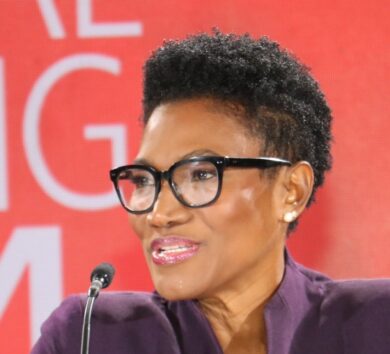
Senator Kisha Anderson made a compelling presentation in the Senate, stating that the amendments do not go far enough. She noted that the Government had raked in $80 billion from the asset tax since 2016, with $10 billion in the last financial year alone.
“That is capital that could have remained within Jamaica’s productive economy. If that capital remained as a stand-alone institution, it would be one of the largest financial groups in this country-that’s the scale that has been removed.
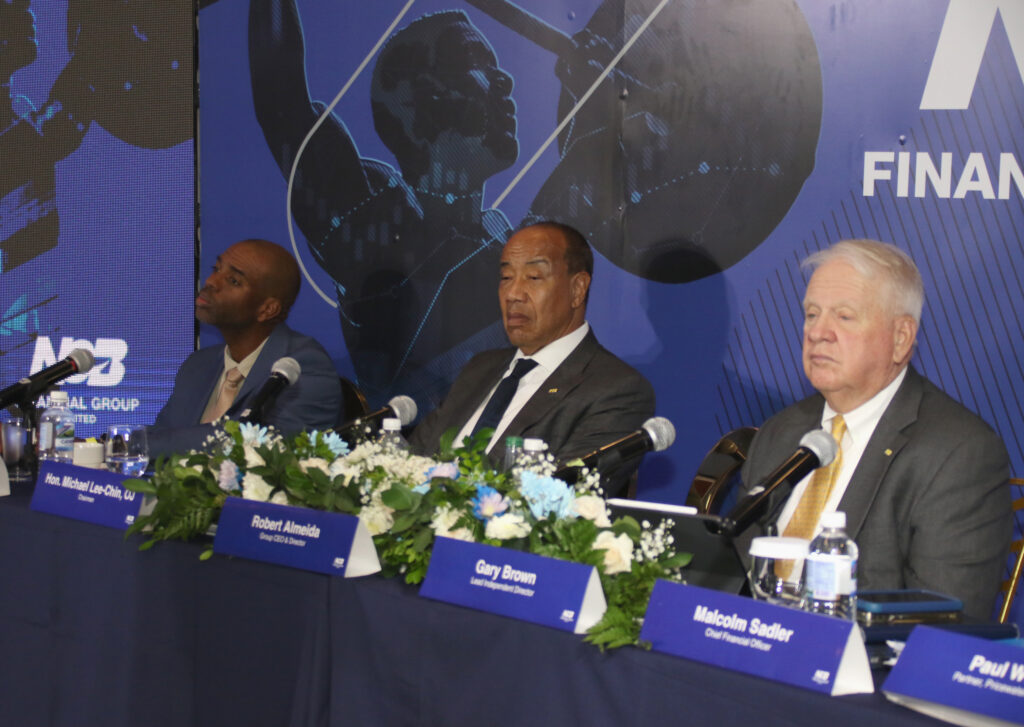
“NCB has paid US$194 million in asset tax since its imposition. In the last year alone, it paid over J$2.6 billion in asset tax, which translated to a 41 per cent reduction in dividends paid. The Chairman of NCBFG Michael Lee Chin said that without the albatross of the asset tax, he would be better able to treat with AIC bondholders.”
Senator Anderson also made clear that the asset tax was brought in as a temporary measure for three years, but is still here. She noted that the former Minister of Finance Dr. Nigel Clarke, condemned the asset tax and said it was counterproductive to economic activity.
“This asset tax not only depletes capital of financial institutions but is not fair to shareholders. It also means there is an invisible floor to lending because it must be added to the cost of doing business.
The President of the Private Sector Organisation of Jamaica (PSOJ) has called for the removal of the asset tax and its then President, Metry Seaga in both 2023 and 2024, suggested it be replaced with:
1. The Introduction of a new Customs Act
2. A comprehensive review of The Income Tax Act
3. Unification of various payroll taxes.
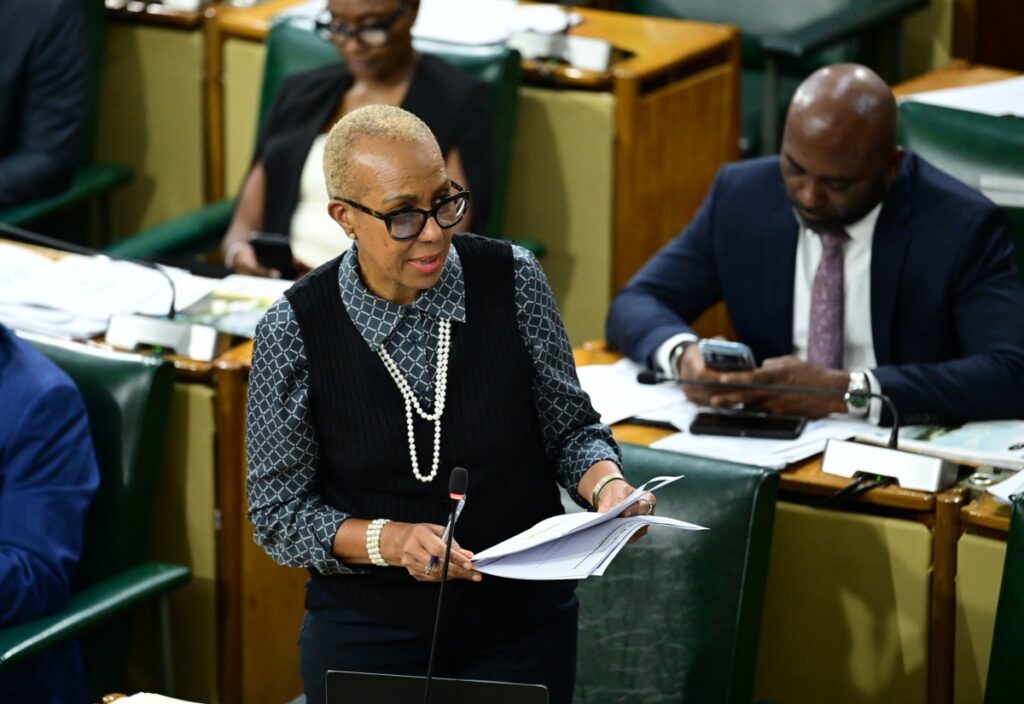
“Addressing the asset tax, the Minister of Finance Fayval Williams, said the rollback will begin “as soon as the national budget allows”. What does that mean? Why not disclose a targeted time period in order to reduce the asset tax? In the words of the late Senator Don Wehby, what gets measured gets done.
“Allow businesses to plan. Where is the engagement with the business sector? How can a blanket commitment be made when there has been a lack of credibility in giving commitments?”
Senator Anderson added that dividends and retained earnings don’t only accrue to large shareholders but to pension funds, retirement accounts and to all ordinary Jamaicans whose savings are invested in these financial institutions.
Turning her attention to the asset tax’s deleterious impact on the economy, she continued: “ Without the asset tax, that capital could be reinvested to fund growth. It is the productive capacity that is removed from the Jamaican economy. The asset tax penalises capital formation; it taxes assets whether or not these assets generate income. It reduces investment capacity. Bottom line-it suppresses economic growth.
“Financial institutions are central to national development. They finance housing, infrastructure. When capital formation is penalised, economic expansion is constrained and ultimately the Jamaican people bear the cost.”




Comments