
By Valhalla | Reform under fire: What is really happening at UWI Hospital?

/ Our Today
administrator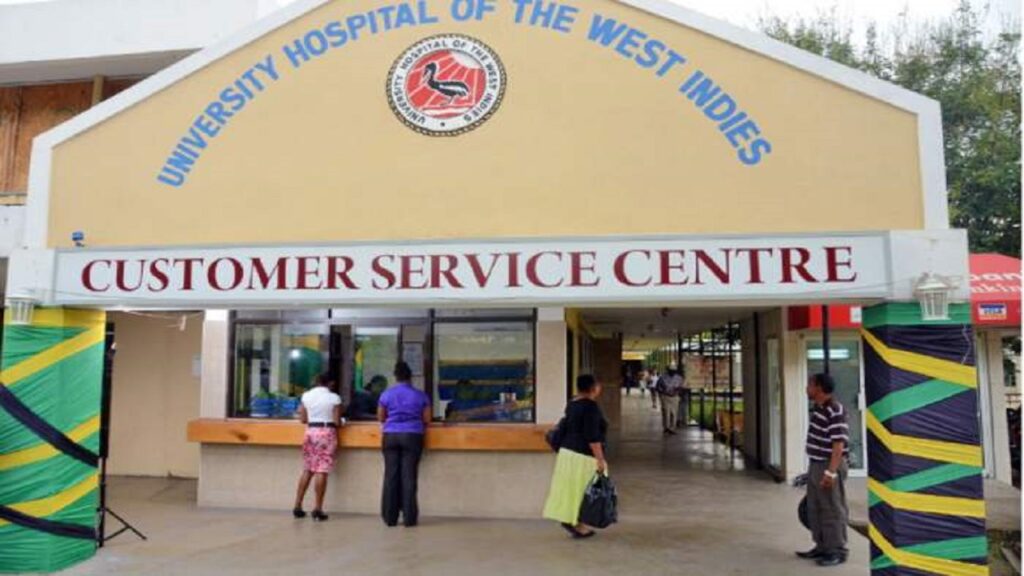
The recent controversy surrounding the University Hospital of the West Indies and its internal operations has raised troubling questions, not just about documents or allegations circulating in the public space but more concerning: about resistance to change within one of Jamaica’s most important health institutions.
At the centre of the discourse is a hospital undergoing reform. UWI Hospital has been moving toward long-needed modernisation, including the digitisation of hospital management systems, improved patient-record access, and tighter controls within pharmacy and medication management.
These changes are not cosmetic. They are designed to improve patient safety, reduce human error, and bring the institution in line with modern healthcare standards. But we understand these positive changes came with pushback from being implemented. This has led to questions about whether the resistance is politically motivated and designed to undermine reforms meant to strengthen patient care. History shows that hospitals cannot improve outcomes without embracing change.
Yet, instead of national focus on the benefits of these reforms, public attention has been diverted by false claims, counterclaims, and what appears to be a concerted effort to discredit the transformation process. One will ask, who are these false claims coming from? Is it because they are not in charge of operating the best outcome for UWI, which makes them more power-hungry? Shouldn’t management and staff be focused on doing what is best for the hospital? Shouldn’t the patient’s care and how they are treated be given top priority?
One cannot ignore the pattern emerging. Allegations are surfacing at a moment when structural changes are being implemented. Claims are circulating rapidly, often without clear sourcing or verification, creating confusion and undermining public trust. In that context, it is reasonable to ask whether some of this noise is less about accountability and more about resistance.
Healthcare reform is rarely comfortable. Digitising patient information introduces transparency and traceability. Improved pharmacy systems reduce discretion and error. Clearer data systems change how power, influence, and decision-making operate within hospitals. For some, particularly those accustomed to legacy systems and informal processes, reform can feel threatening. And these are all great measures of improvements but the hospital needs to continue on the reform of change.
There are growing concerns that a small group of doctors may be actively working to stall or sabotage these changes. If true, this would represent not a professional disagreement, but a direct challenge to patient-centred care and their selfish need for power rather than focusing on the current proposed reform. It must be stressed that reform is what is needed for the hospital to continue do better and improve its systems. Reform that improves medication accuracy, reduces prescription errors, and ensures patients can reliably access their medical information should not be controversial. It should be welcomed.
This moment calls for careful investigation, not hysteria. Allegations must be properly examined, facts verified, and due process respected. But it also calls for discernment from the public and the media. We must ask, who benefits from confusion? Who benefits from reform being delayed? Who benefits when trust in institutional leadership is eroded at a critical moment of transition?
Most importantly, the conversation must return to patients. Every distraction from reform has real consequences for the people relying on UWI Hospital for care. Progress in healthcare is not about protecting comfort zones. It is about outcomes, safety, and dignity.
If there are legitimate concerns, they should be raised transparently and responsibly. If false claims are being weaponised to block progress, they must be exposed. Jamaica cannot afford to allow internal resistance or misinformation to derail improvements in patient care.
The World Health Organisation (WHO) says, “strengthening the management capabilities within health systems is being increasingly seen as a critical strategy for improving the importance of healthcare delivery and building health systems.”
According to St. Mary’s University, Twickenham, London, “The overarching goal of healthcare management is to enhance the quality of care given to patients. Managers implement quality assurance measures, monitor healthcare services to meet standards and establish protocols to minimise risks and errors, prioritising patient safety. A McKinsey survey titled, ‘Why Hospital Management Matters,’ found that good hospital management appeared to improve clinical outcomes. It was also found that patient satisfaction with care tended to be higher in better-managed hospitals and in the UK, in particular, satisfaction ratings correlated with management scores.”
St Mary’s University notes, “As the healthcare industry advances, the demand for skilled healthcare managers is expected to grow. The integration of technology, data-driven decision making and a focus on patient-centred care will require healthcare managers to adapt and acquire new skills and knowledge in order to lead the modern healthcare workforce.”
Reform is rarely quiet. But it should not be sabotaged.
The public deserves better health systems. And UWI Hospital deserves the space to modernise without being undermined by fear of change.





Comments