Byles: DTIs, Government have to move quicker to embrace and implement JAM-DEX

Al Edwards / Our Today
administrator
Cash is king in Jamaica but can that continue to be the case in the digital age?
Many countries are turning to digital currencies, particularly Central Bank Digital Currencies (CBDCs).
The Bahamas’ Sand Dollar and China’s e-CNY readily spring to mind.
There is a reluctance in Jamaica to go digital, and that has not gone unnoticed by governor of the Bank of Jamaica (BOJ), Richard Byles.
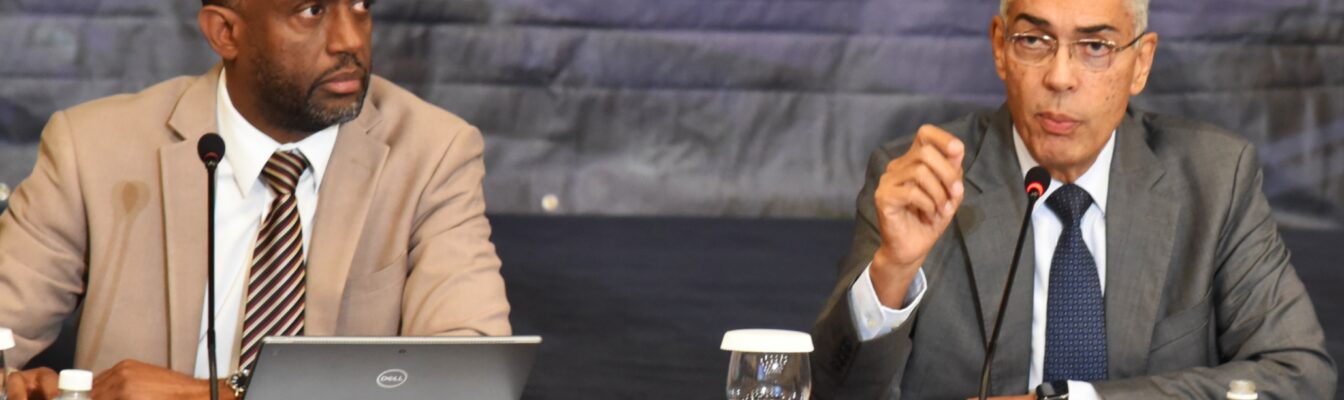
Speaking at this week’s BOJ quarterly press briefing, Governor Byles said: “ I have to express a little disgruntlement with deposit-taking institutions (DTIs). I don’t think they appreciate how important digitalisation of payments is to a modern economy and the plans the government has to make business more efficient.
“You cannot have an efficient business environment fostering growth when you have such a high reliance on cash and other non-digital forms of doing business. We have to get with the plan. That plan has been on the table for years. The government has said it wants a more modern digital economy. The banks also have a deep interest in JAM-DEX, digitalisation and the reduction on relying upon cash.

“A lot of the bad reputation banks have has to do with their handling of cash. It is expensive for them, and it is expensive for businesses, so banks need to prioritise this issue more. Every year they keep saying I have this technology implementation to do, that to do, come on! This is important and has been waiting in line for years.”
Governor Byles stressed that the BOJ has been ready and able to implement JamDex throughout the economy for years and has been waiting on the slow DTIs. He let it be known that the Central Bank has had discussions with them, and yet their prioritisation of this issue is low. Their inertia is most disturbing.
The boss of the Central Bank continued: “ The BOJ has said it will pay half the cost to get the POS machines converted, come on, what more do they want? The banks need to wake up and smell the coffee. This is modern Jamaica we are trying to create, and they are standing in the way.”
It has been suggested that the Government pay some public sector workers in JEM-DEX so this digital currency can become more familiar and so demystified.
Governor Byles believes paying people in digital currency is fine except when they go to spend it in a shop or supermarket, then there is a problem.
“The circuit breaks right there, and that’s where we are with JAM-DEX. We want whenever a Jamaican goes into a shop, or supermarket, that the POS (point of sale) machine that he or she runs their debit or credit card on, that machine also takes JEM-DEX. Can you believe that for years, that is what we have been trying to get done? The technical solution exists and works, but it is for the banks to alter the POS machines to take the Jam-DEX code. We have said we will pay half of that cost.
“Yes, you could say to the Government ‘Why don’t you pay everybody in JAM-DEX?’ but you are going to end up with JamDex in your pocket and nowhere to spend it. The crucial link is to get those POS machines converted to take the JAM-DEX code.

So what is the obstacle to that? When one travels, you see transactions done this way, and in many instances is preferred to cash. One sees it in Beijing, Shanghai, Perth, Melbourne, Lagos, Nigeria (eNaira).
A paper entitled ‘The Value of Central Bank Digital Currencies to Public Markets‘, published by the World Federation of Exchanges last year, lends support to Governor Byles’ position on CBDCs.
The paper read in part: “Central bank digital currencies (CBDCs) are emerging as a significant development in global finance, with 94 per cent of central banks exploring CBDCs and the World Economic Forum projecting 24 CBDCs to be operational by 2030.
“This paper finds that CBDCs are a crucial enabler of a technological financial ecosystem. Nevertheless, their adoption and success depend on coordinated industry efforts and a balanced evaluation of benefits vs costs.”
As to costs in Jamaica, Byles has repeatedly said the BOJ will put up half the costs, so DTIs are not overburdened and financially strapped.






Comments