China looking to deepen relationship with LAC region

/ Our Today
administrator
The release of the third China’s Policy Paper on Latin America and the Caribbean, formally announced at a press conference hosted by the Ministry of Foreign Affairs of the People’s Republic of China on December 10, 2025, marks a significant milestone in the evolution of China–LAC relations.
Delivered under the leadership of Assistant Foreign Minister Cai Wei and welcomed by diplomatic representatives and CELAC officials, the policy paper reaffirms China’s long-term commitment to deepening cooperation with the region and advancing the construction of a China–LAC community with a shared future.
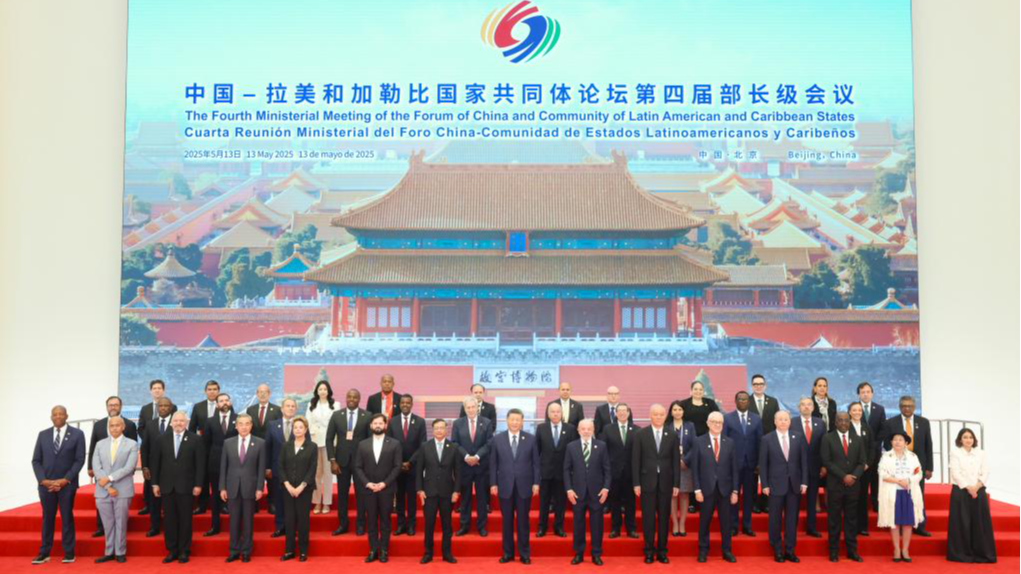
Anchored in the vision articulated by President Xi Jinping at the Fourth Ministerial Meeting of the China–CELAC Forum, the policy advances five interconnected programs—Solidarity, Development, Civilisation, Peace, and People-to-People Connectivity.
Together, these pillars offer a comprehensive and carefully calibrated framework that reflects China’s understanding of the region’s development priorities, its diversity, and its aspirations within the broader Global South.
A Comprehensive Agenda for Shared Development
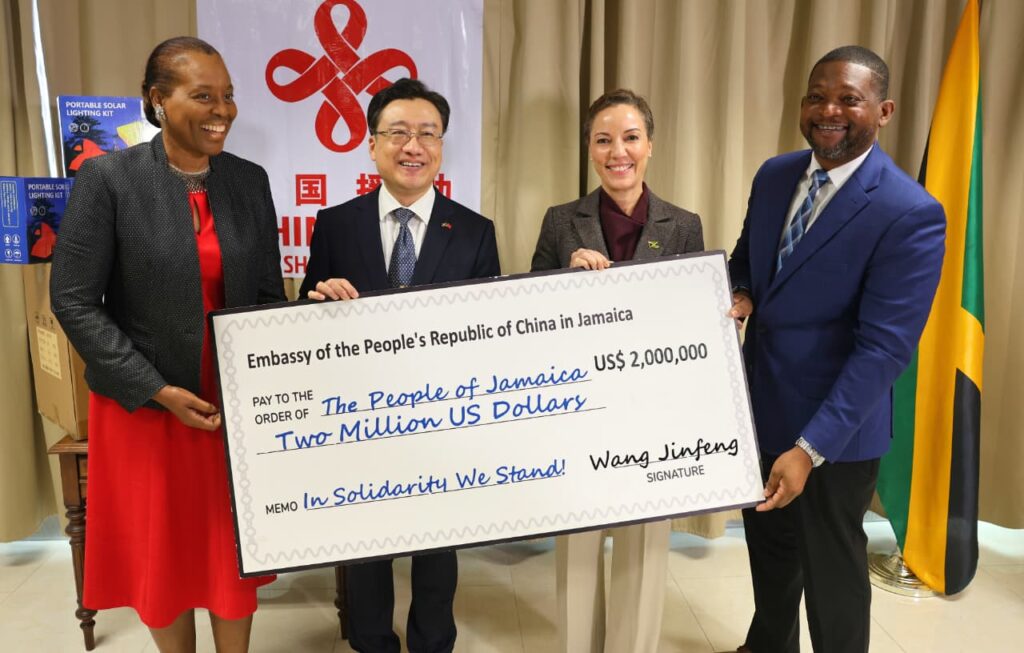
The scope of the policy paper is both ambitious and timely. It spans high-level political dialogue, infrastructure development, climate resilience, education, technological innovation, cultural exchange, and people-centred development.
For Latin American and Caribbean states, particularly Small Island Developing States, the emphasis on climate change adaptation, disaster risk reduction, education, and sustainable economic transformation is especially resonant.
The overwhelmingly positive reception from LAC diplomatic representatives, as reflected in the press conference proceedings, underscores the degree to which the policy aligns with regional needs and development trajectories. It also signals confidence in China as a partner that approaches cooperation through mutual respect, non-interference, and shared benefit rather than prescription or conditionality.
People-to-People Connectivity as a Strategic Enabler
Among the five programs outlined, People-to-People Connectivity stands out as both a foundation and a force multiplier. While infrastructure, trade, and finance remain critical, enduring partnerships are ultimately sustained through human relationships, cultural understanding, and mutual trust. Education exchanges, youth forums, professional training, and cultural cooperation are therefore not peripheral elements but central drivers of the policy’s long-term success.
Having recently experienced life in China firsthand, it becomes evident that China’s social cohesion, respect for learning, and emphasis on collective advancement are strengths that resonate deeply when encountered directly. Such lived experience reinforces the importance of sustained interpersonal engagement in demystifying systems, building confidence, and fostering genuine appreciation across cultures.
The Case for a China–LAC Youth Diplomatic Corps
Given the breadth and complexity of the five-program agenda, there is merit in exploring innovative mechanisms to accelerate implementation and broaden societal ownership. One such mechanism could be the establishment of a structured China–LAC Youth Diplomatic Corps, composed of emerging professionals from across the region with expertise aligned to the policy’s priority areas—education, climate science, digital technology, health, cultural industries, governance, and sustainable development.
Such a corps would not replace traditional diplomacy but rather complement it by serving as a bridge between policy and practice. Youth professionals, equipped with cultural fluency, technical competence, and regional insight, could support project coordination, public engagement, research collaboration, and people-to-people initiatives. In doing so, they would help translate high-level agreements into accessible, community-level impact while cultivating the next generation of China–LAC partnership leaders.
Importantly, this approach aligns naturally with China’s existing emphasis on youth exchanges, scholarships, training programs, and capacity building, as articulated in the policy paper. A more formalised youth diplomatic framework could therefore be seen as an evolution of existing commitments rather than a departure from them.
Human Capital Development and Service to a Shared Mission

Within this context, human capital development emerges as a strategic priority. The success of such an expansive agenda depends not only on financial investment and policy alignment but also on the cultivation of capable, ethical, and globally minded professionals. There is meaningful space for experienced educators, researchers, and practitioners from the LAC region to contribute to this mission by supporting training, institutional strengthening, and intercultural learning.
In this regard, there is a personal willingness to serve, particularly in the area of human capital development, should such a special mission or initiative be contemplated. This willingness is grounded not in ambition, but in a sincere appreciation of China’s development philosophy, a respect for its governance systems, and a belief in the transformative power of education and youth engagement to sustain long-term cooperation.
Deepening Understanding, Sustaining Partnership
The third China’s Policy Paper on Latin America and the Caribbean represents more than a diplomatic document; it is a statement of intent and a reflection of China’s evolving role within the Global South. Its release, and the clarity with which it has been communicated by the Ministry of Foreign Affairs, signals readiness for deeper, more nuanced engagement with the region.
As China and LAC countries move forward in implementing this expansive agenda, continued emphasis on people-to-people ties—and particularly on youth as partners in development—will be essential. By investing in human connections alongside physical infrastructure, the vision of a China–LAC community with a shared future becomes not only achievable, but sustainable for generations to come.





Comments