Clinton Rattray | Will Fayval Williams meet the mark?

/ Our Today
administrator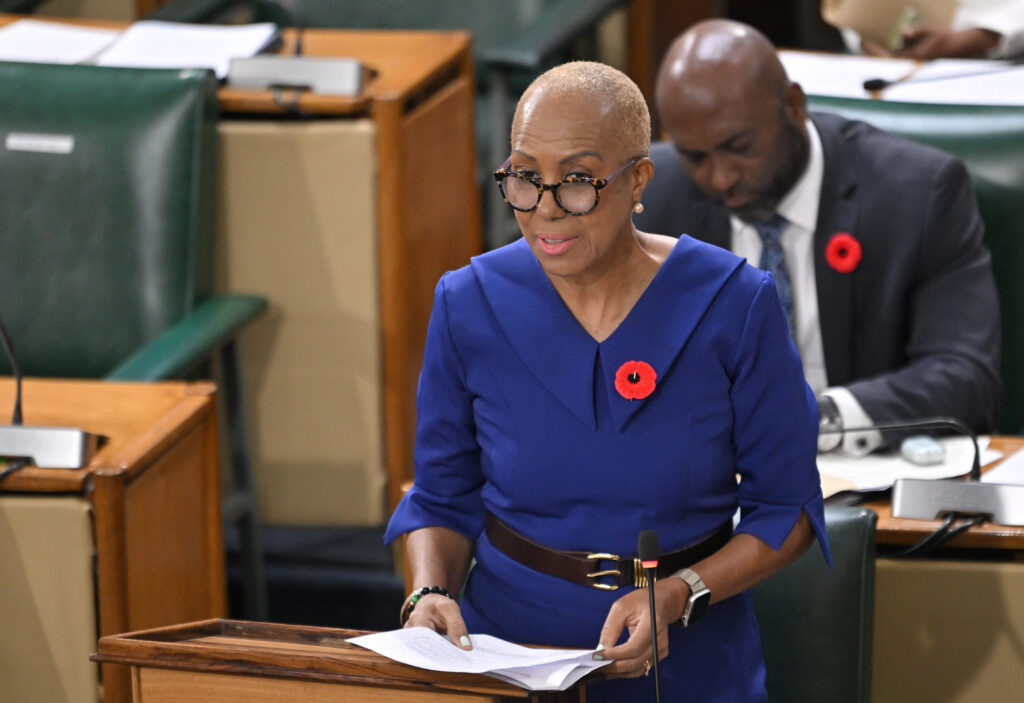
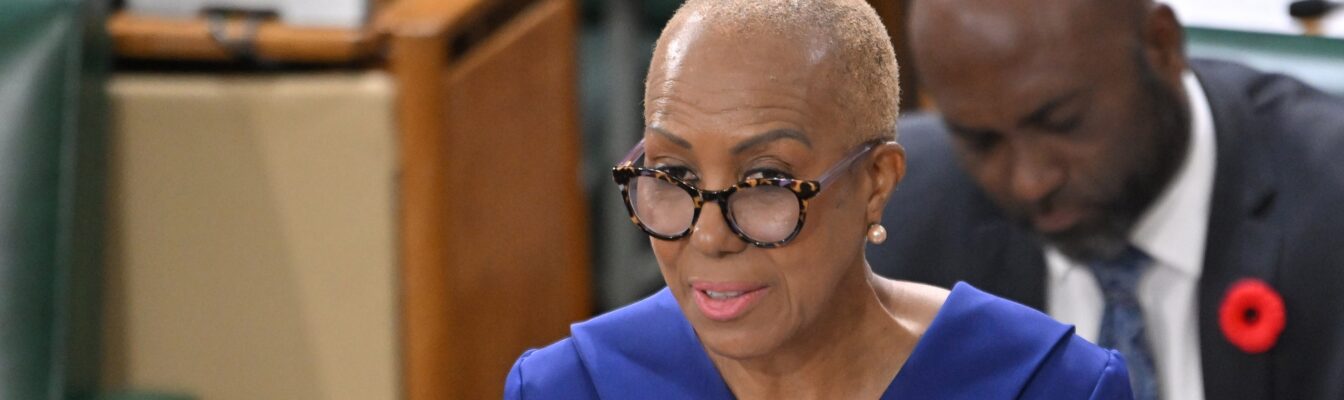
In less than a week, Jamaica’s finance minister Fayval Williams will open the 2026-2027 national budget debates in Parliament.
She has one task, anchor lady ‘land, wood and water’ in a world of unprecedented storms. Her presentation should not be a ritual of regurgitation of ideas, but a stress test of national resolve. March 10 will arguably be the most consequential budget presentation in a generation.
It will be framed by an economy whose navigators must chart the path of survival on a battlefield of uncertainty, instability and political idiocy. This budget must frame the response to tariffs, tightening oil-market risks due to a daylight US-Israel versus Iran sabbatical war and an economy that must build back better than the onslaught Hurricane Melissa unleashed on western Jamaica. This approach must be anchored with a clear vision to maintain the hard-won macroeconomic stability that we have achieved.
May we not expect this budget to have the usual fanfare, since the elections are over, but demand a detailed cerebral exercise of statecraft under pressure? The minister must rise to the occasion.
The scale of the shock
Hurricane Melissa was not a weather event; it was a systemic shock that crippled the western end of the island, causing an immediate nosedive of the nation’s economy.
The Planning Institute of Jamaica estimated that the damage caused by Hurricane Melissa totalled some US$12 billion, or nearly J$2 trillion, representing roughly 40 per cent of the country’s GDP, as revealed at PIOJ’s quarterly media briefing on Tuesday (March 3).

With no sector spared Melissa’s wrath, housing, health facilities, energy and transport infrastructures crumbled at a scale of loss that will test national resilience and guarantee multi‑year scars in output, jobs, and fiscal accounts unless decisively addressed. The human and productive impacts are visible as satellite‑based assessments and situation reports point to severe destruction of the built environment and mass displacement.
This is the context in which Parliament will interrogate not only expenditures but the first substantial tax package in a decade. These surely demand stability and sobriety over our public finances, investment in infrastructure and support for our people.
A world that got riskier overnight
As the only Cabinet minister planted in our Constitution, Williams occupies an unenviable position at this crucial time. The instability of global eco-political architecture presents the greatest risk to her J$1.44 trillion budget tabled in the House of Representatives in February.
It will be the first in a decade that viewers will only be able to reflect via rear-view mirror on the famed lines of ‘No New Taxes’. It will, however, be a sober outline confronting the largest natural‑disaster bill in the nation’s history that created both a funding gap and a GDP concussion.
The Iran war will prove history right; that our reliance on external oil supplies to power all facets of the nation’s economy may create price volatility and market shocks, which analysts warn could push Brent crude prices toward and beyond the US$100 mark. Jamaica has been here before, and only steady hands will carry us through.

Guardrails worth preserving
Jamaica’s credibility rests on a decade of fiscal reform that cut debt from a high of 140 per cent of GDP in 2012 to the low 60s by 2025, under a rules‑based framework with an “escape clause” for large shocks.
That clause has now been invoked appropriately. But “temporary” must mean temporary, with a transparent glidepath back to the fiscal rule and the 60 per cent debt target once reconstruction peaks. In a small open economy, policy slippage is punished quickly. The guardrails must be preserved for us to stabilise the ship, akin to what this administration and those past have done before.
The Bank of Jamaica’s (BOJ) four to six per cent inflation target is the other indispensable anchor. The Central Bank projects inflation averaging 5.9 per cent over the next two years, with temporary breaches mid‑2026, then returning to target by year’s end. That forecast is contingent on disciplined fiscal operations and contains second-round effects.
The budget must be designed not to fight the BOJ but to complement it, especially if oil prices lurch higher. The Independent Fiscal Commission and private‑sector reviewers have given their stamp of approval to the J$1.44 trillion budget for the 2026/2027 fiscal year. It’s a sober package. The minister should lean into this by pairing the tax package with a credible compliance strategy and a time‑bound borrowing program ring‑fenced for climate‑resilient reconstruction.
Productivity needs to be reimagined. On March 10, Minister Williams must give the green light, for the opportunity is hers, to put recovery on a tri-track, centred around relief, rebuild and resilience. Each path must be carefully marked and adequately funded.
The task is hers to protect real incomes where the shock is sharpest, especially in areas of rural agriculture and tourism. Production must be the new vehicle of our economy. Jamaica must produce more. Our rebuilding effort must therefore prioritise public goods with high multiplier effects, feeder roads to farms, rural electrification hardening, and modernisation of our ports, while equally tackling resilience through higher design standards for coastal defence, flood‑mitigation and micro‑grid pilots, so that Melissa is the last storm that wipes out 40 per cent of domestic GDP overnight.
Here are my suggestions:

- Remove oil risk off the table for households and SME through a 12‑month fuel‑price stabilisation window funded from a hedging reserve and multilateral facilities.
- Let’s turn the tax package from pain into fairness by pairing new levies with a visible compliance plan and a one-off voluntary disclosure program to regularise arrears.
- Can we promote and protect competitiveness while broadening the tax base?
- May we codify a reconstruction‑first borrowing program with sunset clauses, since the fiscal rule has been suspended, but ensuring clear debt‑path projection is designed to return to the 60 per cent target by 2030 or sooner. It is a moral imperative.
- With food and utility prices likely to face upward pressure, the Minister must bolster social protection to match inflation realities and align fiscal optics with monetary reality in a bid to shield the most vulnerable from imported shocks.
On March 10, Minister Williams must do more than allocate resources; she must set direction, stabilise the ship with targeted relief, energise the nation to invest and produce, and point the bow toward resilience with capital that builds back better than before. First, truth: recovery is a marathon, not a sprint.
Second, fairness: if we must tax, we must also enforce, with no more moral hazard for chronic non‑compliance.
Third, discipline: debt targets and fiscal rules are not technocratic fetishes; they are why Jamaica could enter this storm with credibility and reserves, and why we can exit with our reputation intact. Finally, possibility: Jamaica has done the impossible before.

We built institutional guardrails that halved debt, attracted record tourism, and stabilised inflation within a credible target range. That institutional muscle, independent fiscal oversight, transparent rules, and central‑bank resolve remain our greatest assets. Her budget should prove that we can deploy that muscle in a crisis without losing our balance. After all, “a smooth sea never made a skilled sailor,” as said by Franklin D. Roosevelt.
Her outro need not be loud, but plainly delivered, reassuring Jamaicans credibly, that while the seas are rough, the compass is steady. Jamaica’s best days are ahead.
Send comments/feedback to [email protected].






Comments