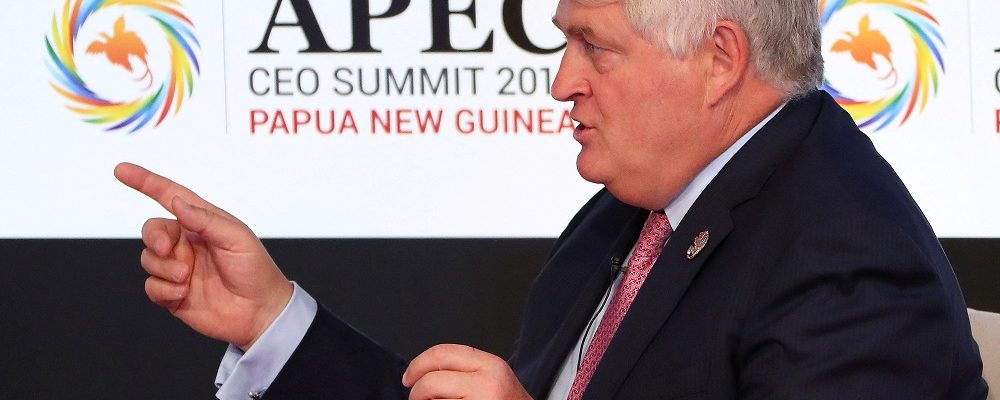
Denis O’Brien could lift his Digicel stake to 20% post reorganisation

/ Our Today
administrator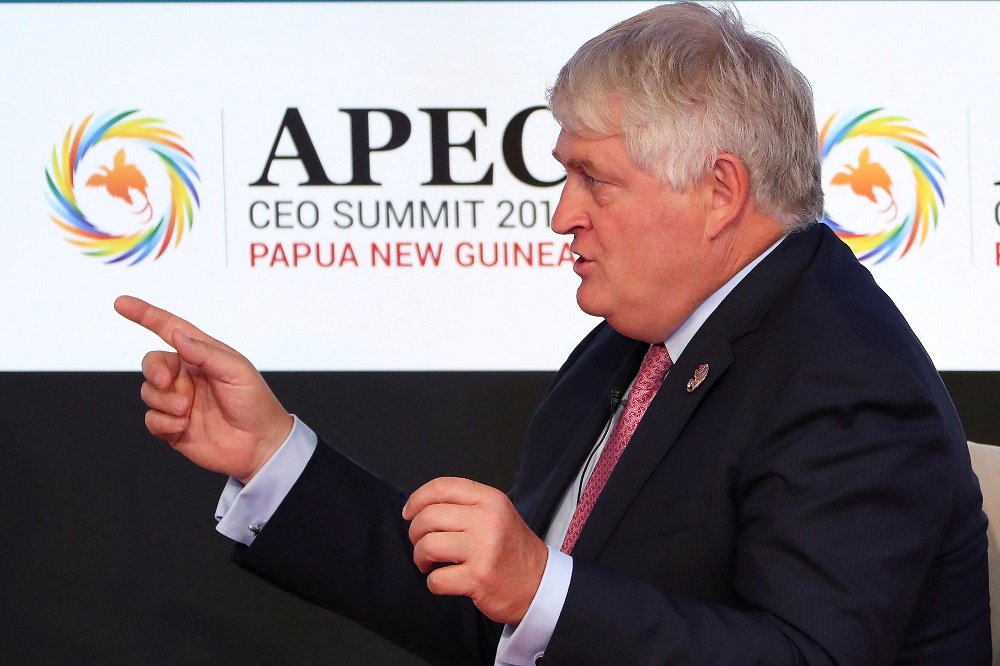
Durrant Pate/Contributor
Digicel founder, Denis O’Brien, could lift his stake in the Jamaica based regional telecoms giant that he formed from scratch in April 2001 from 10 per cent to 20 per cent post reorganisation.
Based on the current reorganisation trajectory in which bondholders are preparing to write down US$1.7 billion (€1.57 billion) of Digicel’s debt by the end of the year, O’Brien would be left with only a 10 per cent stake and a seat on the new board.
Under a debt restructuring in the works for months, the group of bond investors will retain 90 per cent equity in Digicel, whittling down O’Brien interest to a mere 10 per cent from the slow-moving debt train wreck that his telecoms group had become in recent years.
This restructuring follows from from Digicel receiving a US$1.6 billion debt forgiveness deal three years ago. Documents relating to the debt restructuring, filed by Digicel units last week with the Securities and Exchange Commission (SEC) indicates that O’Brien is being offered an unspecified “portion” of proceeds from Digicel’s US$1.85 billion deal last year to sell its Pacific operations.
Payments to be made to O’Brien
In addition, O’Brien will get warrants that will allow him to purchase within six years the equivalent of a further 10 per cent of shares outstanding when the restructuring is completed. This would bring his equity in Digicel up to 20 per cent but this stake could be diluted if the company make any equity raise in the near future.
However, the price at which the warrants can be converted into shares will be based off an equity value target of $1.1 billion for Digicel – a multiple of what it will be worth by the end of the current restructuring, based on the filings with the SEC. The Irish Times reported earlier this week that, “O’Brien has his work cut out for the warrants to be in the money before the company is inevitably put up for sale over the medium term by the creditors-turned-shareholders.”

The creditors soon to be majority owners want O’Brien to remain on the Digicel board as a non-executive director for at least three years and that a so-called services agreement will see him “to perform services for the companies in a manner consistent with his current role as executive chairman.”
The widely-held view among Digicel bondholders has been that he needs to remain with the business, given his operational insights and relationships with regulators and politicians in emerging and, often, frontier markets.






Comments