
Dennis Minott | The living tapestry: A manifesto for Jamaican cultural resilience

/ Our Today
administrator
As a Jamaican whose identity includes a complex weaving of Maroon resistance, Haitian tenacity, and East Indian ceremonial richness, I stand in hybrid vigour supporting the Jamaica Gleaner’s December 27 editorial, ‘Preserving Jamaica’s Living Culture’.
The alarm raised regarding the decline of Jonkonnu in Moore Town is more than of parochial concern; it is a summons to a national reckoning. To safeguard our living heritage is a moral imperative, essential for a society that intends to navigate the future without losing its collective soul.
The vitality of lived experience
Culture is frequently misunderstood as a static relic or a curated spectacle for the tourist’s gaze. In reality, it is the very breath of a people. When traditions like Jonkonnu—born from the crucible of African enslavement—begin to flicker, we lose more than choreography and costume. We lose the vital strands of historical consciousness that bind a community together.
My lineage—blending the industrious legacy of a hot, red-herring-eating Caucasian millwright at Hampden Estate ever sipping ‘jancro batty’ spirits, with my coney-loving Maroon forebears, savouring the gamey, earth-dusted flesh roasted in smoky bush pits, and my parched curry-addicted Indian ancestors, inhaling the turmeric-sharp steam rising from bubbling pots thick with ginger and bird pepper—reminds us that Jamaica’s inheritance is one of profound “human entanglement.”
This history demands not the celebration of any hierarchy, but honest absorption as a vital context. Immersing ourselves in these ancestral rhythms fosters an indispensable rootedness for human well-being, orienting us toward higher values: dignity, creativity, and profound respect for life’s continuity.
Beyond the footnote: Culture as scaffolding
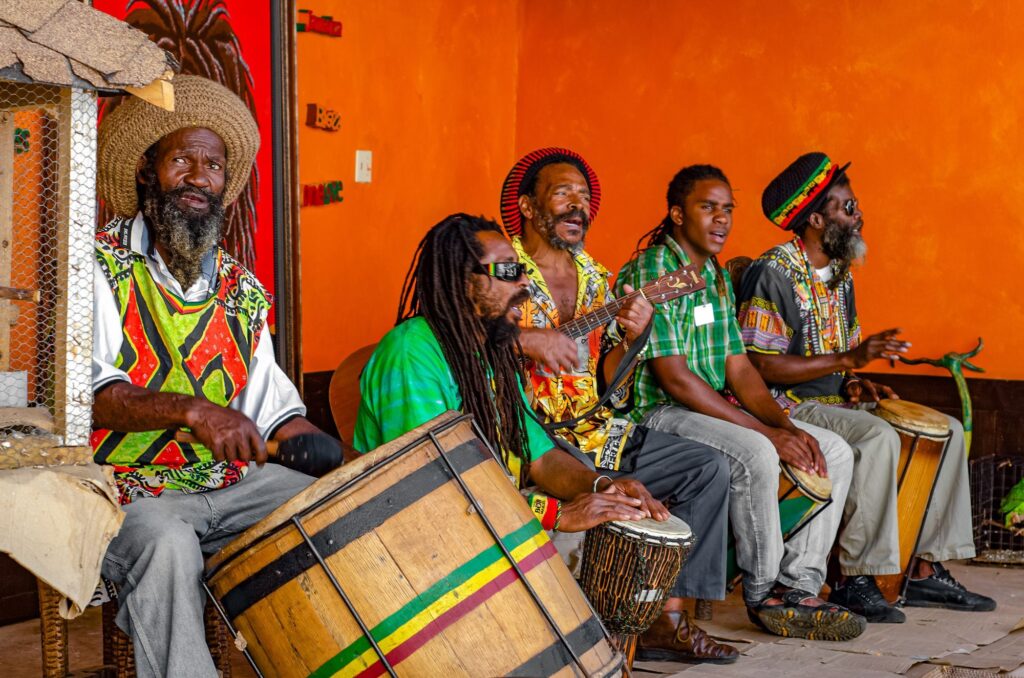
There is a critical distinction between culture as a “textbook entry” and culture as a living practice. When we relegate Kumina, Mento, Revival, or Jesus-is-Still-Saving-Souls water-baptism rituals to the status of abstract facts, we reduce our heritage to a series of footnotes. For the younger generation to internalise the values of their ancestors, they must experience the thrum of the stomach-shaking bass guitar and the heat of the praise-and-worship service. History that is not lived is easily dismissed.
Culture functions as the invisible root system of a great tree, drawing nourishment from deep strata of memory. It serves as the moral scaffolding upon which families and nations build resilience. The Gleaner rightly rejects a fossilised view of tradition, acknowledging that culture must evolve to survive. However, this evolution requires a constructive template for sustainability, involving sustained funding, corporate partnership, and, crucially, the integration of these forms into the national school curriculum.
A Symphony of Plurality
Jamaica’s cultural identity is a pluralistic symphony. To neglect the Maroon, the Indian, the Haitian, the European,
OR the Biblical contribution is to silence a necessary voice in our national choir. Our policy must shift from viewing culture as a voluntary afterthought to treating it as a cornerstone of educational and social development. Modern technology should not be permitted to eclipse these legacies but should instead be harnessed to amplify them. We must also move beyond platitudes regarding our cultural practitioners. Those who carry the fire of tradition in communities like Moore Town, Trench Town, or Waltham Park Road deserve more than praise; they require institutional and financial partnership. Culture cannot thrive on the fumes of volunteerism alone. A comprehensive ecosystem—linking education, tourism, and community development—is required to ensure that Jamaican identity remains an assertive self-possession rather than a commercial brand.
The Antidote to Dislocation

In an era characterised by fragmentation and social alienation, these cultural anchors offer a potent antidote. Traditional forms encode lessons of cooperation, humour, and endurance—qualities that strengthen the social fabric and foster psychological well-being. For those of us navigating multiple ancestral paths, culture is the singular space where divergent threads find harmonious expression.
To preserve Jamaica’s living culture is to nurture the psychological and moral roots of the nation. It is an act of defiance against indifference. We must act with boldness and creativity to ensure that our traditions are not merely archived in the halls of history but are vibrantly lived by every generation yet to come.





Comments