Dennis Minott | Why are “Honourable Excellencies” not so noble?

/ Our Today
administrator
There are moments in the life of a people—and of a world—when language itself begins to falter. Words we once trusted feel lighter than they should. Titles we once respected begin to echo without substance. April 2026 is such a moment.
As the “War of Whimsy, Lust, and Criminal Impulse” involving Israel and the United States against Iran unfolds, we are compelled—whether we welcome it or not—to examine not only the conduct of great powers, but the moral posture of smaller states. Including our own.
And it is here that the discomfort sharpens.
Across much of the Global South, the response has been measured, careful, calibrated. Statements are issued. Balance is invoked. Neutrality is implied. Yet beneath the diplomatic phrasing lies something more troubling: a studied reluctance to name what is plainly before us.
Let us not shy away from the word. There is, at times, something dastardly in this careful refusal to speak plainly when human consequences are neither abstract nor distant.
Not dastardly in the crude sense of the current overt aggression in West Asia, but in the quieter, more insidious form: the abandonment of moral clarity under the cover of Kamina’s composure.
This is not new. It is learned.
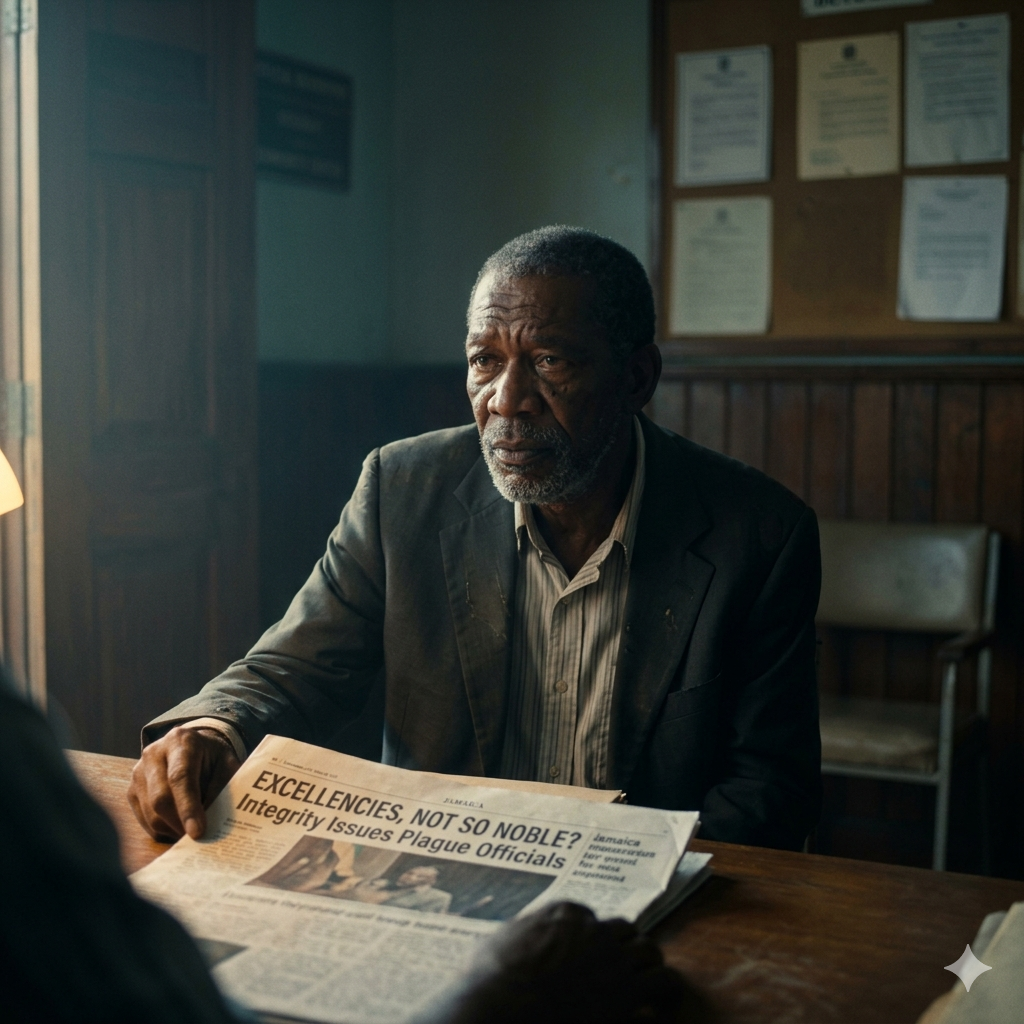
In Jamaica’s public life, the title “Honourable” is liberally bestowed. It precedes names, adorns speeches, and signals authority. Yet increasingly, it appears detached from the conduct it was meant to signify.
This detachment has a history—a method.
Consider the collapse of the West Indies Federation under Alexander Bustamante. A regional future was narrowed and reframed as a national assertion. What was lost was not merely a political arrangement, but a horizon. Lesson one: diminish the horizon, enlarge the rhetoric.
Observe the long hesitation over the Caribbean Court of Justice under Bruce Golding. Dependency was not defended; it was rebranded as prudence. Lesson two: When independence beckons, amplify uncertainty until retreat appears wise.
Examine the absorption of the Petrojam Scandal under Andrew Holness. The system did not rupture; it stabilised. Lesson three: outlast scandal—time erodes outrage faster than truth restores trust.
Turn to Haiti, and the cautious diplomacy of Andrew Holness, Kamina Johnson Smith, and Horace Chang—my Mr Cool and Deadly— the cunning operator friend of mine. The language of stability circulates, but solidarity struggles to find equal voice. Lesson four: speak principle, act within permission.
Recall the handling of Cuban medical professionals under Andrew Holness, Kamina Johnson Smith, and the unmoral Christopher Tufton. A decades-long act of solidarity is deftly and deviously reframed under external pressure. Lesson five: Gratitude yields to alignment.
And consider, quietly but persistently, the unease surrounding wealth within Cabinet ranks. Declarations are made. Compliance is asserted. Yet the public spirit remains unsettled. Lesson six: legality may satisfy the letter, but it rarely quiets the conscience.
Then there is the cruel, unwinding irony of a supposedly “nobler” Mark Golding, MP (PNP) and Leader of the Opposition, still tongue-tied on the vexatious matter of Dennis Gordon MP (PNP), amidst the latest puff from the UHWI-Health Ministry marshmallow of nastiness.

Neither gentleman yet carries the full ceremonial burden of “Most Honourable” or “Honourable.” Yet both are seated in Jamaica’s Honourable House—a chamber of traditionally untied tongues—now oddly IC-unbowelled: the stumps intact, the ball unbowled, and the first inning to test accountability quietly abandoned
Mark my word, someone ‘ain’t getting it’: These are not isolated episodes. They are rehearsals.
For on the global stage, we now see the same grim grammar—magnified. Powerful states invoke security and order while engaging in actions that strain those very principles. And smaller states—many of whom carry the lived memory of asymmetry—respond not with clarity, but with choreography.
Words are weighed. Offence is avoided. Alignment is preserved.
And so diplomacy, at times, begins to feel less like principle and more like what Jamaicans would quietly recognise as bad-mind diplomacy, taught by an unread finishing-school tutor of dance and fashionable grooming—not loud, not crude, but powdered, coiffed, careful, calculating, and curiously skimmed and cleansed from the human consequences it so elegantly speaks around.
We have seen this before.
From Federation to Petrojam, from Haiti to Cuban medical solidarity, there is a recurring sense that the old moral reflex—that instinctive recoil from what is plainly wrong—has been weakened. The cultural equivalent of the shame-tree, once so easily stirred through sensitivity, now stands still through our ubiquitous dung cya mindset.
The shame-tree is dead.
In its place: polish. Procedure. Perfectly balanced statements.
But no moral flinch.
This is where the distinction between honour and nobility becomes decisive.
Honour, in its degraded form, is performative. It is the balanced statement, the neutral tone, the safe distance. It is diplomacy as choreography.
Nobility, by contrast, is costly. It risks displeasure. It invites consequence. It speaks when silence would be more convenient.
And this is precisely where too many “Honourable Excellencies” falter.
For systems that reward alignment, courage will rarely be produced. They will produce spin, polish, discipline, and composure—but not necessarily truth.
Thus, the manual persists:
Redefine retreat as strategy.
Rebrand hesitation as wisdom.
Outlast scandal rather than confront it.
Substitute alignment for conviction.
Treat loyalty as expendable.
Rely on legality to eclipse morality.
And above all, maintain composure.
But composure is not courage. And tone is not truth.
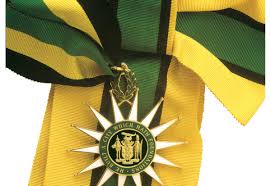
For this Cabinet, the tragedy is not merely that this pattern exists—it is that it is increasingly accepted. Citizens adjust. Expectations lower. The gap between title and trait widens.
Until “Honourable” is heard not as assurance, but as irony.
Jamaica does not lack memory. Nor does it lack moral intelligence. What it risks, in moments such as this, is something far more fragile:
the will to act on what it already knows.
And so, in this moment—shaped by war, sharpened by power, and illuminated by conscience—the question returns, unavoidable:
Are we content with leaders who are safely honourable—or do we still demand those who are unmistakably noble? For if we continue to accept the former without insisting on the latter, we will not merely witness the erosion of trust.
We will participate in it. And that, in the end, is not merely unfortunate. It is refined, respectable—and profoundly dastardly.
Brahta: A study published in The Lancet Global Health in 2025–no less– estimated that unilateral economic sanctions by the US and EU from 1971 to 2021 were associated with about 38 million excess deaths (not specified as deliberate murders), based on mortality data from 152 countries. The annual toll was around 564,000 deaths, comparable to armed conflict impacts, with stronger effects from US unilateral sanctions.—Sanctions come from Excellencies and Honourables.



Comments