
Digicel Foundation donates US$80,000 smart lab to Church Teachers’ College

/ Our Today
administrator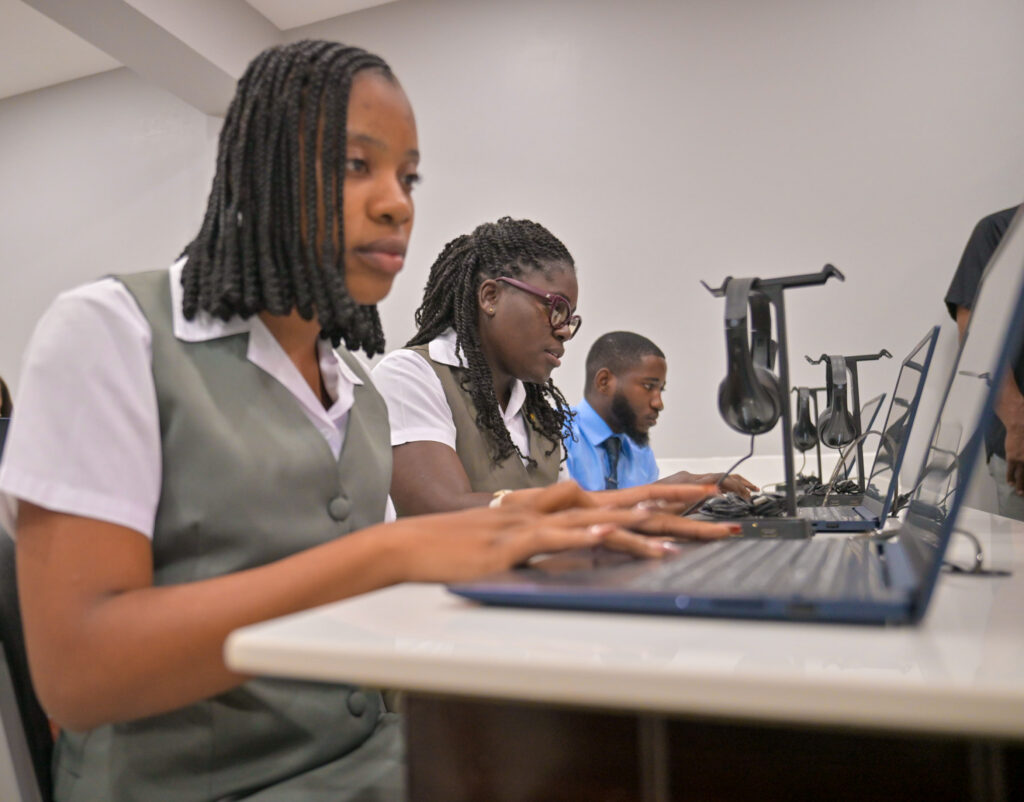
The Digicel Foundation has handed over a US$80,000 Smart Lab to Church Teachers’ College in Mandeville, Manchester, as part of efforts to strengthen teacher preparation and accelerate digital transformation in Jamaica’s education system.
The facility was officially opened during a ceremony at the institution on Tuesday, February 24.
Dr Tamika Benjamin, Assistant Chief Education Officer in the Tertiary Unit of the Ministry of Education, Skills, Youth, and Information, described the initiative as a strategic and visionary investment in Jamaica’s human capital.
“Today marks more than the unveiling of a physical space. It represents [a] strategic investment in Jamaica’s future…an investment in teacher education, an investment in our students and in the continued transformation of education in our rapidly evolving digital space,” she said.
Dr Benjamin emphasised that meaningful and sustainable school transformation must begin with teacher preparation.
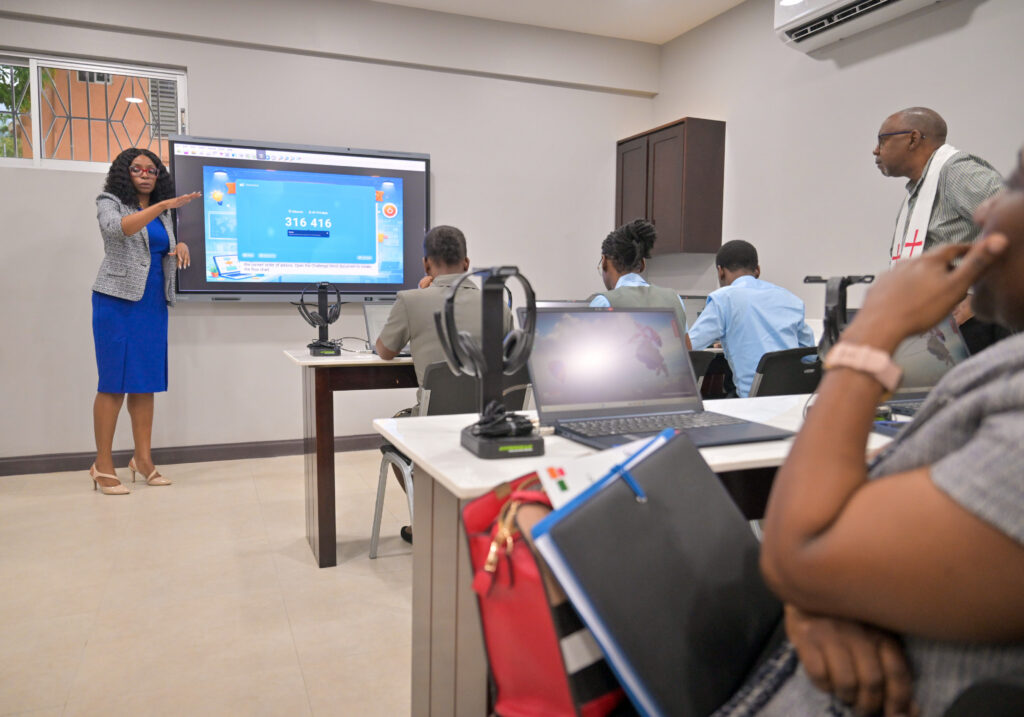
She noted that while the Digicel Foundation has established Smart Labs at primary and secondary institutions, its extension into teacher-training colleges demonstrates foresight. “Teachers remain the single most important school-based factor influencing student achievement…and the quality of our education system cannot exceed the quality of the teachers we prepare,” Dr Benjamin stated.
She underscored the national responsibility of teacher-training institutions to produce graduates who are not only strong in pedagogy and content knowledge but also digitally competent, innovative, and responsive to the needs of modern learners.
According to Dr Benjamin, the Smart Lab will provide teachers at the College with the opportunity to develop information and communications technology (ICT) competencies essential for designing engaging lessons, integrating digital tools to support differentiated instruction, and preparing students to thrive in an increasingly technological society.
She commended the Digicel Foundation for its continued partnership and leadership, describing the collaboration between the private sector and the education system as a powerful example of what is possible when organisations operate with shared purpose and vision.
Dr Benjamin also encouraged that the facility be fully integrated into teacher preparation programmes, not as an optional feature but as a central and essential component of the teacher-training experience.

Chief Executive Officer (CEO) of the Digicel Foundation, Charmaine Daniels, said the lab forms part of a broader national strategy to expand digital access and build technological confidence among educators.
She noted that the Foundation’s team has been travelling weekly to communities and schools, particularly in the aftermath of Hurricane Melissa, and consistently observed the resilience and commitment of teachers. “Despite the conditions of classrooms…and the damage to your own homes…you showed up for your students…and for Jamaica’s future,” Daniels said.
She underscored that digital literacy is now a core competency, adding, ‘In my day, literacy meant whether you could read and write…Today, literacy is whether you are digitally literate,’ while pointing out that many everyday services, including banking and communication, are now technology-driven.
Daniels disclosed that the Smart Lab at Church Teachers’ College brings the total number of such facilities established across Jamaica to 28, with the institution being the fourth teachers’ college to benefit.
The CEO highlighted that the Smart Lab is equipped not only with computers but also with integrated software, global lesson-plan resources, and interactive tools such as a Mimio smart board. She added that the facility includes two years of complimentary internet access.
She encouraged lecturers and student teachers to create and upload Jamaican and Caribbean-specific content to enrich the platform and foster a collaborative ecosystem.
For his part, Dr Garth Anderson, Principal of Church Teachers’ College, described the opening as a historic moment for the institution and a significant step forward in advancing educational innovation and digital transformation.
He noted that the lab will be embedded across teaching and learning activities rather than operating as a stand-alone resource, ensuring its sustained use and impact.
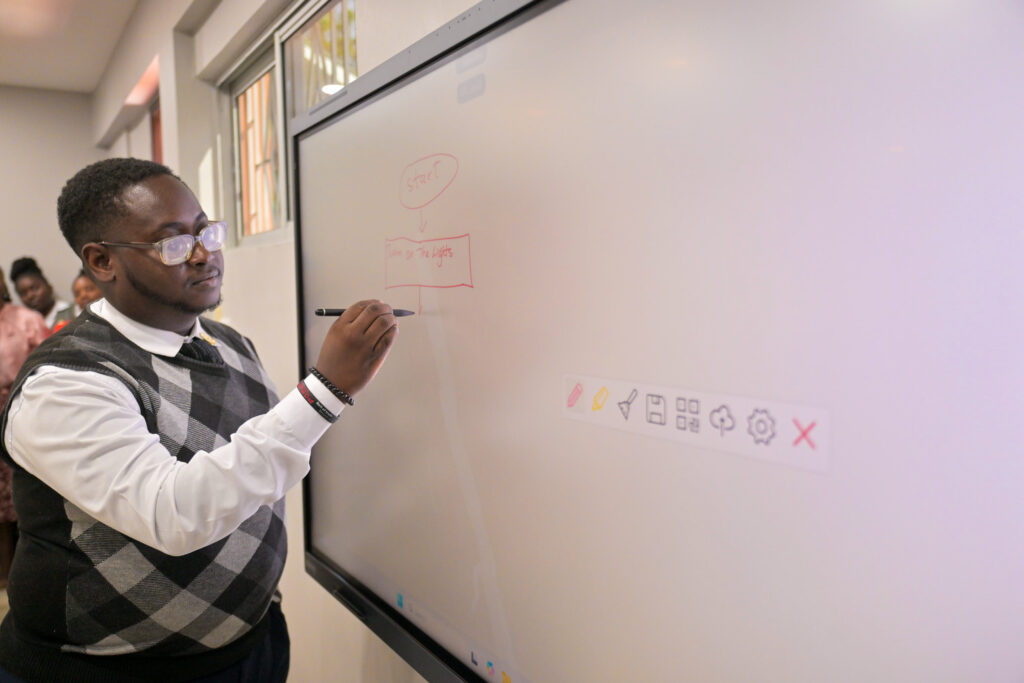
By providing hands-on access to digital tools and collaborative platforms, the facility strengthens the College’s capacity to train educators who are confident in integrating technology into modern classrooms and preparing graduates for an evolving education system.
“It is for the advancement and development of all of us who work and learn here, so that we can prepare for a more productive and wholesome society. We can’t run from this technology. We have to run into it and find better ways of engaging it,” Dr Anderson said.
He further underscored the broader benefit of the investment, noting that faculty members must strengthen their competencies to ensure students are equipped with 21st‑century skills.




Comments