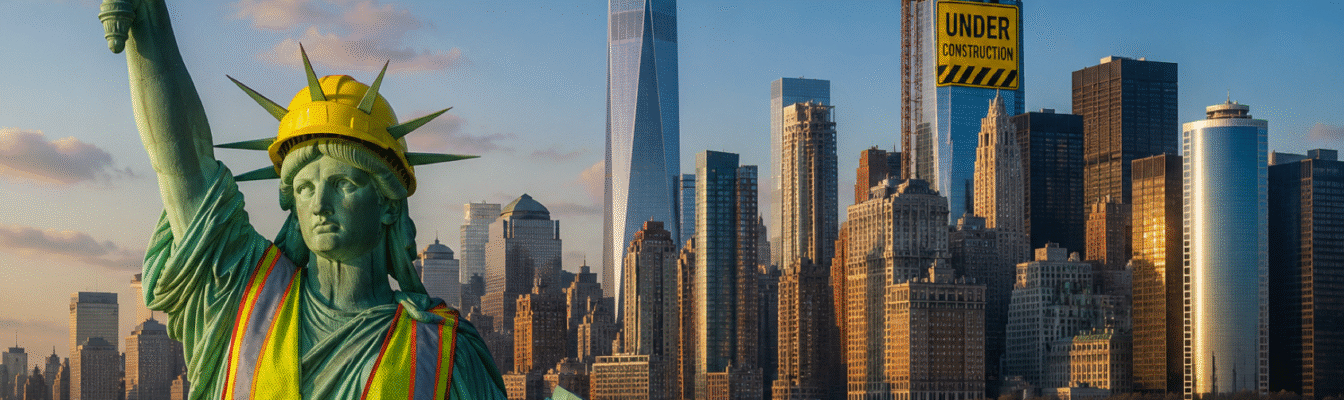
Douglas Levermore | The American Dream… Still Under Construction

/ Our Today
administrator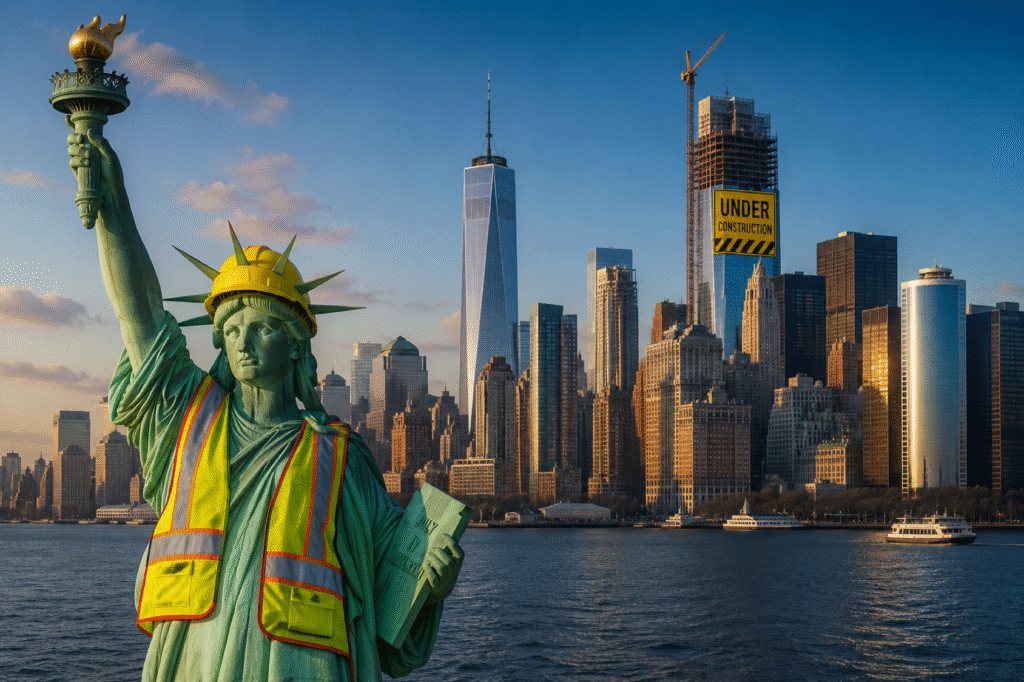
“Father, father… we don’t need to escalate
You see, war is not the answer/ for only love can conquer hate
You know we’ve got to find a way/ to bring some lovin’ here today
Picket lines and picket signs/ don’t punish me with brutality
Talk to me, so you can see/ oh, what’s going on…”
Excerpt from Marvin Gaye’s “What’s Going On”
Few songs have captured the soul of America quite like 1971’s “What’s Going On” by Marvin Gaye.
From the moment the haunting saxophone drifts across the opening bars, followed by the warm layering of voices that feels less like a performance than a neighbourhood conversation, listeners are invited into something very personal. There is no anger in the melody, no bitterness in the arrangement, and no condemnation in Gaye’s voice. Instead, there is love—a profound love for a country whose promise he believed was worth protecting, even as he questioned the direction in which it was travelling.
His timeless refrain, “Brother, brother, brother, there’s far too many of you dying,” was never simply about conflict or division. It was a plea for compassion over confrontation, understanding over suspicion, and unity over discord. More than five decades later, those questions continue to echo across the American landscape. As the United States celebrates its 250th birthday this Fourth of July, perhaps there could be no more fitting soundtrack for a nation still striving to reconcile its extraordinary achievements with its enduring challenges.
Two hundred and fifty years is a remarkable achievement for any nation, yet America remains relatively young by historical standards. Long before the Declaration of Independence was signed in Philadelphia, civilisations had risen and fallen across Africa, Asia, Europe, and the Middle East. Kingdoms had flourished, empires had expanded, and societies had already accumulated centuries of history. By comparison, the United States is still something of a newcomer.
More importantly, it remains an experiment unlike any the world had previously attempted—a nation built not upon a common ethnicity, language, or religion, but upon a shared commitment to a set of ideals: that all men are created equal, that they are endowed by their Creator with certain unalienable Rights, that among these are Life, Liberty and the pursuit of Happiness. That to secure these rights, Governments are instituted among Men, deriving their just powers from the consent of the governed.
The experiment has never been perfect. In truth, it has often been messy, contradictory, and deeply frustrating. Despite its imperfections, though, America continues to occupy a unique place in the global imagination. Millions still dream of studying in its universities, launching businesses within its borders, working for its companies, or simply calling it home. Countries are rarely admired because they are flawless. More often, it is because they represent possibility. America has long been an aspirational country, not because it has always lived up to its ideals, but because it has continually challenged itself to move closer to them.
If a management consultant, such as the author, were asked to evaluate America at 250, the exercise would probably resemble a SWOT analysis, examining the nation’s strengths, weaknesses, opportunities, and threats. Admittedly, it is an imperfect framework for assessing a country, but it offers a useful way to step back from the deluge of daily headlines and consider the larger picture.

America’s strengths remain extraordinary. Few countries have contributed more to scientific discovery, technological innovation, higher education, entrepreneurship, medicine, entertainment, and global finance. Its universities continue to attract many of the world’s brightest students. Its laboratories develop life-saving medicines and cutting-edge technologies. Its entrepreneurs routinely transform industries that scarcely existed a generation ago. Silicon Valley has become synonymous with innovation, while American companies continue to influence how billions of people communicate, shop, travel, and conduct business.
Its influence extends well beyond economics. American music, literature, sports, film, and popular culture have shaped generations across every continent. The U.S. military remains among the most capable in the world, while the dollar continues to serve as the principal reserve currency for global commerce. Even those who criticise America often do so using technologies, platforms, or institutions that originated there. Leadership carries responsibilities, but it also reflects decades of investment in ideas, talent, and institutions.
Perhaps America’s greatest strength, however, has never been its wealth or military power. It has been its ability to reinvent itself. Throughout its history, the nation has endured civil war, economic collapse, world wars, social upheaval, terrorist attacks, financial crises, and, recently, a global pandemic. Time and again, observers predicted irreversible decline. Time and again, America found a way to adapt. Reinvention has become one of its defining characteristics.
But for all the criticism directed at the United States—and much of it is deserved—one question continues to linger. If America is truly in irreversible decline as its vocal critics protest, why do U.S. embassies and consulates around the world continue to process millions of visa applications each year from people hoping to study, work, invest, visit, or build a new life there? Why does the American passport remain one of the world’s most respected and valuable travel documents? The answer is not that America is perfect. It is that, despite its flaws and frustrations, millions of people still believe it offers something increasingly rare: opportunity.
The numbers tell an interesting story. In a typical year, the United States admits tens of millions of temporary visitors and grants hundreds of thousands of lawful permanent resident visas, making it one of the world’s leading destinations for migrants and international travellers. At the same time, the U.S. Department of Homeland Security has consistently reported hundreds of thousands of suspected visa overstays annually, with approximately 575,000 recorded in fiscal year 2019 alone. Moreover, numerous immigration studies have found that, since about 2007, more people have joined the undocumented population by overstaying valid visas than by crossing the border illegally.
Honest reflection, however, requires equal attention to weaknesses, and no discussion of America’s journey can ignore the issue that has haunted it from the very beginning. The country declared that all people are created equal while simultaneously permitting slavery to flourish. That contradiction did not disappear with emancipation. Instead, it evolved through segregation, discriminatory laws, unequal educational opportunities, disparities in housing and wealth accumulation, and persistent differences in health, employment, and criminal justice outcomes. Every generation has inherited that unfinished conversation, and every generation has wrestled with how best to move the country closer to its founding ideals.
To be fair, America has made remarkable progress. The election of Black and Brown public officials at every level of government – including the President, the dismantling of legal segregation, expanded educational and professional opportunities, and the growth of a vibrant minority middle class would have seemed unimaginable to many only a few generations ago. Yet progress has rarely followed a straight line. At times, it can feel as though the country takes two steps forward only to find itself taking one—or even several—steps back.
Hard-fought gains are continually tested, and debates over voting access, electoral maps, affirmative action, diversity, equity and inclusion and broader civil rights protections remind Americans that history is never entirely settled. Recent court decisions narrowing aspects of the protections provided under the Voting Rights Act have reinforced the view among many scholars and civil rights advocates that the struggle to ensure equal access to the ballot remains unfinished, even six decades after the landmark legislation was enacted.
The evidence suggests that these challenges remain very real. Surveys conducted by the Pew Research Centre continue to find substantial differences in how Americans of different racial backgrounds view fairness, discrimination, and equal opportunity. Likewise, the Federal Reserve’s Survey of Consumer Finances consistently documents significant racial disparities in household wealth, illustrating how historical inequalities continue to influence present-day economic outcomes. These findings should neither diminish America’s achievements nor excuse its shortcomings. Rather, they remind us that progress and unfinished business can coexist within the same nation.
There are other weaknesses that deserve equal attention. Public trust in institutions has declined noticeably over the past two decades. Political disagreement has increasingly evolved into visceral personal hostility, making compromise more difficult and public discourse less civil. The annual Edelman Trust Barometer has repeatedly documented declining confidence in governments, media, and other institutions across many democracies, while research from the American National Election Studies has shown that political polarisation has deepened to the point where many citizens increasingly distrust not merely opposing ideas but the people who hold them. Democracies depend upon disagreement, but they also depend upon trust. Without a shared commitment to the rules of the game, even the strongest institutions begin to weaken.
One need not mention names to recognise that the tone of public life has changed. There is a sense that relationships are increasingly defined by ideology rather than common purpose, and that national conversations have become contests to be won instead of problems to be solved. Damage to civic culture does not occur overnight, and neither is it repaired overnight. Restoring confidence in institutions, rebuilding trust between communities, and rediscovering a measure of national unity will likely require years of patient leadership and a willingness to place country above faction.
Yet if history has taught us anything, it is that America has repeatedly transformed periods of crisis into opportunities for renewal. The nation remains uniquely positioned to lead the world in artificial intelligence, biotechnology, advanced manufacturing, clean energy, medical research, and space exploration. It continues to attract ambitious students, scientists, entrepreneurs, and innovators from virtually every corner of the globe. That ability to attract talent may prove to be one of America’s greatest competitive advantages over the next fifty years. Brilliant ideas know no nationality, and America has long excelled at providing fertile ground where those ideas can flourish.
Perhaps its greatest opportunity, however, lies in something less tangible. Diversity has often been portrayed as America’s greatest challenge, but it may ultimately become its greatest strength. Few nations possess such a remarkable combination of cultures, experiences, traditions, and perspectives living under a single constitutional framework. Managed wisely, diversity becomes a source of innovation rather than division. Different life experiences produce different ideas, and different ideas often produce better solutions.
The greatest threats facing America may therefore come not from abroad but from within. Great powers throughout history have survived military rivals and economic competitors. They have often struggled far more with internal division, declining civic trust, and the gradual erosion of shared purpose. Nations rarely collapse because they encounter disagreement. They weaken when disagreement becomes contempt, when compromise becomes betrayal, and when citizens lose faith in one another as fellow Americans before they see each other as political opponents.
Looming over all of these challenges is climate change, whose increasingly frequent hurricanes, floods, droughts, wildfires, and extreme heat are no longer distant environmental concerns but growing economic, public health, and national security risks.
None of this should diminish the significance of America’s achievements over the past 250 years. Few countries have contributed more to expanding scientific knowledge, advancing democratic governance, defending global security, or creating opportunities for millions of people seeking better lives. At the same time, genuine patriotism does not require pretending that problems do not exist. On the contrary, the healthiest families, businesses, and nations are those willing to examine themselves honestly while remaining confident enough to improve.
Perhaps the American Dream was never intended to describe a destination: it has always been a direction. Dreams, after all, are not self-executing. They require work, sacrifice, compromise, resilience, and an unwavering belief that tomorrow can be better than today. Every generation inherits that responsibility. No generation gets to borrow the sacrifices of its predecessors indefinitely without making sacrifices of its own.
As fireworks light the skies this Independence Day, Americans will celebrate a nation that has accomplished extraordinary things while continuing to wrestle with extraordinary challenges. That tension should not be viewed as failure. It is the natural consequence of an ongoing experiment in self-government that remains unfinished after two and a half centuries.
The question of America at 250 is therefore not whether America is perfect. No nation is. The more meaningful question is whether America still possesses the courage to confront uncomfortable truths without abandoning hope, to acknowledge its mistakes without surrendering its ideals, and to continue striving toward that more perfect union envisioned nearly two and a half centuries ago. If it does, then perhaps the American Dream is not disappearing at all. It is simply waiting for another generation willing to build it.
Douglas Levermore, MBA, JP, is an independent management consultant and the founding Executive Director of Jamaica’s Public Investment Management Secretariat (PIMSEC)—the government unit established to strengthen project appraisal, fiscal discipline, and oversight of public investment, now known as the Public Investment Appraisal Branch (PIAB) within the Ministry of Finance and the Public Service. He also serves as a FINRA arbitrator and a commissioned Notary Public in the Commonwealth of Virginia. With experience advising governments, international development partners, public bodies, and private-sector organisations on governance, public investment management, organisational performance, and strategic reform, Douglas brings a practical, results-oriented perspective to his writing on social issues, leadership, management lessons, and organisational strategy. He is available for select international consulting, advisory, keynote speaking, and project-based engagements and may be contacted at [email protected].



Comments