Douglas Levermore | The True Economic Cost of Domestic Violence

/ Our Today
administrator
It seems that scarcely a week passes without another horrifying story of domestic violence spilling into public view.
A woman killed by a jealous partner. A mother murdered in front of her children. Another grieving family. Another candlelight vigil. Another round of public outrage followed by the familiar question: “How did it come to this?”
What is perhaps even more troubling is how familiar these cases have become. Repetition has created a dangerous numbness. Reports of domestic violence now compete for attention alongside politics, sports, entertainment, and everyday life. Yet beneath every headline lies something far more devastating than a news story. There are traumatised children, shattered families, emotional scars that may never fully heal, and economic consequences that continue long after the cameras disappear.
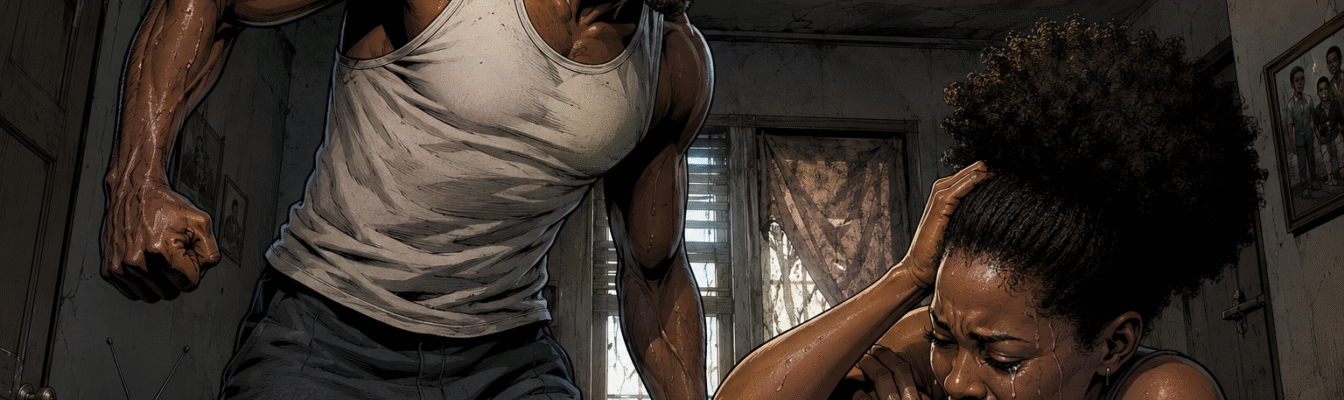
Domestic violence is usually discussed as a criminal justice issue, a family issue, or a women’s rights issue. It is all of those things. Yet it is also an economic issue of enormous magnitude. Every assault, every emergency room visit, every missed day of work, every court proceeding, and every traumatised child carries a financial cost that eventually appears somewhere in the national accounts. Domestic violence may begin behind closed doors, but the bill is ultimately paid by the entire country.

Few cases captured Jamaica’s attention like the disappearance and presumed murder of social media influencer Donna-Lee Donaldson. What began as a missing persons investigation evolved into one of the most widely followed criminal cases in recent Jamaican history. Her body was never recovered. The case exposed uncomfortable realities about emotional control, abuse, and violence that can exist beneath the surface of seemingly ordinary relationships. The conviction of her boyfriend, former police constable Noel Maitland, in 2026 brought legal closure, but it also forced the country to confront broader questions about warning signs, intervention, and violence against women.
The Donaldson case serves as a reminder that domestic violence is not confined to any particular social class, profession, or community. Behind every headline is a family left to rebuild, children forced to carry trauma, and a society absorbing costs that extend far beyond the criminal justice system.
Jamaica has strengthened legislation, expanded Protection Orders, increased police intervention powers, established specialised units to address gender-based violence, and supported shelters, counselling services, and public awareness campaigns. Yet despite these efforts, the headlines continue.
But is domestic violence becoming more common, or are Jamaicans simply more willing to report what previous generations kept hidden behind closed doors? The two things may be true. Increased awareness has brought greater visibility to abuse, but the persistence and brutality of many cases suggest that deeper cultural and psychological issues remain unresolved.
One of the most troubling aspects of domestic violence is how rarely it occurs entirely unseen. Friends often know. Neighbours hear the arguments. Co-workers notice bruises, fear, emotional distress, or increasingly controlling behaviour. Family members worry privately while hoping not to become involved. Too often, communities become reluctant spectators to escalating dysfunction until tragedy forces public attention. Afterward, the same phrase is repeated with heartbreaking regularity: “We knew something was wrong.”

From a national development perspective, domestic violence is not only a social issue. Jamaica has begun to quantify its economic consequences. A study supported by UN Women estimated that violence against women and girls costs the country approximately JMD $102 billion annually, representing roughly 6.5 per cent of Gross Domestic Product.
That figure should stop every policymaker in their tracks. To place it in perspective, JMD $102 billion exceeds the annual budgets of several government ministries. No country would calmly tolerate the loss of such resources through corruption, theft, or infrastructure failure. Yet domestic violence quietly extracts this cost year after year while leaving emotional devastation that no spreadsheet can fully quantify.
The economic damage extends far beyond hospital bills and police investigations. Businesses absorb losses through absenteeism, reduced productivity, staff turnover, workplace disruptions, and increased healthcare-related costs. Schools inherit children carrying trauma that affects concentration, behaviour, and long-term academic performance. Courts, shelters, social workers, and healthcare systems become strained by cases that often began as unresolved conflicts behind closed doors.
Survivors frequently experience long-term psychological consequences that reduce earning potential, workforce participation, and economic independence for years. In this sense, domestic violence functions almost like a hidden tax on society, quietly reducing productivity, weakening human capital, and slowing development.
International organisations, including the World Bank and the United Nations, have similarly warned that countries can lose between one and 3.7 per cent of GDP annually because of gender-based violence. Jamaica’s aforementioned estimated 6.5 per cent highlights the seriousness of the challenge. The implication is clear. A nation cannot fully prosper when fear, instability, and trauma are silently draining the emotional and economic capacity of its people before they ever arrive at school or work.
The statistics are sobering: One in four Jamaican women has experienced physical violence by an intimate partner. Emotional abuse remains one of the most prevalent forms of intimate partner violence. Nearly two-thirds of women who recently experienced abuse never formally reported it. During the COVID-19 pandemic, many women reported that incidents became both more frequent and more severe.
The workplace consequences alone deserve greater attention. Economists often discuss productivity as though it is determined solely by education, technology, or investment. Yet an employee who spent the previous night fearing for her safety, caring for traumatised children, or recovering from abuse arrives at work carrying burdens that no productivity model can easily measure. Concentration declines. Absenteeism increases. Opportunities for advancement disappear. Businesses absorb the costs while often failing to recognise the underlying cause.
Children are frequently invisible casualties. A child raised in a violent household may struggle academically, emotionally, and socially long before adulthood arrives. Some internalise fear and withdraw. Others normalise aggression and repeat behaviours they have witnessed. Unless intervention occurs, the cycle can perpetuate itself across generations. Domestic violence therefore does not simply damage the present. It mortgages the future.
Many societies continue to treat domestic violence as though it were disconnected from economics, governance, and national planning. Governments routinely debate productivity, healthcare costs, labour shortages, and economic growth while overlooking the reality that violence inside homes undermines every one of those objectives simultaneously. Fear is economically inefficient. Trauma weakens human capital. Instability reduces productivity. Violence erodes trust and resilience in ways that no budget speech can easily repair.
The irony is that prevention is often far less expensive than the long-term cost of inaction. Investments in counselling services, shelters, mental health support, school-based education programmes, community outreach, and stronger protection systems may appear costly initially, but they pale beside the billions already being lost annually through violence-related social and economic damage. Nations invest heavily in roads, seaports, airports, and digital networks because they understand that economic growth depends upon functioning infrastructure. Families are also infrastructure. When families become unsafe, unstable, and violent, society eventually fractures around them.
Domestic violence rarely erupts out of thin air. In many cases, the tragedy is simply the final explosion after a long period of ignored warning signs, normalised dysfunction, and institutional hesitation. Questions emerge repeatedly after these tragedies. Did friends notice emotional distress? Did relatives observe controlling behaviour? Did neighbours hear the arguments? Were warning signs dismissed as private relationship matters until it was too late?
A friend once shared an observation with this writer that has grown more profound with time: one of the most important lessons a person can learn is knowing when to walk away and refuse to become emotionally triggered. Many people never develop the emotional discipline required to disengage before anger, jealousy, humiliation, insecurity, or obsession escalate into irreversible consequences. Too often, relationships become emotional pressure cookers where arguments are treated as battles to be won rather than conflicts to be resolved. Control becomes confused with love. Possession becomes confused with commitment. Retaliation becomes confused with strength.
It is also important to acknowledge that domestic violence is not exclusively male-driven, even though women remain disproportionately the victims of the most severe and fatal forms of abuse. Men can also be victims of emotional, psychological, verbal, and physical abuse. However, the data consistently shows that men commit the overwhelming majority of severe physical assaults, sexual violence, and intimate partner homicides. The broader lesson is therefore not simply about assigning blame, but about recognising the dangerous consequences of unresolved trauma, emotional volatility, possessiveness, and an inability to manage conflict constructively.
The names Donna-Lee Donaldson, Melissa Silvera, Khanice Jackson, Tiffany Edwards, Monique McLean, Tashana Brown, Shanice Clarke, and many others now linger in Jamaica’s national memory because their stories have become part of a pattern that the country can no longer dismiss as isolated incidents. Different communities, different backgrounds, different circumstances, yet remarkably similar endings marked by jealousy, control, intimidation, and escalating violence.
If Jamaica is serious about reducing domestic violence, the response must be equally serious and occur on three fronts.
First, we must strengthen prevention through education and emotional development. Conflict resolution, emotional intelligence, healthy relationship skills, and anger management should not be treated as optional life lessons. They are essential skills that can help individuals recognise unhealthy behaviour, manage emotions constructively, and resolve disputes before they escalate into violence.
Second, we must create a culture of intervention rather than silence. Friends, relatives, neighbours, co-workers, churches, schools, and community organisations all have a role to play. While not every disagreement signals danger, repeated patterns of intimidation, isolation, threats, controlling behaviour, or escalating violence should never be dismissed as merely “people business.” Communities must become more willing to support victims and encourage early intervention before a crisis becomes a tragedy.
Third, we must continue investing in support systems that protect victims and break the cycle of abuse. Accessible counselling, shelters, mental health services, crisis hotlines, school-based programmes, and effective law enforcement responses are not social luxuries. They are investments in public safety, human capital, and national development. Every dollar spent preventing violence today saves many more dollars that would otherwise be spent responding to its consequences tomorrow.
Jamaica cannot arrest its way out of this problem, legislate its way out of this problem, or campaign its way out of this problem alone. Domestic violence is ultimately a crisis of culture, emotional regulation, accountability, and human dignity. Until we confront it honestly, another family will grieve, another child will carry trauma into adulthood, another workplace will absorb hidden costs, and another name will join a list that has already become far too long.
Domestic violence is not merely a private matter; it is a national development issue. It creates casualties long before anyone dies. It destroys trust, erodes confidence, traumatises children, weakens families, drains productivity, burdens public institutions, and leaves scars that can persist for generations. By the time a name appears in a headline, society has often been paying the cost for years.
One of the most devastating costs of domestic violence is that it rarely remains confined to a single generation. The traumatised child of today often becomes the vulnerable adult of tomorrow, carrying emotional scars, learned behaviours, and unresolved pain that can quietly perpetuate the very cycle of dysfunction they once endured. What begins as violence within a single household can ultimately echo across decades, shaping families, communities, and future generations in ways that are both profound and heartbreaking.
The tragedy is not that we do not know the warning signs; it is that too often we see them and choose to look away.
Douglas Levermore, MBA, JP, is an independent management consultant and the founding Executive Director of Jamaica’s Public Investment Management Secretariat (PIMSEC)—the government unit established to strengthen project appraisal, fiscal discipline, and oversight of public investment, now known as the Public Investment Appraisal Branch (PIAB) within the Ministry of Finance and the Public Service. He also serves as a FINRA arbitrator and a commissioned Notary Public in the Commonwealth of Virginia. Douglas writes on social issues, leadership, management lessons, and organizational strategy, drawing on extensive real-world experience across both the public and private sectors.






Comments