
FID to engage realtors to dispose of J$2.6b in forfeited properties

Vanassa McKenzie / Our Today

The Financial Investigations Division (FID) is to engage professional realtors, in keeping with government procurement rules, to market and sell forfeited properties valued at billions of dollars.
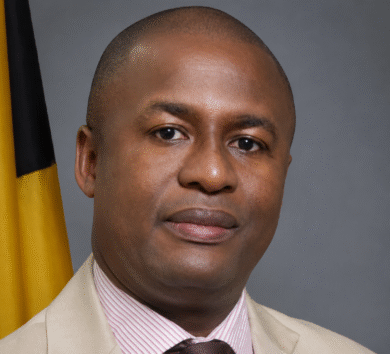
Finance Minister Dr Nigel Clarke made the disclosure during the opening of the Budget Debate in the House of Representatives last week.
“Currently, the Department manages a portfolio of 118 real properties with a combined market value of J$2.6 billion. Sixty-seven properties with an estimated market value of J$2 billion have been forfeited by the courts.
Of the 67 [forfeited properties], 26 with an estimated market value of J$685 million are the subject of foreign forfeited orders, and the proceeds of any sale will be subject to the asset-sharing agreement. The remaining 41 properties, valued at J$1.2 billion, were forfeited pursuant to the domestic Proceeds of Crime Act,” he said.
He informed that during the period 2012 to 2024 ,only three properties valued at J$108 million have been sold.
“The policy intent is to accelerate the pace at which these resources can be put into the public’s coffers to use, in the benefit of the Jamaican people,” he said.
The finance minister pointed out that significant operational expenditure is incurred by the FID in the management of its portfolio of properties, noting that its Asset Recovery Branch expended J$150 million on maintaining the properties over the last 12 years.
Clarke said that in addition to the forfeited properties, the FID is also managing the proceeds of more than 800 cash seizure cases, pursuant to the Proceeds of Crime Act. The aggregate value of the cash seizure cases is approximately J$1 billion.
“There are over 800 cases before the courts that are related to this billion dollars, but we are only disposing of 25 to 30 cases per year and the number of new cases continues to grow exponentially. This [pace] puts a burden on the Courts, the State, the FID and the defendants from whom the cash was seized, The FID is working across government to look for ways to solve this problem, and when we have solutions we’ll come back, but we want you to at least be aware of the problem,”
DR NIGEL CLARKE
The FID is the department of the Government that probes financial crimes located in the Ministry of Finance and the Public Service.
It is mandated to implement Jamaica’s anti-money laundering and countering the financing of terrorism regime (AML/CFT), utilising a raft of legislation, including the Proceeds of Crime Act (POCA), the Financial Investigations Division Act (FIDA), United Nations Security Council Resolution Implementation Act (UNSCRIA) and the Terrorism Prevention Act (TPA).
The FID is also designated as Jamaica’s Asset Recovery Agency (ARA).
As the asset recovery agency, the FID is responsible for the management and disposal of restrained and forfeited assets. These assets are derived from investigations utilising either civil or criminal provisions pursuant to POCA.
The department also exercises responsibilities under the Sharing of Forfeiture Property Act in managing properties restrained and forfeited in keeping with a foreign forfeiture order registered in Jamaica, pursuant to the Mutual Assistance (Criminal Matters) Act.
Upon the completion of the disposal of the foreign forfeited properties, the net proceeds are shared between Jamaica and the foreign country, in a 50:50 ratio, after the FID recoups the expenditure associated with the investigation and management of these properties.





Comments