
Government launches Shelter Recovery Programme following Hurricane Melissa

Toriann Ellis / Our Today
author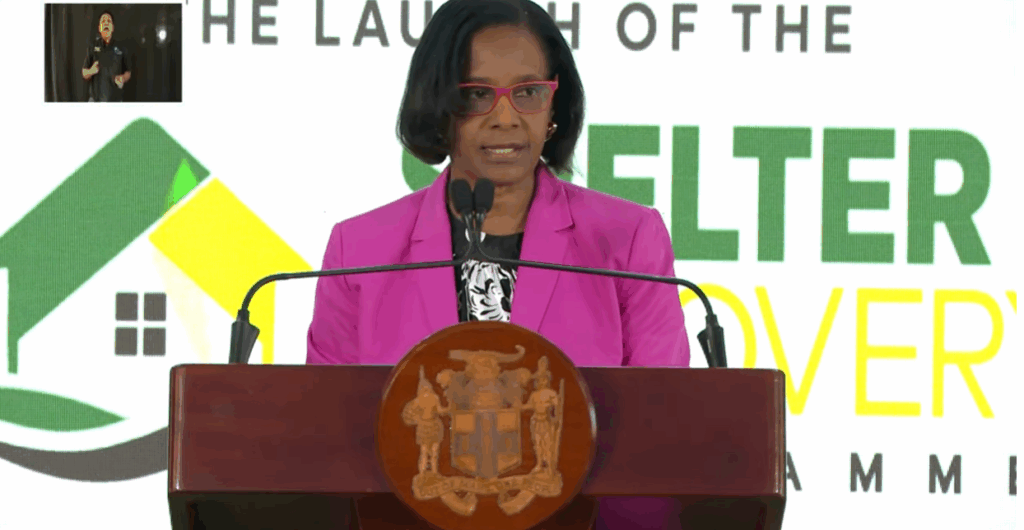
The Government of Jamaica officially launched the Shelter Recovery Programme (SRP) on Thursday, a key initiative aimed at supporting households affected by Hurricane Melissa as the country transitions from emergency relief to long-term recovery.
Permanent Secretary in the Ministry of Labour and Social Security (MLSS), Dionne Jennings, said the programme represents a major milestone in the government’s post-hurricane response.
“We welcome you to the official launch of the Shelter Recovery Programme, a critical initiative in the government’s efforts to rebuild and recover from the devastating impact of Hurricane Melissa,” Jennings said.
She explained that while the immediate emergency phase focused on rapid relief, the launch of SRP is to foster sustainable housing recovery.
“Today’s launch signals our transition to a more structured and sustained approach to shelter restoration and housing recovery,” she noted.
Jennings said the programme was carefully designed to ensure targeted assistance, strong coordination, and accountability.
“The Shelter Recovery Programme has been carefully designed to provide targeted assistance to affected households, supported by clear implementation arrangements, strong inter-agency coordination, and robust accountability mechanisms,” she said.
She added that the initiative reflects the government’s commitment to transparency and support for the most vulnerable.
Jennings also acknowledged the support of international partners and the Jamaican diaspora.
Highlighting the programme’s broader social impact, Jennings emphasised its focus on dignity, resilience, and empowerment.
“This programme embodies our shared commitment to leaving no one behind, ensuring that vulnerable households are supported and empowered so they can rebuild their lives with dignity,” she said.
She noted that SRP integrates adaptive social protection measures. “This programme seeks to strengthen our resilience to shocks by integrating cash transfers, livelihood support, and shelter solutions that empower families and communities to recover and thrive,” Jennings explained.
A key component of the programme, she said, is financial inclusion through digital payment systems, “leveraging digital payment solutions and access to financial services so grant recipients can receive and manage funds efficiently.”
She welcomed private-sector partners who will assist in delivering these payment solutions by ensuring that payment solutions reach those who have been affected.
Jennings also acknowledged the contribution of government ministries, departments, and international partners, including representatives from Canada, The Bahamas, the International Federation of the Red Cross, the International Organisation for Migration (IOM), the World Food Programme, Food for the Poor, ADRA, and the Jamaica Red Cross.
“Your collaboration and contributions are vital to the success of the programme and reflect a shared responsibility and unified approach to rebuilding safer homes, restoring dignity, and strengthening resilience at the community level,” she said.
In closing, Jennings reaffirmed the government’s commitment to fairness and accountability in delivering assistance.
“As we embark on this journey of recovery, we reaffirm our commitment to transparency, accountability, and equity in the distribution of support,” she said. “Together, we can make a meaningful and lasting difference in the lives of our people as we rebuild stronger, safer, and more resilient communities.”



Comments