
VG Group shines light on Jamaica in latest construction push

/ Our Today
administrator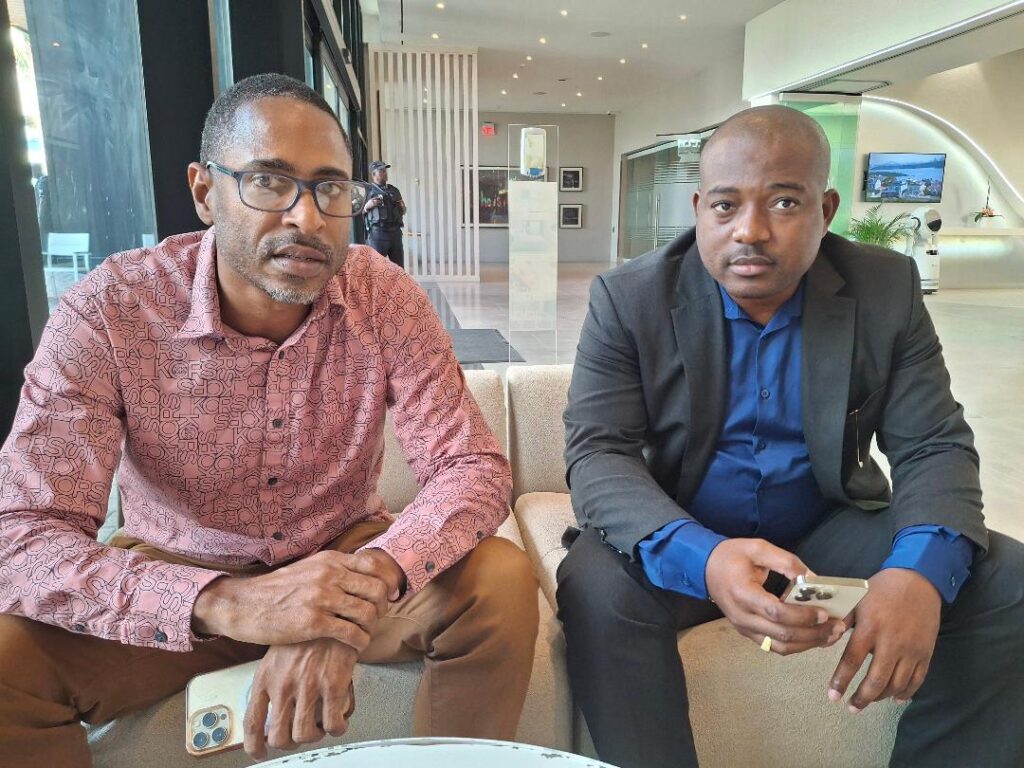
After successful stints in the construction, project management, and landscaping businesses in Caribbean islands, Trinidad & Tobago, Guyana, and, latterly Bermuda, the Jamaican space will see the physical emergence of VG Group, pushing to solidify its already laid foundation.
Spearheaded by two ‘born-ya’ business operators, the Group, though registered to operate in Jamaica for over two years, and actually getting involved in a few low-key activities, has decided to spread its wings in laying its building blocks for the future.
Executive Chairman of VG Group, Lambert Nevins, a St Ann-born entrepreneur, who admitted to have tried his hands at things too many to count; and Hugh Buchanan, a physical education specialist who tasted success in the St Elizabeth South Western seat in the House of Representatives from 2011 to 2016 – one that his late father – Donald – held for decades before – are the two principals in the business. Buchanan being Executive Director and CEO for the Jamaican operations.
Both were well-grounded in Jamaica’s traditional secondary school system – 40-year-old Nevins at Aabuthnott Gallimore High School in St Ann, and Buchanan, 44, at popular Kingston College, so they felt compelled to be part of the struggle for self-sufficiency from early in the game of life.
VG Group has been around since 2012, but the time has come to tell Jamaica what the company has in store for the most populous of the English-speaking Caribbean islands.
“Jamaica is fairly new,” Nevins told Our Today in an interview. “But we have residential projects that we had started. Right now, we have two that we just started – one on the north coast and the other in St Catherine, which are private developments.

“We are largely into high-end and medium-end structures, although we have plans for low-income developments, but we would have to approach it from a volume point of view. There are different methodologies that we can use to establish low-income homes, but if you approach it, especially in this market where they still have an issue with pulling in the technical people, attempting to go after one or two low-income homes would spread you very thin and its non-profitable. That’s the reality.
“If it is a case wherein the Government partners with the private sector to build out these homes, that it something that we would pay attention to, like a collaboration with National Housing Trust for example. Low-income housing is a medium to long-term goal of ours. Giving back to the community is part of our social responsibility. It’s not always going to be about profit, but giving some ease to our citizens,” Nevins said.
Shared building arrangements too, is something that the group would be willing to do in the Jamaica market, as long as it fits into its business model.
“Although we have had an office in Jamaica for the last two years, we did not want to spread ourselves all over the country, to the point that we are not paying attention to structures,” said Nevins.
He continuesd “We have already learned, materially, how important it is to develop a structured construction company. So just calling out to say we have a yard here to do, or one up there to renovate, and having 15-20 guys at different sites all over the country, is not the way. It’s not difficult to get that, but it will not be meaningful to our own operations. We have spent the last year or so, focusing mainly on our model, trying to understand what is there in the market, who our competitors are, how we are going to target that market segment, building out our different structures, our safety policies, what are some of the challenges for our workers, how are we going to go out there and attract the skilled workers, what are some of the challenges with tradesmen, how to prevent those tradesmen from bringing our company’s name into disrepute. So, we looked at all those risks and started to focus on developing the system to protect us from those risks. We were not aggressively in the field but we were very much aggressive as it relates to policies, procedures and trying to make sure we have something strong,”

“We are marketing strongly right now,” Buchanan added. “In Guyana, VG Group Guyana Inc, had the training done for its ISO (International Organisation for Standardisation) certification, and the company followed all the guidelines, however, the audit has not yet been completed. We know what is necessary to get the company to that level, which is why we didn’t rush off in Jamaica to do a lot of things. If you check around now to see what construction companies are ISO certified, I am not sure you will find that many.
“Also, we were pushing Bermuda as a market we were getting into simultaneously with Jamaica over the last two years as well, so we were juggling both of them. We are the two partners, so it’s not like we have a big team out there. We want to make sure that we do it the right way and not just depend on others getting some of these things done,” Buchanan said.
So, for now, most of VG Group’s clients are middle and high-end customers, and it is doing a lot of work for Governments in countries in which the company has operations, though volume may outdistance revenue in some cases.
In an atmosphere where construction systems sometimes differ from regulated ones, the duo strongly believes that sticking to the regular block and steel system, instead of prefabricated structures, is the best way to go.
Nevins is not your everyday proponent of prefab units, although confessing that there were pros and cons involved.
“I am not the strongest believer in metal prefab homes,” he said. “Most times for Caribbean people, when we consider a home, we start to consider a lifetime investment and inheritance. With these metal homes I am not convinced that they are ready to be passed on to generations, as they are not sturdy enough to last as many years” (as the block and steel technology would be) .
Buchanan agreed: “Block and steel is the natural appetite of the Jamaican market. It’s more our culture – a tradition – and it’s something that we don’t want to lose. It’s not very different than what we eat. It’s like a car – some people would rather go for the Japanese and German vehicles now, than go with the Chinese vehicles that are not yet tested and proven”.
“Not every single technology that is put out there is something that we have to run behind,” Nevins interjected. Precast is a very solid one. The problem with that is again going to be volume. If I am going to approach that precast method, or the form system that factories in China produce a lot of, there is not going to be savings on one single house. If I have 50 houses with the exact same footprint, then you start to save and save you tremendously, but not as single units.”
The contentious subject of whether or not Jamaica’s building code is being followed to the last full stop, came up during the interview. Hurricane Melissa’s destruction of structures, mainly in sections of Jamaica’s southern, western and northwestern regions, ignited debates as to whether or not people were getting value for money on the one hand, and paying strict attention to the island’s building code on the other.
Nevins was quick on the draw in respect of the subject: “When you look at how some of those buildings were ripped apart during Melissa, there might be a need to question the structural integrity as it relates to even the method of insulation. Jamaica has a fairly good building code. The question is whether or not the developers are building according to the code,” was his response.
The businessmen also suggested that there ought to be deeper integration by companies within the Caribbean region to participate in projects that have the Caribbean flavour, instead of the Asian one, which has become popular in the Caribbean community, due to its cheaper rates, but not necessarily offering long term guarantees.
They fully agree that companies in the Caribbean are capable of developing the region, based on a collective approach, that will benefit people of the area, as they understand the culture.
“One of the areas that I don’t think has been capitalised adequately upon is our construction industry. A lot of governments within the region are calling upon companies all the way from Asia to carry out large infrastructural projects, even at the supervisory level. If Caricom is able to share those resources and try to understand the market better, then I believe that some of those projects that are being carried out by others, can be carried out by our Caricom partners. But we can’t compete, because we don’t even know how to go into the other islands,” argued Nevins, who has spent years living in Trinidad & Tobago, and a shorter time in Guyana until he got home sick and began to chart a course for a return to his homeland.
“One of the key areas that I will be pushing in Jamaica is project management. A lot of projects don’t have project engineers or project managers. But that too is difficult to send professionals across the islands,” said Nevins. Procurement is a big area for us too, as it ties back with properly managed construction projects,” he added.
“We have launched a sister company strictly for procurement, not only to serve our company, but any contractor. So, if somebody is building a hotel and they want to share the entire building plan with us, we can help them to develop a master schedule for that particular project, also a procurement schedule, when you are going to need what, and more. It’s not that we are competing with those companies, we are basically complementing them,” he said.
Though relatively young men, the journey for Nevins and Buchanan has been long, coming from a collaboration in agricultural production, when Nevins decided to use up his agricultural skills earned at Ebony Park HEART Academy in Clarendon, in general agriculture, horticulture and landscaping with Buchanan’s practical background in the ‘bread basket’ parish of St Elizabeth.
The downturn in agricultural production in 2008 set them back, as production costs were not balancing with returns. The focus switched to landscaping, and for Nevins in particular, his eyes led him south of Jamaica, while Buchanan concentrated on politics, though maintaining close ties with his business partner.
“What was present for me in the landscaping market was a little more employment. I was never a good employee, in the sense that you put me in a space to function as an employee, and there was always a case of my mind going a bit further beyond that space,” Nevins stated.
“So just hiring me as a landscaper or a gardener was a waste. I decided to start my own landscaping business while doing a little contracted work here and there. At the same time, I was attracted to the Trinidad market as far more of that was going on there ,and the pay was better.
“Jamaica was employing landscapers; it was difficult to start a landscaping business, and the hotels were absorbing all the landscapers. Trinidad on the other hand, you found that a lot of small and medium landscaping entrepreneurs were blossoming there, so I took on that market, and then I expanded that landscaping market into swimming pool construction, backyard makeovers, and I kept expanding until when we had a downturn in 2015 when we could hardly pay our bills, then we started to expand into construction, having been able to gather more experience between smaller construction, renovation, patios and gazebos, and backyard makeovers.
“I then decided to take on engineers and invest in the general construction aspect of the business. That’s when we branched out from Trinidad to Guyana. So now, where we are today, construction has become the primary business, with outdoor backyard, living spaces, and landscaping, becoming like complementary arms to our business.“Now, if a customer builds a high-end home with us, we offer a post care service, where for a six-month or 12-month period, we take care of the landscaping,” he said.
In Buchanan’s case, the future looks bright for the 14-year-old organisation, as the focus is not only on expanding its project base, but ensuring that the company’s staff continue to serve in an environment of comfort and assurance. Already, the company has what it believes is an attractive profit-sharing system, in which employees, after they have been approved, benefit with shares of three per cent, following an aggressive evaluation of applicants, and an overall 18 per cent of gross profit is disbursed among employees, senior executives, and shareholders, annually.



Comments