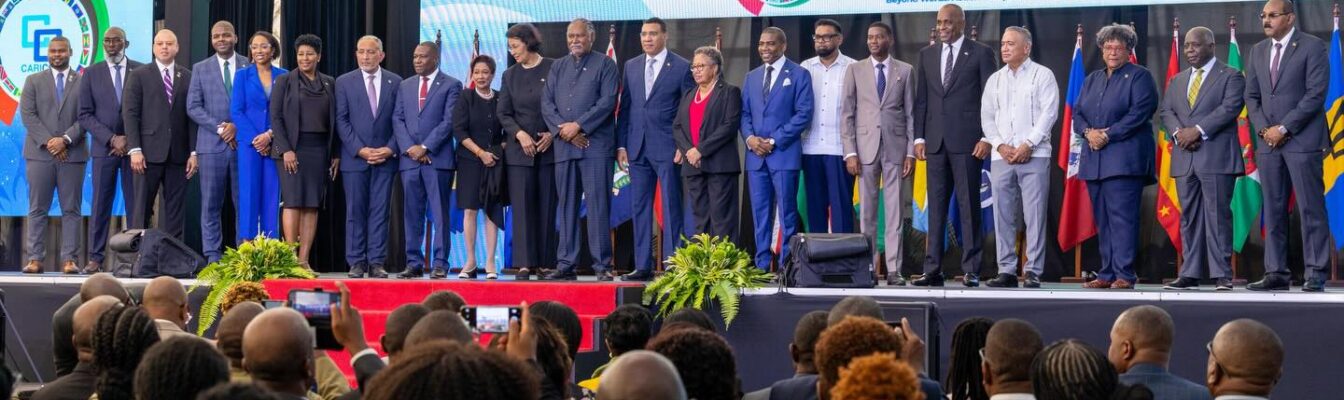
Holness calls for strategic recalibration at CARICOM’s 50th Heads of Government Meeting

Toriann Ellis / Our Today
author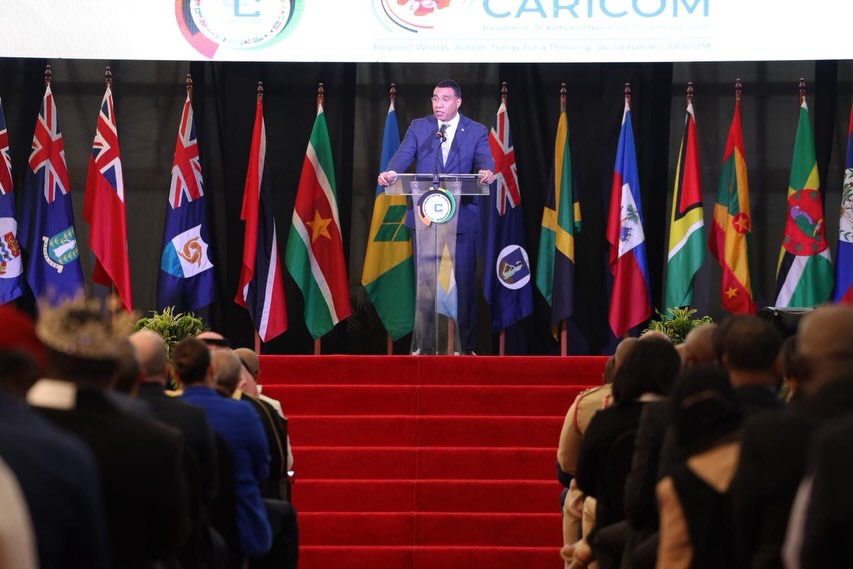
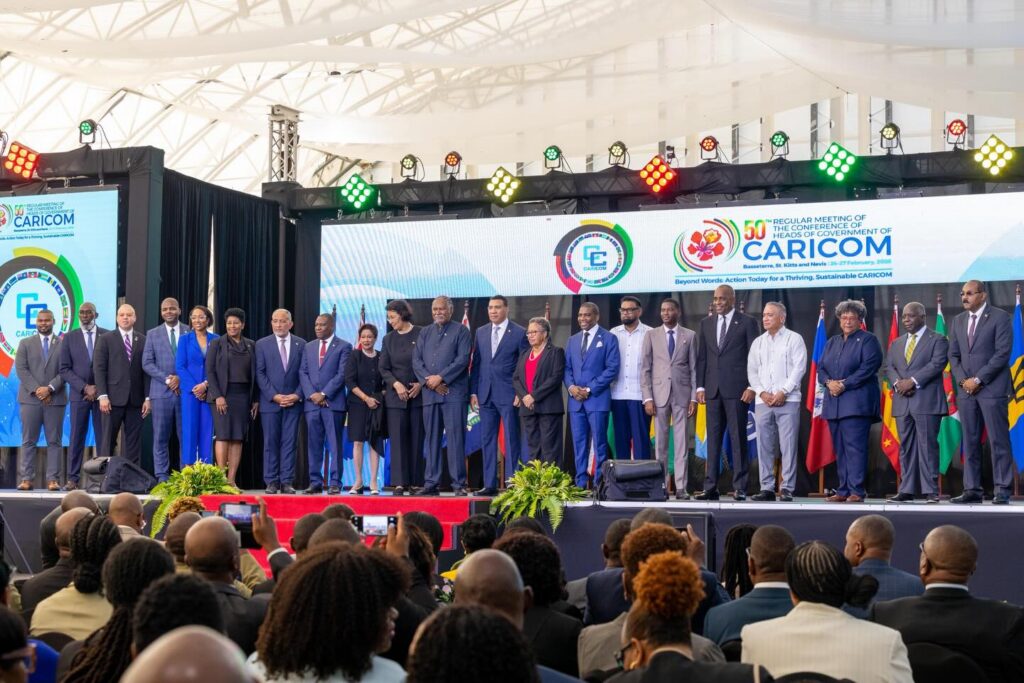
At the 50th Regular Conference of Heads of Government of the Caribbean Community (CARICOM), Prime Minister Andrew Holness urged regional leaders to seize what he described as a pivotal moment in global affairs, marked by geopolitical shifts and rapid technological transformation.
Addressing fellow heads of government, Holness said the international environment “is shifting, maybe it has already shifted,” framing the period as one of opportunity for transition, recalibration and renewal across the Caribbean.
He argued that CARICOM must position itself not as an ideological bloc, but as “a community of democratic states” focused on cooperation, economic reform and social development.
“This is not a moment for division in our community,” Holness said. “It is a moment for maturity, for principled realism, and if we act wisely, for positive change in our hemisphere.”
Small States in a Changing Global Order
Holness pointed to mounting strategic rivalry among global powers, supply chain realignments, growing trade protectionism and the disruptive expansion of artificial intelligence as defining features of the new global system.
He warned that control over information platforms, standards, algorithms and digital networks now shapes economic power, national security and policy autonomy as significantly as control over physical resources once did.
For small island developing states, he said, the risks of marginalisation are real. However, he emphasised that opportunities also exist for “leapfrogging” stages of development — provided governments act deliberately.
“Digital capability is now a component of sovereignty,” Holness told delegates. States that fail to influence how technology is deployed, he cautioned, may find their policy space increasingly shaped by external actors.
Leveraging CARICOM’s Diversity
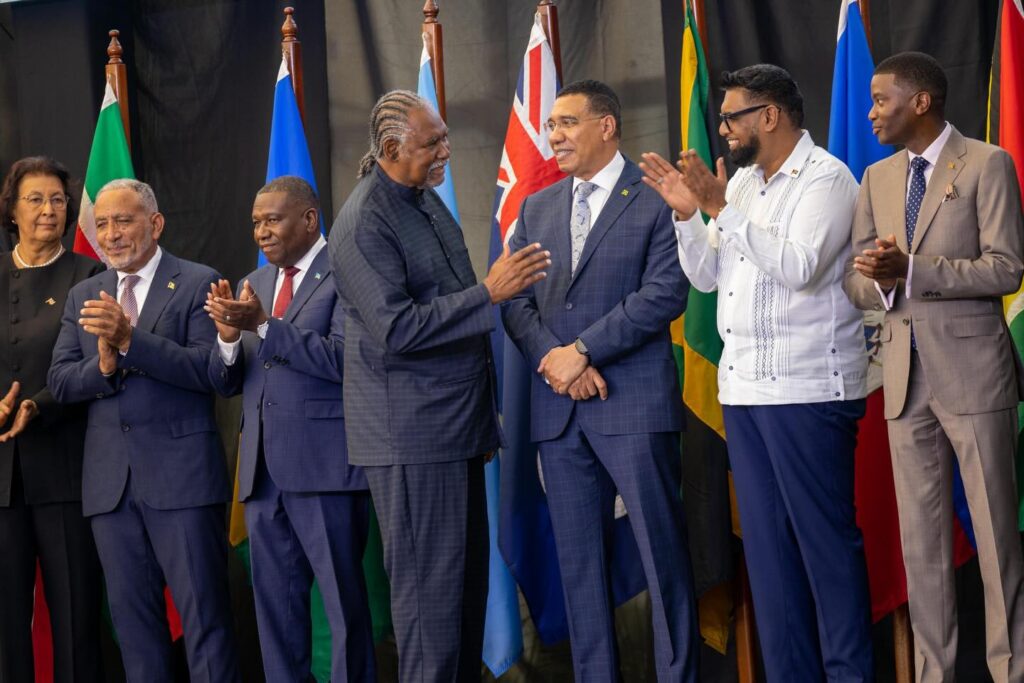
Holness described CARICOM’s diversity as a strategic strength. Because member states are not bound to a single foreign policy orientation, they can cultivate different diplomatic, commercial and strategic partnerships.
Rather than seeing this as fragmentation, he said, the region should recognise it as an advantage — creating multiple points of engagement in a complex global system and collectively enhancing resilience and influence.
“No single Caribbean state can build scale across these domains alone,” Holness noted. “But together we can pool talent, align standards, and develop digital public infrastructure to enhance productivity, inclusion and resilience.”
He stressed that achieving this vision will require deeper engagement, greater information sharing and what he termed “true enhanced cooperation” among member states.
Strengthening the Single Market
Holness reaffirmed Jamaica’s commitment to a transparent and rules-based multilateral trading system that addresses the vulnerabilities of small island developing states while enabling them to compete in a technology-driven global economy.
He highlighted the Caribbean Single Market and Economy (CSME) as one of the region’s most important tools for translating regional cooperation into tangible economic opportunity.
Describing the CSME as a practical and flexible framework, Holness said it allows countries to pool advantages, reduce trade barriers and create a larger economic space in which firms, workers and innovators can compete. Its structure, he added, permits integration where interests converge while allowing individual states to sequence reforms at their own pace.
“Our task is to make the single market work better,” he said, calling for improved connectivity, aligned standards, easier movement of skills and compatible digital and logistics infrastructure.
Holness concluded that a more functional CSME will be critical to building resilience, raising productivity and ensuring Caribbean enterprises can thrive in an increasingly competitive global economy.



Comments