
Handling the death of a joint tenant, legally speaking…
Shari-Lee Crooks / Our Today

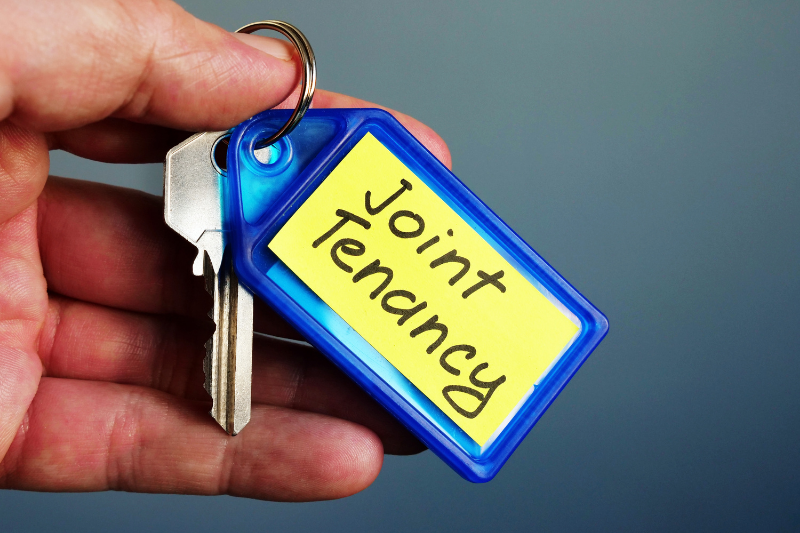
Joint tenancy is a common way for multiple people to hold land. In this version of tenancy, no single person owns a specific share, like a 50/50 split between spouses.
In this tenancy, all the tenants together own the whole. In this situation, no one tenant can sell or will their share, as there is no dividing the property under this tenancy.
What is unique to this situation is what is called survivorship.
In this case, the remaining tenants own the property in the same way, even if one of the tenants dies. In the case of the death, the remaining tenants submit a document which is called a ‘Note of the death of a Joint Tenant’, which they fill out and give to the National Land Agency (NLA), pay the requisite processing fees and stamp duties and the NLA will make a notation on the title.
This notation will allow the remaining tenants to carry out business using the property, without it being prevented due to the non-involvement of the other listed joint tenant. In the case that only one joint tenant is left, this last surviving tenant, now becomes the sole owner, and may sell, lease or will the land as if they had purchased or been gifted it on their own.
The aforementioned form would of course need to be accompanied by a proof of death for the joint tenant to be noted, as well as signed by all the ones who remain alive. The NLA will insert a line that notes that one person has died. There is no mention of the others in this notation, as this note of death, leaves the remaining tenants intact and there is no need to specify that in the notation.
In the case of all tenants dying at once, the assumption is that the notations are made in age order and therefore the youngest of the tenants will be assumed to be the last survivor and the property would then be subject to that person’s will or estate.
This of course is a much easier process than if there was a tenancy-in-common, as the share of the property would have to go through the process of will probation or estate administration, in order to change hands, but in this case, one form to the NLA, is all that is needed in the event of the death.






Comments