
Jamaica Association for the Deaf expands recycled paper products with EU funding

/ Our Today
administrator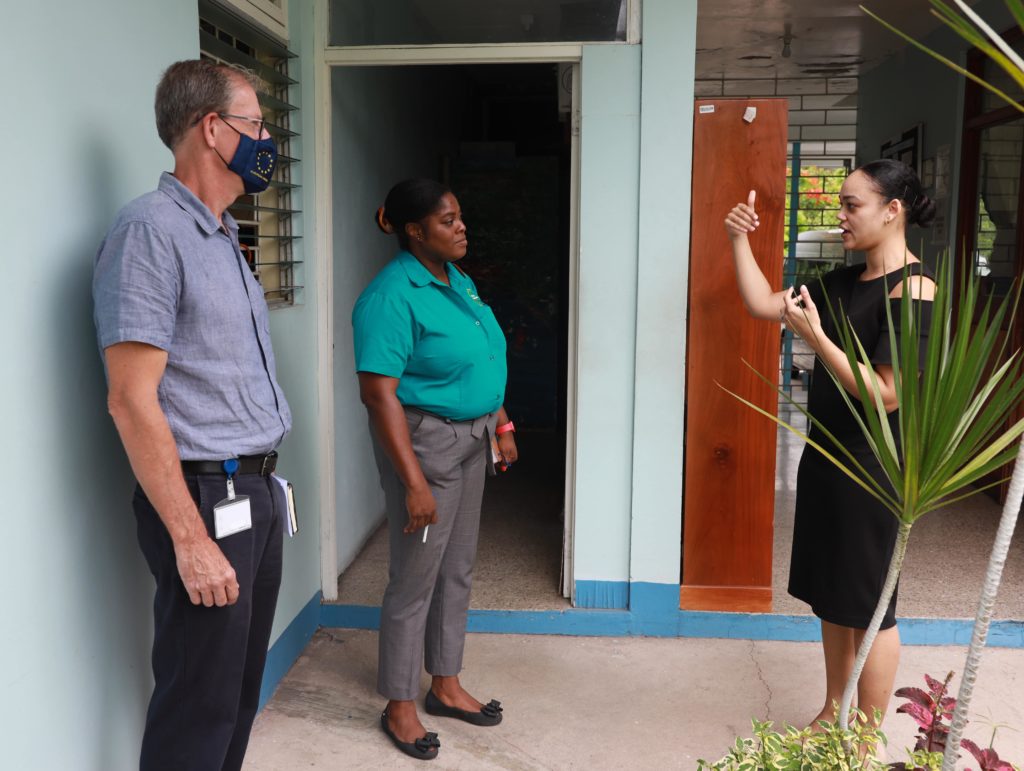
When an individual is deaf or hard-of-hearing, they usually lose more than their sense of hearing. Persons within the deaf community often find that they lose social mobility and face social isolation because of their disability. This extends to having fewer educational and job opportunities due to impaired communication. Knowing this, the Jamaica Association for the Deaf (JAD) provides support to increase the quality of life for the deaf and hard-of-hearing community.
Through its subsidiary, JAD Binders, the organisation took its efforts to a next level with the implementation of a recycle venture titled The Deaf Craft – Paper Trash to Environmental Treasure Project, which upskills members and promotes environmental sustainability.
This was achieved through a grant funded by the European Union under its ‘Addressing Environmental and Climate Change Challenges through Improved Forest Management in Jamaica (IFMJ)’ programme.

The project was implemented through the Government of Jamaica’s Forestry Department and forms part of the EU’s mandate to create sustainable livelihoods for communities across the island. Under the project, the staff at JAD Binders were trained in papermaking and the necessary equipment were purchased to facilitate the production of recycled paper.
JAD Executive Director Kimberley Sherlock Marriott-Blake says the introduction of the project was a perfect opportunity to empower members of their deaf community.
“JAD Binders creates several books, souvenirs, and memorabilia for individuals. We decided that across our seven schools we would collect our waste paper and turn it into a value-added product. We restore books, so the creation of paper is adding to what we already do. It made perfect sense for us, being that the bindery comprised both hearing and deaf persons. It was an excellent opportunity to upskill our deaf individuals and provide an opportunity for them to explore new and unique reusable methods of binding,” she stated.
“One challenge we had was keeping our participants motivated. Art can sometimes seem intimidating because it requires a level of creativity and patience, so initially some trainees lacked confidence.”
JAD Executive Director Kimberley Sherlock Marriott-Blake
She notes that the project’s success was not without its challenges.
“One challenge we had was keeping our participants motivated. Art can sometimes seem intimidating because it requires a level of creativity and patience, so initially some trainees lacked confidence. Others felt overwhelmed and frustrated when things didn’t go according to plan but with the support of our senior binders and bindery manager, we were able to overcome those challenges and create unique products,” she shared.
Onindia McNamee, a hearing impaired person who works as a binder at JAD Binders, notes he is grateful for the opportunity to learn a skill although it was not originally in his plans.
“To be honest, I wanted to be maybe a computer technician, but here I am. I joined in 2017 as part of my work experience while I attended the Lister Mair/Gilby High School for the Deaf. I was taught [binding] skills and although I wasn’t feeling sure about it initially, I have now improved a lot. Not perfect, but improving. I like that I get to make books, boxes, and [recycle] paper,” he signed.
BUSINESS LOOKING TO EXPAND PRODUCT LINE
Marriott-Blake says the business is now looking to expand their product line.
“Our bindery team is small, so our reach in the market is smaller than we would like but people are excited about our recycled products. We are now looking to see what new markets we can penetrate and possible approaches we can take to promote these items. In fact, we have been engaging with current and previous clients of the bindery and will soon announce our new products with the wider society,” she revealed.
Meanwhile, André Fache, programme officer for the EU delegation to Jamaica, Belize, The Bahamas, Turks and Caicos and Cayman Islands commends the group for their efforts.
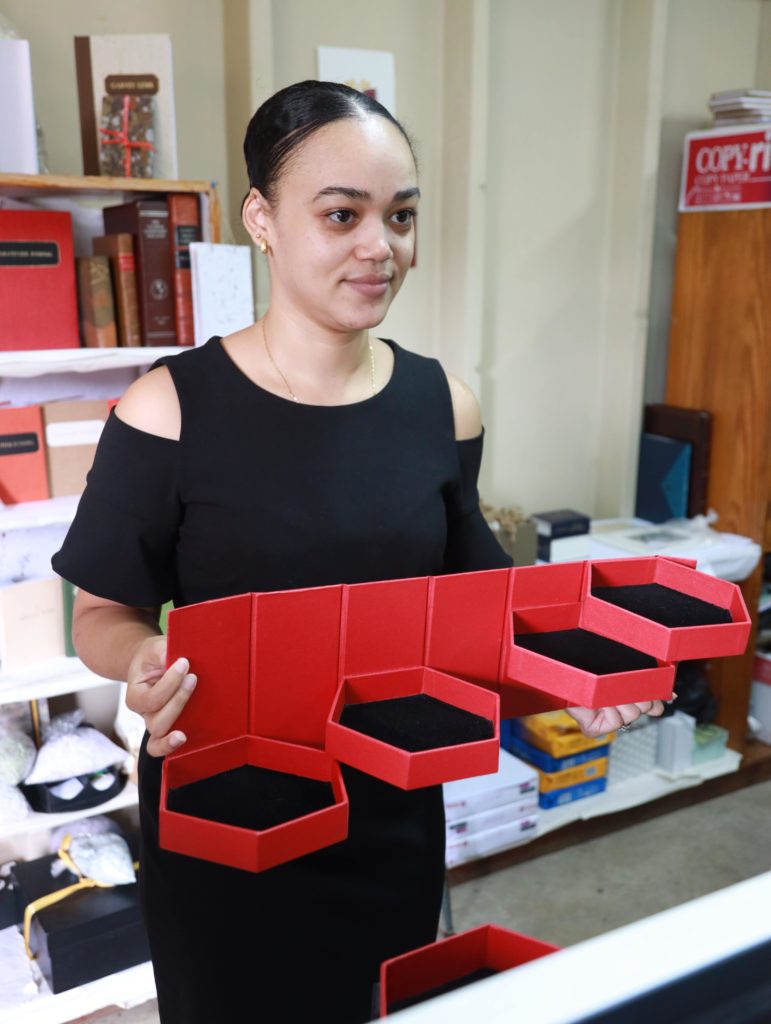
“The Jamaica Association for the Deaf’s sustainable business model is one which the European Union delegation in Jamaica is proud to support under its four-year budget support programme. What makes JAD Binders innovative is its use of recycled paper and magazines to create new and interesting handmade products. As a result, the group plays an important role in reducing the number of trees that are cut down and saves energy, water and landfill space. The EU wishes them continued success as their team works to make a difference,” he said.
“One of the greatest value that this project has brought is the capacity for us to not only recycle our waste products but also invest them back into our business. At the end of a year when we looked at how much of our trash was comprised of paper, we had to do something, so we are grateful to have been able to make that necessary change,” she continued.
“I want to thank the EU, the Forestry Department and the Environmental Foundation of Jamaica for all the support that was provided. This includes both the fiscal and technical assistance that was offered. It’s not often that you find funders who appreciate the unique and critical needs of the community of persons with disabilities.”
The Jamaica Association for the Deaf said it remains committed to providing new and innovative ways to empower these individuals through increased access to education, a wide range of screening and diagnostic hearing tests, interpreters, Jamaican Sign Language training, bookbinding and other social services.





Comments