Jamaica’s poverty rate for 2024 fell to 7.8 per cent
Ainsworth Morris / Our Today
author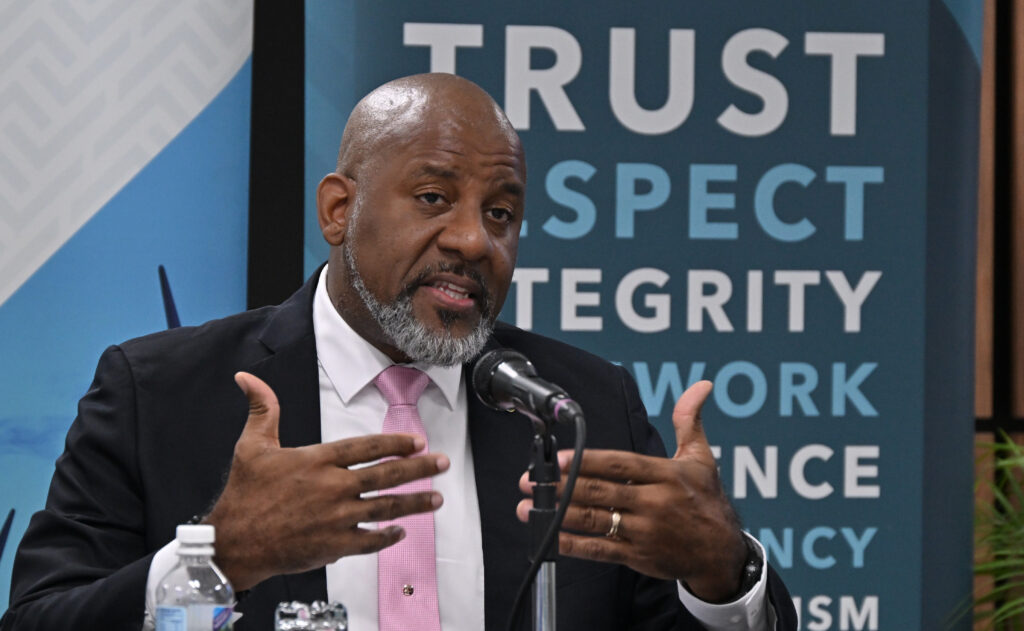
The poverty rate for the year 2024 was 7.8 per cent, which remains statistically the same as 2023, which was 8.2 per cent, according to the Planning Institute of Jamaica (PIOJ).
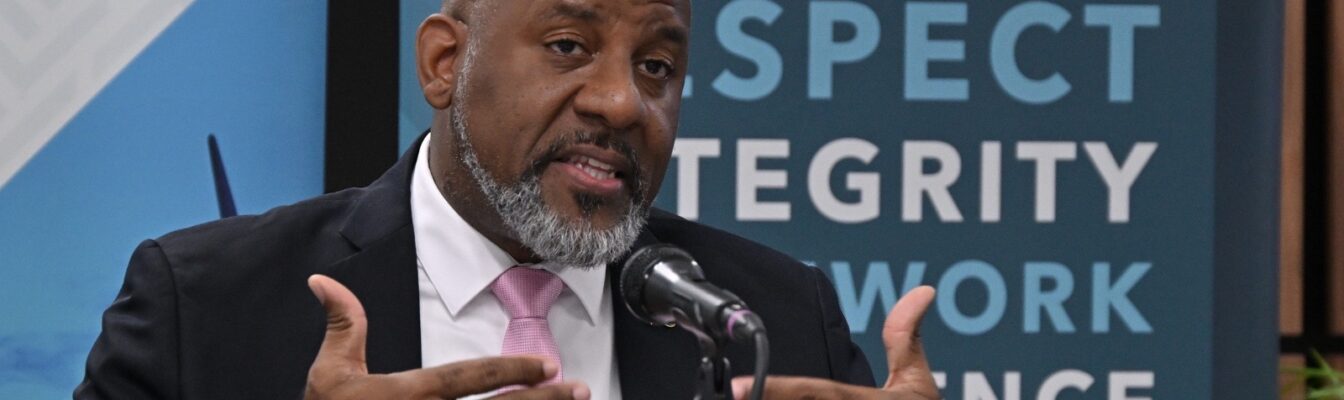
Dr Wayne Henry, Chairman and Director General of the PIOJ, gave the update on the prevalence of poverty during the PIOJ Quarterly Review on the Economy and Outlook on Tuesday at their offices located in St Andrew.
This, Dr Henry said, maintains the lowest rate on record since 1989. The 2024 prevalence of poverty data was provided by computing from the Jamaica Survey of Living Conditions (JSLC), and from data collected by the Statistical Institute of Jamaica (STATIN).
“The results indicate that poverty remained at levels similar to 2023, despite economic shocks. The relative stability of the poverty rate occurred in a year of economic disruption, as real GDP contracted due to weather-related shocks, which reduced agricultural output and rural earnings. However, the government’s target relief interventions, a moderation of inflation and increased employment, helped to preserve household consumption,” Dr Henry said.
“The 2024 results reflect relative stability across all regions of the country. In the Greater Kingston Metropolitan Area (GKMA), poverty was recorded at 2.5 per cent, relative to 3 per cent in 2023. The rate in the GKMA was the lowest across regions, consistent with historical trends,” he said.
He said in Other Urban Centres (OUC), it was 9.4 per cent for 2024. Relatively unchanged from the 9 per cent recorded in 2023. In rural areas, which historically experienced the highest rates of poverty, the rate was 11 per cent, compared with 11.5 per cent recorded in 2023.
In 2012, poverty in Jamaica was 19.7 per cent. That meant nearly one in every five Jamaicans was living below the poverty line. Poverty rates have since trended downwards, but spiked to 16.7 per cent in 2021, likely reflecting the fallout from the COVID-19 pandemic.
In Jamaica, consumption expenditure data, rather than income, is used to measure poverty. The rates are first calculated at the household level, the regional and then nationally.
For Jamaica’s extreme poverty or food poverty, the rate was estimated at 2.7 per cent in 2024, showing no real change from 2023.
“This maintains Jamaica’s lowest recorded level of food poverty since 1989,” he said.
Additionally, for food poverty, which is the inability of a household to afford the minimum daily caloric intake required for good health, Dr Henry reported that there has been a general decline in the food poverty rate since 2013, when it was recorded at 10.3 per cent.
He said the impact of targeted social protection expenditure and interventions contributed to the decline and created a buffer at the household level and served to maintain consumption, given the heightened vulnerability of marginal households to economic contraction.
Dr Henry also pointed out that the Jamaican economy recorded fairly robust growth in the review quarter, reflecting the recovery from the impact of Hurricane Beryl. However, going forward, the economy will face significant challenges arising from the catastrophic impact of Hurricane Melissa.
“It is anticipated that the economy will record a sharp downturn during the October to December quarter, the worst quarter performance since the April to June quarter of 2020, when the island was impacted by the COVID-19 pandemic,” Dr Henry said.
He said the frequency of weather-related and other shocks has also hindered the country’s ability to realise sustained economic growth. This highlights the need to re-examine and prioritise plans and initiatives to address the challenges that have hindered the country’s ability to foster more robust and sustained growth.
To make its reporting more defined and more specific about poverty, the PIOJ advanced work on a national Multidimensional Poverty Index (MPI).
This MPI will complement the traditional monetary measure by capturing other forms of deprivation, such as limited access to education and healthcare, inadequate housing and unemployment. Dr Henry said, for this, the PIOJ will provide an update on the launch of this important measure in due course.




Comments