
Kemal Brown | Development with dignity: How community engagement creates better outcomes for urban expansion

/ Our Today
administrator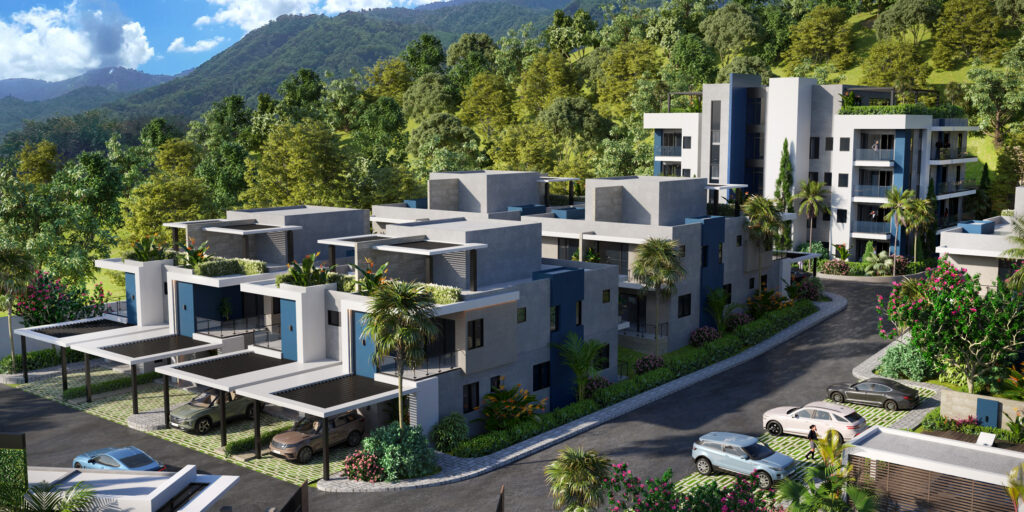
Last week, my team and I convened a meeting with residents in the community surrounding a development our company, Digita Properties Limited, is preparing to begin.
The project, known as The Singularity, has secured all required municipal and local government approvals. Present at the meeting were two MPs, local councillors and the divisional superintendent of police for the area.
The purpose was straightforward: To listen and give a forum for the airing of any concerns before construction begins. In many jurisdictions, such engagement is standard practice. In Jamaica, it remains the exception. One elected official observed that developers often post a notice and proceed with construction, engaging the community only when complaints arise. That model may have worked in an earlier era of slower growth. It is increasingly untenable now.
Jamaica is experiencing sustained development momentum.
According to the Planning Institute of Jamaica, municipal corporations received 5,945 building applications worth approximately J$265 billion in 2022, with approvals remaining strong despite a slight dip in numbers, reflecting sustained investor interest in residential, commercial and mixed-use projects. Over the past decade, municipal corporations have approved projects amounting to nearly J$2 trillion in construction value, supporting hundreds of thousands of jobs across the island. Construction remains one of the country’s most significant drivers of employment and fixed capital formation.
Growth of this scale inevitably reshapes communities, physically, economically and socially. The question facing developers is not whether to build, but how. There are at least five practices that should become standard in Jamaica’s evolving development culture.
1. Community consultation before construction begins
First, consultation must precede construction. International research on urban planning and infrastructure delivery consistently finds that early stakeholder engagement reduces project delays and cost overruns. When residents are invited into discussions before heavy equipment arrives, potential flashpoints — traffic congestion, drainage concerns, pedestrian safety, school access, can be addressed proactively rather than defensively. A one-hour meeting can save six months of conflict. Social license, while intangible, has measurable economic consequences.
More importantly, it humanises the process. When residents can put a face to a developer, suspicion decreases. Trust increases.

2. Secure all approvals before breaking ground
Second, regulatory compliance must be complete and visible. In environments where informality has historically been tolerated, the discipline of securing all approvals before breaking ground signals institutional respect. It reduces investor risk, protects purchasers, and strengthens confidence in the planning framework. Development cannot outpace governance. Regulatory integrity is not bureaucracy, it is risk management.
3. Engage law enforcement and local representatives early
Third, law enforcement and elected representatives should be engaged early. Construction sites alter traffic patterns, increase movement, and in some cases create temporary security vulnerabilities. Collaborative planning with police and political leadership allows for traffic management, safety protocols and communication channels to be established in advance. It also ensures that elected officials are partners in problem-solving rather than intermediaries responding to frustration.
4. Publish a construction impact plan
Fourth, developers should publish clear construction impact plans. Noise, dust and temporary disruption are unavoidable in most projects. What is avoidable is uncertainty. Outlining working hours, mitigation measures, escalation contacts and expected timelines reduces anxiety and complaint escalation. Transparency does not eliminate inconvenience, but it increases tolerance.
5. Demonstrate long-term community value
Fifth, long-term community value must be articulated and, where possible, quantified. Developments can improve lighting, sidewalks, drainage infrastructure and property values. They generate employment and expand the tax base. Yet these benefits are rarely communicated in structured ways. In a country where housing demand continues to exceed supply and urban densification is accelerating, projects that fail to demonstrate shared value risk being perceived as extractive rather than additive.
Globally, cities that have managed growth most successfully, from Toronto to Singapore, have institutionalized participatory planning not as a concession, but as strategy. The lesson is not ideological; it is practical. Projects that secure early buy-in encounter fewer delays, fewer injunctions and fewer reputational risks.
The future of Jamaican development
Jamaica is urbanising. Kingston is densifying. Montego Bay continues expanding. Secondary towns are evolving. With growth comes responsibility. As developers, we cannot simply rely on approvals and assume social license. The social contract matters just as much as the legal contract.

Jamaica stands at an inflection point. Urban expansion in Kingston, Montego Bay and emerging town centers will intensify over the coming decade. Capital is available. Demand is present. The missing ingredient, in many cases, is trust. Trust is built less by architectural renderings and more by conversation. Development, at its best, is not simply the rearrangement of land. It is a negotiation between present residents and future possibilities.
If Jamaica is to grow without deepening social friction, developers must treat community engagement not as public relations, but as infrastructure in its own right. The cranes will rise regardless. The question is whether the relationships beneath them are strengthened or strained. As we prepare to break ground, our hats are firmly in the ring with the former.
Send comments and feedback to [email protected].





Comments