
Kemal Brown | Private equity is Jamaica’s path to rebuilding after Hurricane Melissa

/ Our Today
administrator
Hurricane Melissa’s devastation has forced Jamaica to confront a difficult truth: the scale and urgency of recovery required far exceeds what public resources alone can deliver.
As someone working in the investment space with a focus on resilience, I have seen how targeted private capital can turn catastrophic loss into durable, climate-smart development. Melissa’s impact makes it clear: Jamaica now needs a coordinated surge of public leadership, multilateral support and private investment.
Hurricane Melissa’s Economic and Human Toll
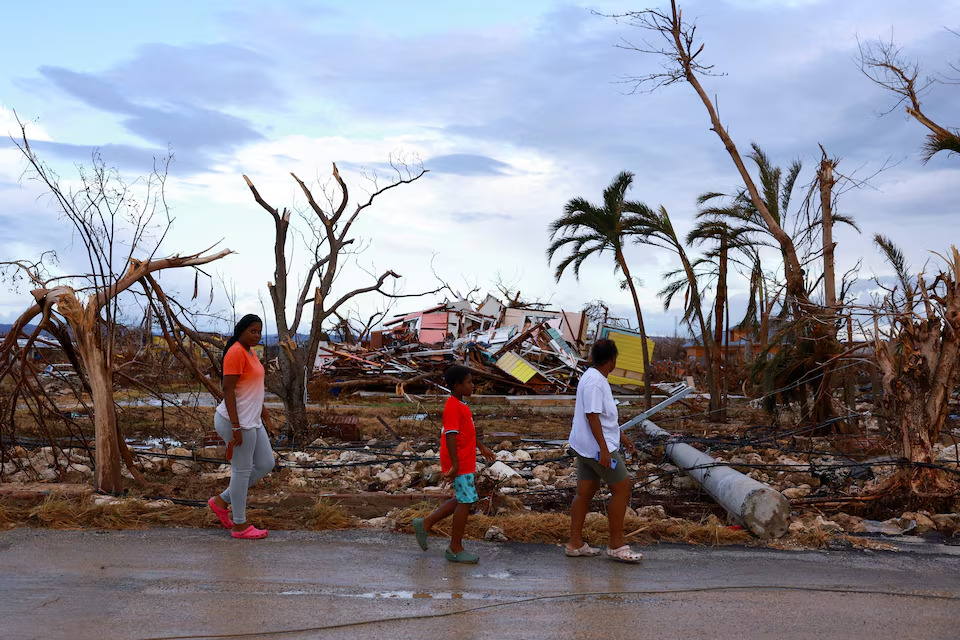
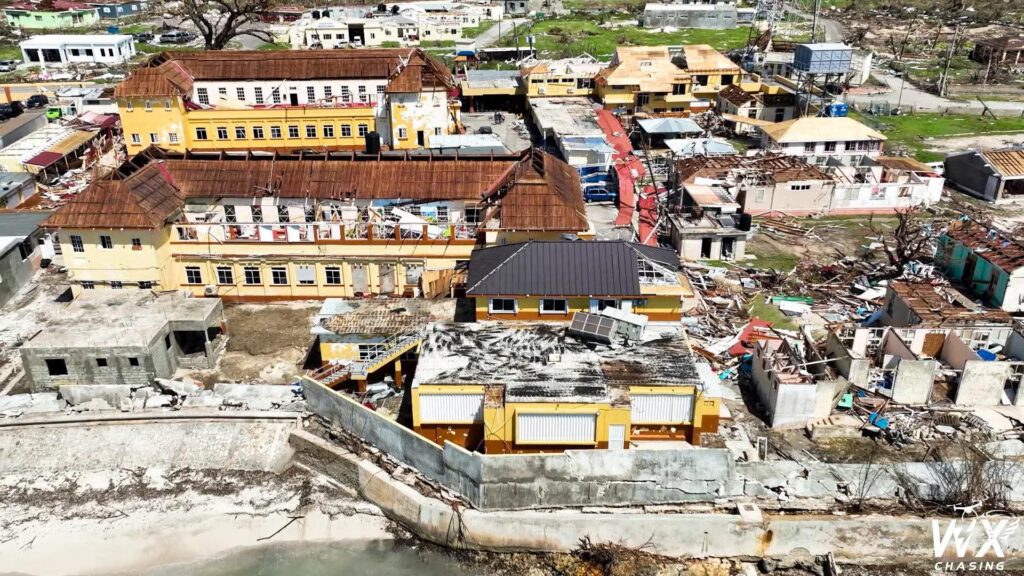
Melissa made landfall in western Jamaica as a Category 5 storm on Tuesday, October 28, 2025, causing an estimated US$8.8 billion in damage, according to preliminary assessments by the Government and multilateral partners. This represents roughly 41 per cent of the island’s 2024 GDP, the most costly natural disaster in the nation’s history.
Nearly US$3 billion in infrastructure damage crippled power grids, road networks, water systems, ports and airports. Homes and buildings accounted for more than US$3.7 billion in losses. Over 4.8 million tonnes of debris blanketed affected communities, displacing more than 32,000 people. Agriculture saw close to 102,000 acres damaged and nearly J$30 billion in losses.
These numbers are staggering, but they also point precisely to where private capital can accelerate the pace of recovery.
Around the world, private equity has repeatedly played a catalytic role after major disasters. Following Hurricane Katrina, private investment consolidated and scaled cleanup and restoration companies, enabling rapid deployment at a time when public systems were overwhelmed. Across the United States, investment in the disaster-recovery industry surged in the past five years, and firms reported strong performance while supporting faster community rebuilding. The lesson is consistent: when deployed responsibly, private capital brings speed, discipline and innovation, all critical qualities in the months after Melissa.
In Jamaica, the enabling frameworks already exist. The Development Bank of Jamaica (DBJ) has been instrumental in structuring public–private partnerships (PPPs) capable of mobilising private resources for public infrastructure. The PPP model behind the Rio Cobre Water Treatment Plant, supported by IDB Invest, Proparco and Sagicor, demonstrates how blended finance can deliver essential services resiliently and sustainably while easing fiscal pressure on the State. DBJ’s pipeline of PPPs is one of the strongest in the Caribbean and offers a ready-made platform for scaling resilience investment.
A Caribbean-Wide Shift Toward Resilience Financing
Multilateral agencies, including the World Bank, IDB and Caribbean Development Bank, have signalled plans to help mobilise more than US$2.4 billion in private investment for reconstruction. This will be essential not only to rebuild but to protect Jamaica’s debt trajectory in an era of rising climate risk. Successful PPP structures already exist across the region, such as Haiti’s post-earthquake telecom upgrades, Dominica’s Climate Resilience Execution Agency, and Barbados’s Blue Bond financing for marine ecosystems. These examples show that resilience finance is not theoretical; it is live, funded and expanding.
There are also funded resilience projects across the Caribbean that illustrate the opportunities. The IDB’s Pilot Program for Climate Resilience is strengthening Jamaica’s watersheds and agricultural systems. The Caribbean Climate-Smart Accelerator is mobilising private funding across renewable energy and coastal resilience. The Caribbean Catastrophe Risk Insurance Facility continues to expand risk-transfer solutions across the region. Each demonstrates that when governments, multilaterals and private capital align around resilience goals, transformative impact follows.
High-Impact Projects Ready for Investment
For Jamaica, the most urgent opportunities are immediate and practical. Private equity can finance modular power systems capable of restoring electricity to St James or Westmoreland within weeks. It can support the expansion of the Montego Bay port, accelerating the return of tourism and trade. It can invest in performance-based water-system designs built to withstand future Category 5 storms. And, drawing on the Katrina example, private capital can consolidate and professionalise debris-hauling services. An investment of US$25 million to US$50 million could accelerate clearance of the roughly 480,000 truckloads of debris still hindering reconnection of hospitals, farms and schools.
Three Steps to Accelerate Jamaica’s Rebuild
To maximise the role of private investment, Jamaica should consider three policy actions:
- Establish a National Resilience PPP Pipeline, curated jointly by the Ministry of Finance, the Ministry of Economic Growth and Job Creation, and DBJ.
- Create a Resilience Credit Guarantee Facility, backed by multilaterals, to de-risk private capital in high-impact reconstruction and infrastructure projects.
- Introduce fast-track regulatory windows for critical infrastructure, modular energy systems, and debris-removal operations during the first 18 months of recovery.
Transforming Recovery Into Long-Term Resilience
Hurricane Melissa was a harsh reminder that climate change is not tomorrow’s threat; it is today’s reality. But recovery also offers an opportunity to rebuild differently. Private equity is not a replacement for government or multilateral support; it is a force multiplier.
Jamaica now has a chance not only to recover from Melissa but to set a new regional standard for climate-resilient development. Mobilising private capital responsibly, transparently and at scale will be essential to achieving it.
Kemal Brown is CEO of Digita Global






Comments