MAJ welcomes Special Consumption Tax on sugar-sweetened beverages

/ Our Today
administrator
The Medical Association of Jamaica (MAJ) has welcomed the move to impose a Special Consumption Tax (SCT) on non-alcoholic beverages containing added sugar or other caloric sweeteners, as a victory for preventive medicine and the long-term health of the population.
Declaring support for the Government’s action, MAJ President, Professor Marvin Reid, said the group’s position on the tax has to do with the preservation of health and combating non-communicable diseases (NCDs) like high blood pressure, obesity, diabetes and stroke.
“Those are the major things that are causing Jamaicans to die,” he pointed out.
“Non-communicable diseases, the main drivers, the main thing that really influences them are…lifestyle [habits]—how it is that you spend your day, what do you eat, what do you do. One source that we have noticed over the years is that people are getting a lot of sugar from these…sugar-sweetened beverages. So, the thinking is that if you can encourage individuals not to consume as much, then what will happen is less chance that you would get diabetes, less chance of you getting high blood pressure,” Professor Reid said.
He noted that the MAJ’s position is backed by investigations and studies that have been conducted across a “wide range of countries”. He informed that last July, the World Health Organization (WHO) convened a panel to devise strategies and encourage governments across the globe to address the major lifestyle-related causes for cardiovascular disease, including heart disease and stroke, which are the leading cause of death worldwide.
He said that the “three culprits turned out to be alcohol, tobacco smoking, and the excessive sugars that we get from sugar-sweetened beverages”.
“What the World Health Organisation says is that we need to encourage all the Governments in the world to put in place some policies that will encourage their citizens to not smoke, stop drinking alcohol or reduce the amount of alcohol that they consume, stop using sugar-sweetened beverages or reduce the amount of sugar-sweetened beverages that they consume,” the MAJ president said.
Professor Reid contended that when children are introduced to sugar-sweetened beverages at a very early age, it not only affects the body but also their taste, which persists throughout adulthood and contributes to poor health.
“It is very important that we start addressing these issues, as the future generation is at risk because of the psychological and appetite-changing effects that these kinds of food have on them, because eating is a combination of physiological needs—what your body needs, plus a psychological component—what you enjoy doing,” he noted.
“So, as we look towards the next generation, we must try and ensure that we provide them with a better dietary environment so that they will grow up enjoying the healthy options. That is one of the consequences or one of the rationales for us supporting any activity or anything that would reduce the consumption of these extra-sweetened beverages,” the MAJ President said.
The new Special Consumption Tax (SCT) of $0.02 per millilitre on non-alcoholic sweetened beverages (NASBs) is scheduled to take effect in the first quarter of the 2026/27 fiscal year. The estimated revenue gain is $10.1 billion.
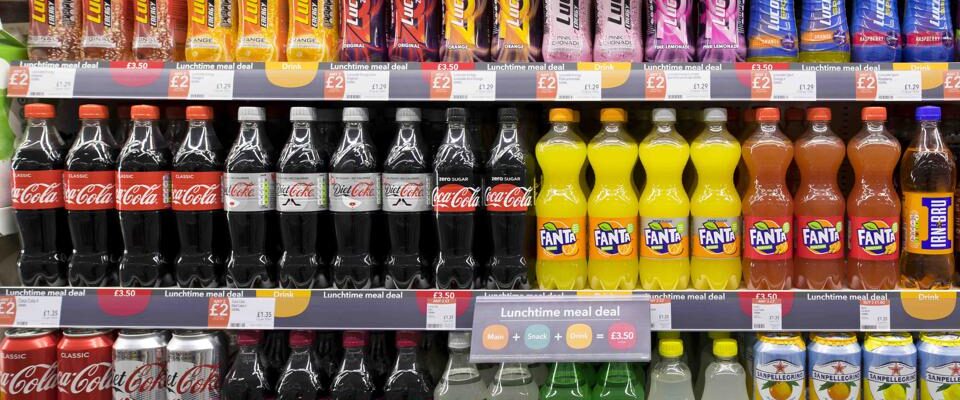
The tax applies to sodas, fruit-flavoured drinks, and any non-alcoholic beverages containing added sugar or other caloric/non-nutritive sweeteners, whether carbonated or non-carbonated, and whether manufactured locally or imported.
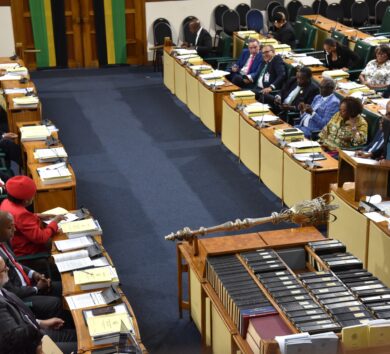
Finance and Public Service Minister Favyal Williams, in announcing the revenue measures in the House of Representatives on February 12, said that the tax is not only aimed at revenue mobilisation, but it also supports broader public health objectives, noting that it is aimed at combating high levels of obesity and diabetes.
She noted that the SCT will apply at the point of manufacture for domestic producers and at the point of importation for imported products, in accordance with the provisions of the General Consumption Tax (GCT) Act. This ensures administrative efficiency and parity between local and imported goods.





Comments