
Ministry of Health & Wellness recruiting specialist nurses in Jamaican Diaspora
Josimar Scott / Our Today
author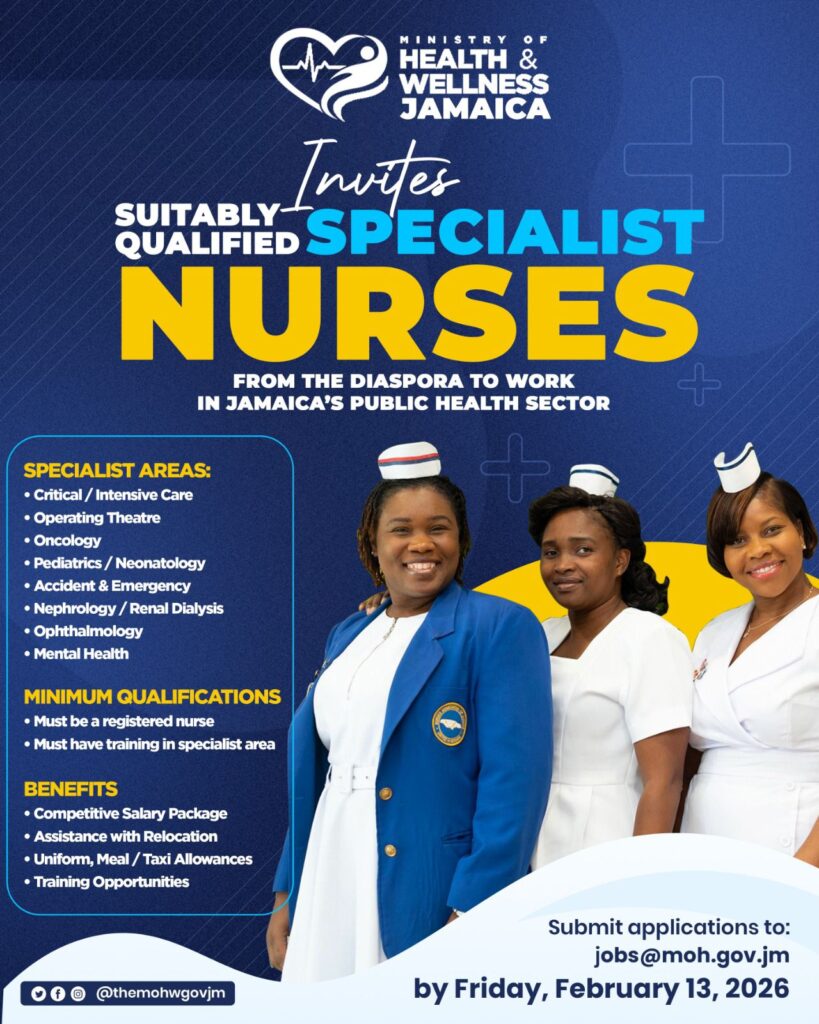
Jamaica’s Ministry of Health and Wellness (MOHW) is seeking to attract nurses in the Diaspora to return to work in Jamaica by advertising specialist positions.
The advertisement on its social media pages reads, “Ministry of Health and Wellness, Jamaica invites suitably qualified specialist nurses from the Diaspora to work in Jamaica’s public health sector.”
The available positions are for nurses qualified and/or experienced in intensive care, operating theatre, oncology, paediatrics/neonatal care, renal dialysis, ophthalmology, and mental health. Applicants need to be registered nurses in their respective jurisdictions.
In the advertisement, the Ministry of Health highlights that the compensation package includes competitive salaries, meal and taxi allowances. Other benefits include assistance with relocation and training opportunities.
A different approach
This move marks a departure from the ministry’s approach to filling gaps in the health sector created by a brain drain of nurses migrating to the USA, UK, Canada, and other Caribbean countries. In the past, the health ministry has recruited nurses from Cuba, India and some African nations.
In 2017, the Gleaner reported that Jamaica recruited 20 specialist nurses from Cuba as part of a recruitment drive for 130 specialist nurses from Cuba and India.
The article noted that the local health sector had experienced a severe reduction in specialist nurses due in part to the recruitment of the professionals by developed countries. Moreover, it noted that the ministry was “unable to match the remuneration packages offered” by the developed countries.
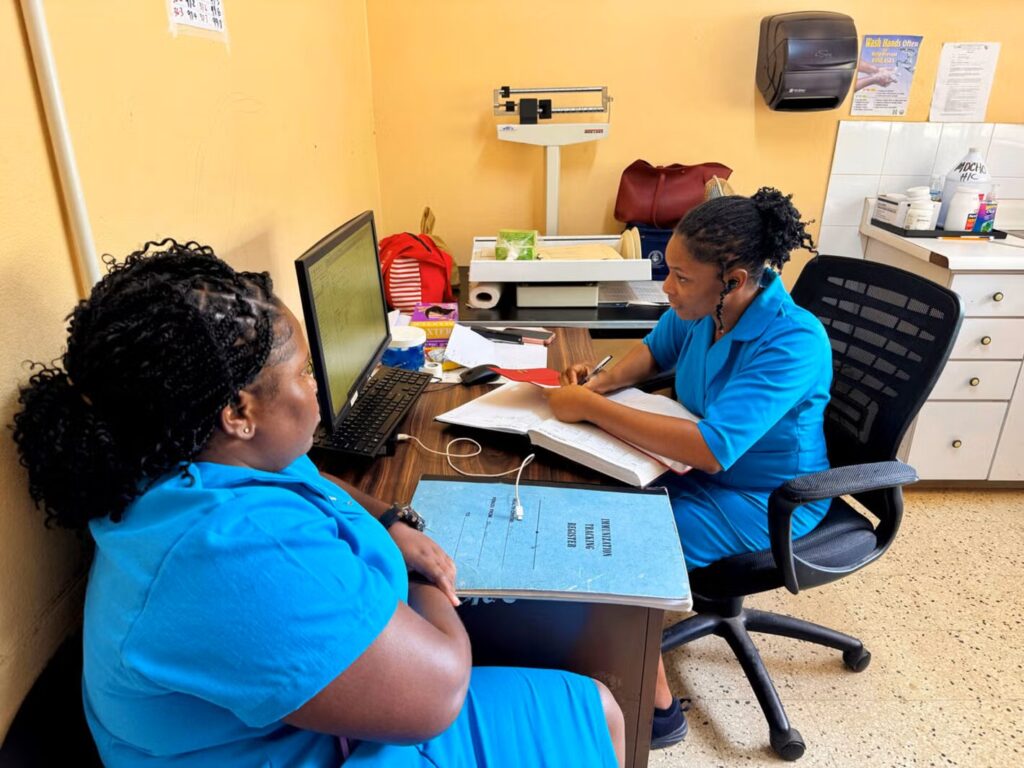
A research paper from the World Bank, titled, EXPLOITING THE BRAIN GAIN POTENTIAL FOR BETTER HUMAN CAPITAL OUTCOMES IN JAMAICA” indicates that nurses and other medical professionals in Jamaica emigrate because of unequal distribution of resources among hospitals, with rural and “periphery” hospitals suffering the most. It also attributes the brain drain to the quality of healthcare, infrastructure, economic opportunities, and training availability.
The study recommends that to retain and attract Jamaicans to work in the health care sector, working conditions will need to improve.
“Working conditions for healthcare workers in Jamaica should be improved by increasing wages, providing more professional development opportunities, and improving workplace safety and support systems. It is important to design incentives for healthcare workers [who] move to rural areas,” it said.
“Moreover, implementing targeted recruitment campaigns that highlight the benefits of working in Jamaica – such as living in a culturally rich environment, lower cost of living, and proximity to family – would provide Jamaica healthcare support workers with more reasons to pursue a job in the country,” the research continued.
Mixed reviews
While the Ministry of Health and Wellness’s offer has some users thinking of home, others have shared their apprehensions.
Facebook user Kay Tee Gee wrote, “This is a great opportunity for those of us who have been contemplating returning but was unsure of the pathway.”
Another user, Carlene James Ottey, commented, “I would return[.] It is and will always be an honour to serve in Jamaica. There are somethings [sic] that money can’t buy.”
“After living in America for 30 years, I would definitely do it,” said Karen Oseni, another Facebook user.
Their comments stand in contrast to that of Coretta Matthie, who noted, “Unfortunately Jamaica is not equipped to accommodate nurses who are accustomed to certain working conditions and are unrestricted in performing certain duties. RNs in Jamaica are like CNA in US. They are restricted from performing certain duties such [as] inserting a foley in a male or starting an IV. I am saying this from what I experienced at Medical Associates. The doctor from the emergency room had to come up and do it. The RN could not flush the foley either. Which nurse is going to work under those restrictions? Not only that, the machines are unavailable, the facilities are deplorable. Many would return but return to what? If you can’t retain those who are on the island why do you think those abroad will return? For them to return a lot needs to be offered. Are you ready for that?”
Facebook user Norma Persevereryaadgurl Allen shared that she knows of nurses from the United Kingdom who have returned to Jamaica to work and, in an attempt to transfer the knowledge they have, were met with ill-treatment. She added that health facilities do have the necessary equipment. For her, the best decision she made was to take a position in Saudi Arabia as an ICU nurse.
On Instagram, nursetbsrn shared, “Nursing is a highly skilled profession that requires significant education, training, and ongoing responsibility. Although nursing has never been only about the money, fair pay matters—especially when wages do not reflect the cost of education, licensure, and the demands of the role. If Jamaica truly wants to attract and retain experienced, high-quality nurses, compensation and working conditions must be part of the conversation. Valuing nurses means valuing their work.”
Another posted, “I’m a Registered Practical Nurse in Canada…would love this.”
February 13, 2026, is the deadline for nurses in the Diaspora to apply for the positions advertised.




Comments