

Minister of Agriculture, Fisheries and Mining Floyd Green has announced a temporary administrative measure permitting the transport of untagged, slaughter-ready cattle during August and September.
The move aims to clear a significant tagging backlog and ensure cattle farmers can generate income for the back-to-school period.
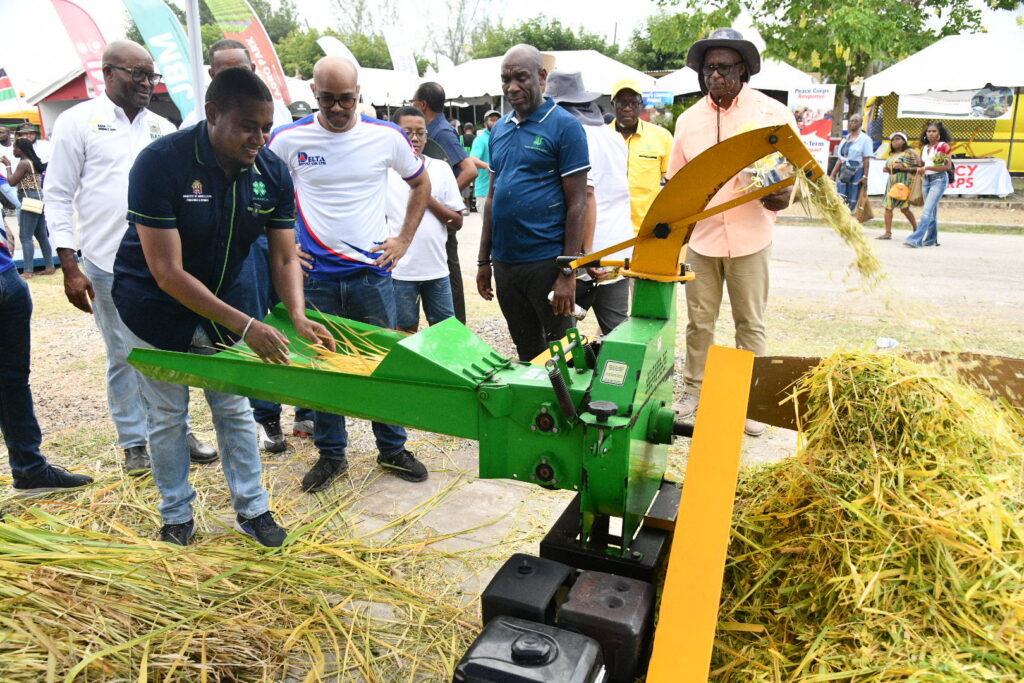
Minister Green made the announcement on Saturday, August 1 at the Denbigh Agricultural, Industrial and Food Show in May Pen, Clarendon.
“We understand this is a time of year that people are preparing to go back to school, that farmers are looking to sell their animals, to bring in some resources to help their families,” Minister Green said.
“So, for the months of August and September, we’re introducing an administrative change where between the Agricultural Protection Branch (APB), the Ministry of Health and our Veterinary Services Unit, animals that are ready for slaughter will be able to be transported to slaughter once they have their receipt,” the Minister said.
He warned that this temporary waiver applies strictly to cattle destined for slaughter and should not be used as an excuse to forgo tagging other livestock.
“So, you can advise your butchers, advise your cattle farmers that the Ministry has implemented that system for the next two months, but don’t use it as an excuse not to tag your other animals. This only goes for animals ready for slaughter,” Minister Green emphasised.
Under the National Animal Identification and Traceability System (NAITS), tagging has been required to transport cattle legally.
However, Minister Green pointed out that heightened enforcement by the APB of the Jamaica Constabulary Force (JCF), combined with infrastructure damage from Hurricane Melissa to the Western Veterinary Services Division (VSD), led to a surge in demand for tagging services.
This led to a backlog across key parishes, including Clarendon, Manchester and St Elizabeth, the Minister said.
To resolve the delay, the Ministry has acquired additional tags and increased staffing and resources.
“We have brought in additional tags, we have employed six interns, and we’re going to employ six more animal health technicians. We’ve bought two new motor vehicles for the division so that we are going to ramp up our tagging. In fact, last week we did about 1,500 cattle that were tagged,” Minister Green said.






Comments