
Nairobi declaration marks turning point for Global Tourism Resilience

/ Our Today
administrator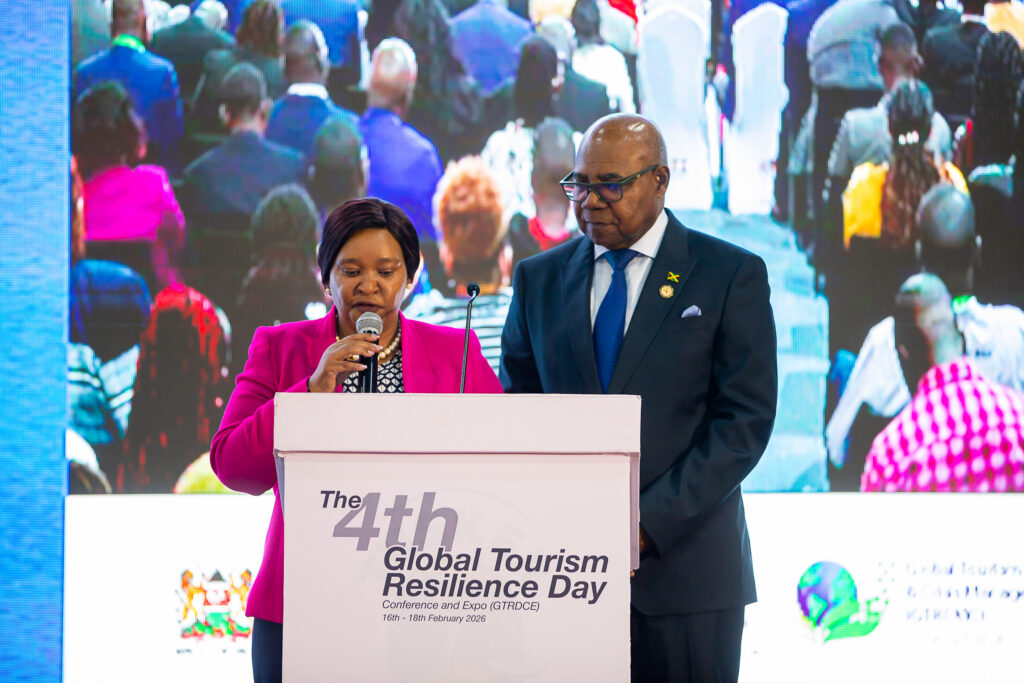
Nairobi, Kenya—Jamaica’s Minister of Tourism Edmund Bartlett has hailed the Nairobi Declaration as a turning point for Global Tourism Resilience. The Nairobi Declaration, announced on Global Tourism Resilience, is a historic framework that commits nations to a coordinated, forward-looking approach to safeguarding one of the world’s most vital economic sectors.
“The Nairobi Declaration is not merely a statement of intent—it is a strategic blueprint for the future of global tourism. In an era defined by climate disruption, geopolitical uncertainty, and rapidly evolving technologies, resilience is no longer optional; it is the foundation upon which sustainable tourism growth must be built. This Declaration calls on every nation to embed resilience into the very architecture of their tourism policies, and Jamaica is proud to have championed this agenda from its inception and to stand at the forefront of this global commitment,” said Bartlett.
The declaration was adopted at the close of the 4th Global Tourism Resilience Day Conference and Expo, held at the Kenyatta International Convention Centre in Nairobi, Kenya, from 16 to 18 February 2026. Held under the theme ‘Tourism Resilience in Action: From Crisis Response to Impactful Transformation,’ the three-day event brought together heads of tourism ministries, multilateral institutions, private sector representatives, academics, and civil society organisations to advance the global resilience agenda as the sector looks ahead to 2030.
The Nairobi Declaration comprises six substantive Articles addressing the full spectrum of resilience priorities. It calls on nations to institutionalise resilience within national tourism policy and legislation; mobilize sustainable financing, including the establishment of dedicated Tourism Resilience Funds in every region; harness data, artificial intelligence, and predictive analytics to anticipate emerging crises; and advance climate adaptation and nature-positive tourism models.
“Critically, the Declaration places inclusivity at the heart of resilience, mandating the full participation of women, youth, indigenous communities, and other vulnerable groups in shaping policy. It further calls for strengthened regional and global cooperation, harmonised crisis-response protocols, and a unified multilateral voice on tourism resilience,” said Professor Lloyd Waller, Executive Director, Global Tourism Resilience and Crisis Management Centre.
Minister Bartlett underscored the Declaration’s strategic significance: “For too long, the tourism sector has responded to crises reactively. The Nairobi Declaration charts a different course—one of proactive, data-driven, and inclusive resilience planning. By 2030, our shared vision is a tourism sector that does not merely survive disruption but is genuinely transformed by it.”
The Nairobi event marks the first time the annual Global Tourism Resilience Day Conference and Expo has been held outside Jamaica, reflecting the Declaration’s call for deeper regional cooperation and broader global ownership of the resilience agenda. The United Nations General Assembly designated 17 February as Global Tourism Resilience Day in 2023, following a resolution initiated by Jamaica and co-sponsored by 94 Member States.
Tourism is one of the world’s largest economic sectors, accounting for approximately one in ten jobs globally. Yet the sector remains acutely vulnerable to climatic, health-related, geopolitical, economic, and technological shocks—vulnerabilities laid bare by the COVID-19 pandemic and deepening climate crisis.
For more information about Jamaica and the GTRCMC go to www.visitjamaica.com and www.gtrcmc.org






Comments