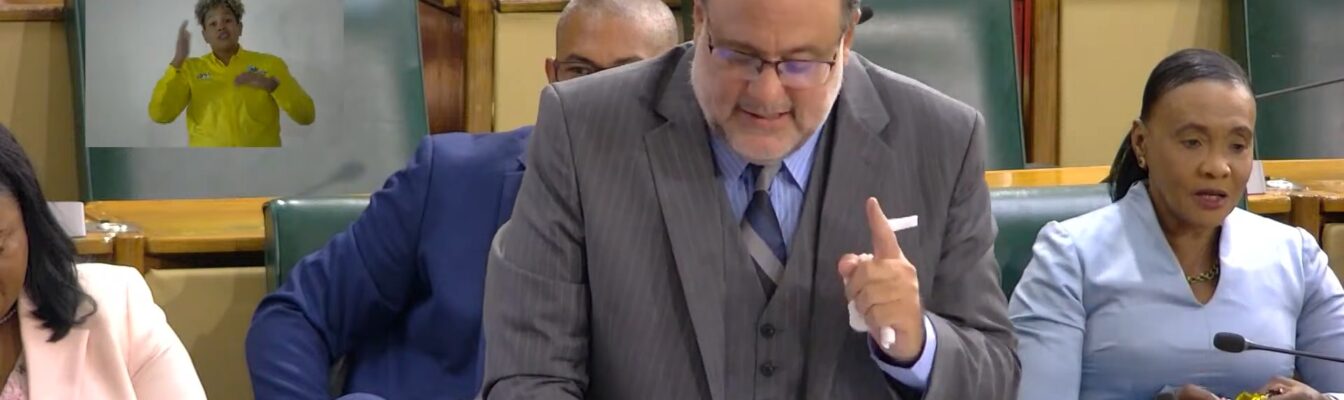
Opposition Leader Mark J Golding’s contribution to the budget debate on March 17, 2026

/ Our Today
administrator
The change in the political landscape of our great island that occurred in September of last year has profoundly altered the trajectory of Jamaica’s future. The result ensured that this budget speech, my fifth as Party President and Leader of the Opposition, is delivered from a platform of strength, momentum and national validation.
The doubling of the People’s National Party’s seat count is living, breathing proof that our national movement is once again firmly on a path to assuming the responsibilities of government. The work put in since 2020 has borne bountiful fruit and re-set deep roots in all corners of Jamaica. It is now surely a matter of when, not if. While we did come up just short of outright victory last time, the swing is undeniable, the margins are shrinking, and the writing is there on the wall for all to see.
The 2025 election ushered in a new generation of parliamentarians, along with several who had suffered temporary setbacks in the Covid election of 2020. Dynamic, energised, and eager to deliver, these voices, ranging from Negril in the West to the Eastern tip of Portland, have connected with the voters and empathized with their needs, goals, and dreams. Unlike so many of the debutants seen in this House after the 2020 Covid election, they are very much here to stay. It is my great honour to serve alongside you, and I look forward to doing so for many years to come.
The combination of these youthful, ambitious souls with the experienced (and slightly more grey) hands of the previous generation, including myself and my fellow long-term PNP stalwarts, has created a parliamentary team for the times we are living in, ready to hold this government to maximum accountability and to and guide the direction that this House flows in, even from the Opposition benches.
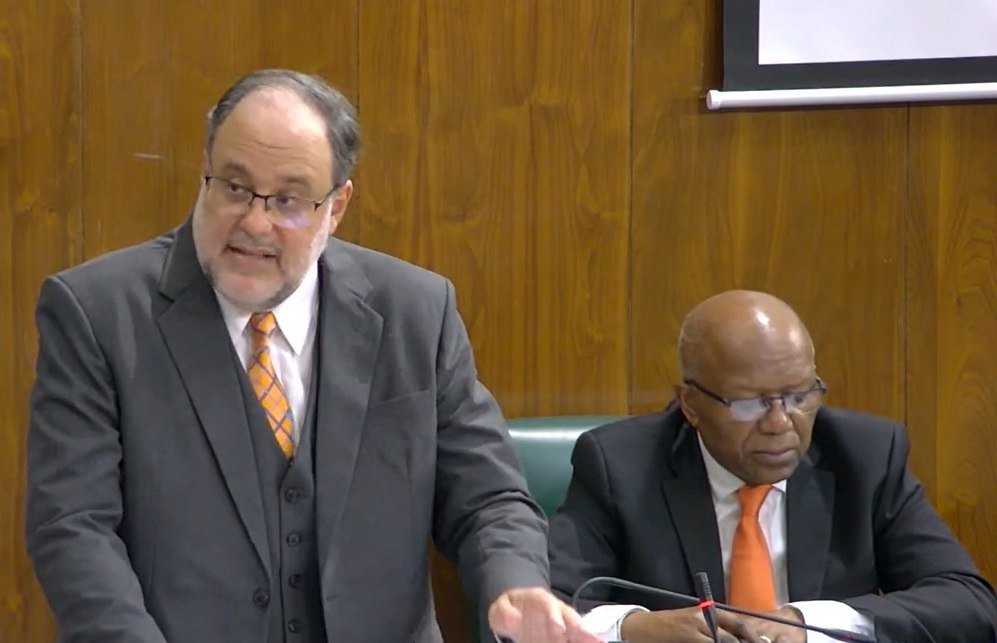
I want to make a special mention to the late Dr Lynvale Bloomfield from Eastern Portland and the late Dr Winston Green from South-East St. Mary, both of whom passed away while serving in this House during a previous term, Dr Bloomfield having been murdered and no one having been brought to justice. The by-elections that occurred after their untimely passing resulted in green victories, but in 2025, Isat Buchanan and Chris Brown, in two famous victories, took back what was lost. We dedicate those victories to those two fallen servants of Jamaica.
The events that took place in September 2025 can be analysed from two competing perspectives. On one side, the people of Jamaica heard our proposals for progressive governance of integrity that is accessible to all Jamaicans, and it resonated with them. The people heard our plans to build society from the base upwards, rather than the top-down approach, and it resonated with them. The people appreciated our willingness to tackle their day-to-day problems and engineer solutions that would have a tangible impact on their lives, rather than fixating on macroeconomic indicators that bear no reflection on their everyday existence, and this resonated with them.
We are the party of the people, and the people saw our eyes locked firmly on the future. They saw the Government looking out for themselves and their interests and contrasted that with the solution-oriented approach from the party of the rising sun. While we came up just short (and only a few members on that side know the truth as to why), the writing is very much on the wall.
Gone are the days of intensely partisan, quasi-authoritarian governance that held sway when the Opposition only held 14 seats. Gone are the days of arrogant sneers from the government benches when certain politically aligned media houses flood the airwaves with misinformation about the disunity of this side. We deh yah now and we solid like a rock. The writing is very much on the wall.
On a personal note, the last 5 years have been some of the most invigorating and fulfilling of my 60 years on this earth. It has been a great honour to fight for the rights and defend the interests of each and every Jamaican from each and every background, including the additional 100,000 voters who came on board last September. We will not let you down.
I give thanks and all praises to the Almighty. He is my strength and redeemer, from whom all blessings flow. I pray that I will always do right by Him and strive to live according to His holy word.
I also remain eternally grateful to all who have supported me. First and foremost, my beautiful and loving wife Sandra, without whom I could not carry the heavy burdens of this role, our dear children and now grandchildren, and my wider family in South St Andrew, who always raise me up and inspire me to give of my best in service to them. A special shout-out goes out to our committed and hard-working Constituency Executive and our two formidable Councillors, Sarah Marshall and Louise Newland, who make sure things are well-managed even while I execute the national duties of my office.
The joys of serving the people in confronting the difficult challenges faced by our beloved nation, the thrill of competing for the highest office in this land, and honourable sparring with my formidable rival, whose day must come, continue to blaze up the fire inside me. And now, with this powerful massive of talent and commitment beside me, I very much look forward to finishing God’s mission that we started in 2020, and living up to the legacy of illustrious predecessors on whose shoulders we stand, by bringing a new era of innovative, strategic, caring and honourable governance to this great nation.
Navigating the post-Melissa crisis
Like many commentators and opinion-makers, I have been thinking about what we must do to take Jamaica out of its chronic economic underperformance. With a GDP of approximately US$7,000 per person, one of the lowest in the Caribbean, compared with US$19,000 in Trinidad & Tobago and US$26,000 in Barbados. Jamaica’s average real GDP growth has been merely crawled at around 0.8% (not even 1%) over the past 10 years. Jamaica’s economy is clearly not delivering for our people.
Economic underperformance narrows fiscal space, so that despite the relative low debt-to-GDP ratio (in the 60% range) that Jamaica has achieved with immense sacrifice over the past 14 years, we are still only able to deliver budgets with Central Government capital expenditure of 2%-3% of GDP, a substantial portion of which (sometimes over one-third) remains unspent at the end of successive fiscal years due to bureaucratic inefficiency. Much of our road network is in a deplorable state, gullies and other waterways are in urgent need of repair, and coastal erosion exacerbated by worsening climate conditions outstrips modest attempts at mitigation.
The education and training systems of the country are big contributors to our economic underperformance. The statistics are well-known. A third of primary children leave primary school functionally illiterate and innumerate, a problem which feeds into the secondary school system, where less than 20% of students achieve the basic requirement of 5 CSEC subjects, including Maths and English. Only approximately 16% of Jamaicans end up with any tertiary qualification. The Jamaican workforce suffers from inadequate training and apprenticeship opportunities, so that over 60% of the workforce has no form of skill certification. HEART has been badly mismanaged, as despite its bespoke source of income from mandatory employer contributions, it made an accumulated operating deficit of $5.5 Billion over the past two fiscal years.
Foreign direct investment has fallen to a third of where it was in 2015. Investors will not invest capital which will fail to generate competitive returns because the conditions for production are sub-optimal and inefficient.
The conditions in the health sector are so awful that they are negatively contributing to our economic prospects. Many Jamaicans overseas who would otherwise wish to return home to build Jamaica and have the means to make a substantial contribution to nation-building are unwilling to do so because of the repeated horror stories about the conditions and standards of care in our public health facilities. Patients routinely have to sleep in corridors, in wheelchairs, on benches or in other makeshift arrangements because there are no available beds for them to be admitted. Free health care remains a fallacy, because diagnostic tests, many medications and surgical implants are available only at a cost that is out of reach of most Jamaicans. Our doctors and nurses in the public health system are stretched so thin that it adversely affects morale and patient care.
Jamaica continues to fall behind, as we wallow in our low-tech and low-growth economy. Two of the industries that employ most of our people, global services and tourism, are vulnerable to existential threats to their viability, like artificial intelligence, climate and geopolitical shocks that periodically cause major downturns.
This economic underperformance contributes to the our high levels of migration, with one of the highest rates of “brain drain” (the migration of trained professionals) in the world, the hollowing out of the middle class, many of whom live from paycheque to paycheque like the working poor despite their tertiary degrees and other qualifications, and the high levels of school absenteeism, teenage pregnancy, gender-based violence and other social ills.
So, having solved our chronic public debt problem and with the murder rate falling significantly over the past two years, we remain disappointed that there are no signs of a strategic plan to deliver a strong, rapidly growing economy that creates abundant good opportunities for our people here at home and attracts the return of talent residing abroad.
How do we lift ourselves out of this chronic economic lethargy?
At the core of the solution is integrity. Honesty, in what we say and do, is the foundation of trust and confidence. A commitment to accountability and being transparent in how we govern and what we do in the name of servants of the people.
We must strengthen, not weaken or undermine, the national institutions that were established to promote these principles and hold perpetrators accountable for corruption – in particular, the Integrity Commission and the FID.
During the 2025 general election campaign, with its manifestos and debates and platform speeches, the Prime Minister did not even hint at, much less disclose, his intention to take the massive salary increase that he had claimed he gave up when the heat reached him after Nigel announced the massive salary increases on the 16th May 2023. Then, in February, we suddenly learned that, effective from payday last September 2025 (i.e. right after the election), the Prime Minister would be receiving his big salary after all.
This is the latest chop! A real Brogad move. It was a shameful deception, not worthy of the high office you hold.
As leaders, we must hold ourselves to a high standard, and should be quick to do the right thing by leaving the scene where transgressions come to light which are not compatible with clean and honest government. In Jamaica today, the reverse all too often prevails. Impunity rules the roost, as persons in positions of responsibility become serial transgressors, and it doesn’t seem to matter because nothing happens to hold them to account. We cannot build the nation that our people aspire to and deserve on such weak and wobbly ethical foundations.
This is why we on this side have signed the Leadership Code of Conduct produced by the Integrity Commission, committing ourselves to upholding principles of good governance and being accountable if we fail to do so.
You should be further strengthening the anti-corruption arsenal by introducing the important tool of Unexplained Wealth Orders to further reinforce the tools available to law enforcement for recovering illegally-obtained income and wealth. That was agreed upon in 2019, but you have cast it asunder.
Why have you abandoned the procedures for the impeachment of parliamentarians and other holders of high public office that the former JLP Prime Minister tabled in this House in 2011, and that I updated by tabling a Private Member’s Bill in 2021? Why are you not pursuing procedures for the recall of non-performing elected representatives, to ensure that there are consequences when conduct and performance fall below what is acceptable in a free and democratic society based on the rule of law? We remain committed to these reforms that will enhance accountability and good governance.
Why have you not joined in our call for strong public education to promote wholesome values and attitudes based on love and respect for our fellow citizens, and playing by the rules (or changing them quickly if they are not fit for purpose)?
In my budget debate presentation last year, I stated:
“A critical dimension which concerns many people a great deal, and which I feel compelled to address, is what may be referred to as ‘the moral decay of the social fabric’ of our country. It is manifested in the lack of respect and care in how we treat each other; the callousness of behaviour we see around us every day; and the corruption that has taken over the affairs of the nation. Indeed, it has everything to do with the values which uphold our society, and our attitudes to life and to each other in our society.”
Former Prime Minister P J Patterson tried with a Values and Attitudes programme, but unfortunately, it was sacrificed on the altar of partisan politics (indeed, I believe former Prime Minister Bruce Golding has acknowledged his regret about that).
I remain committed to pursuing a national effort, for a non-political movement that embraces principles and practices for the spiritual, moral and ethical upliftment of Jamaica. Politicians should not seek to lead it, as experience teaches that with that approach, it would likely not get off the ground. But it must be supported, facilitated and championed by the government of the day.
As I said last year:
“Our vision is that this movement will be led by spiritual and civic leaders who have the reputation, credibility, commitment and desire to do so. Collectively, we must raise the bar as champions of change, and restore the social fabric of the country. If we can do that, it will make it so much easier to overcome our challenges and achieve our economic and social goals.”
The bureaucracy of the country must shift to a pro-Growth philosophy and practice. The procurement system urgently needs to be reformed so that it does not unduly delay the execution of projects and programmes. You have been delinquent in doing this. As it stands today, the bureaucracy always errs on the side of cautious control, when Jamaica’s chronic low-growth situation requires bold steps forward.
The current arrangements are a big impediment to national development – capital investment, especially in infrastructure, is a key input for stronger economic performance, but year after year the capital budget is paired back because of an ability to execute capital expenditures on a timely basis.
In the current fiscal year 2025/26 now ending, for example, the original budget was for $62.6 Billion of capital expenditure, but that has been revised down in supplementary estimates to $55.4 Billion; and in the prior fiscal year (2024/25) the original budget was for $80 Billion of capital expenditure but that ended up at $62 Billion. In the Fiscal Policy Papers, slower than anticipated project execution is given as a main cause of this underperformance.
We are not sufficiently focused on tackling these inefficiencies. The sloth is reflected in our legislative process. Laws of strategic importance that require urgent amendment remain on the books for years without the problems being addressed.
There are many examples of this. I will mention five:
- the amendments to the Companies legislation to facilitate the migration to Jamaica of companies incorporated overseas;
- the amendments to the 2022 Firearms legislation to address the impact it is having on the backlog in the criminal justice system;
- the new Customs Act that entered Parliament over five years ago and still has not made it into law;
- the amendments to the laws governing teenage promiscuity which are throwing hundreds of adolescents before the courts each year despite the 2018 reform recommendations of the joint select committee which reviewed the relevant laws; and, most urgently
- the legislation to establish the National Reconstruction and Resilience Authority (NaRRA), the vehicle announced last year to drive post-Melissa reconstruction, but which remains a mere department within the Office of the Prime Minister with no legislative framework and statutory powers to enable it to pierce through the knotty bureaucracy and drive rapid, transformative reconstruction.
This legislative inefficiency negatively impacts our economy and the society. As regards the first of those three examples, in its Preliminary Review of the Budget for 2026/27 PwC commented on the need for initiatives to encourage taxpayers to bring business activities and investments home to Jamaica, saying that – “where designed and implemented properly, this could bring in fresh economic activity that is currently taking place outside Jamaica which in turn could bring in additional tax revenues after such activities or investments migrate to Jamaica”. There is no good reason for these matters to remain in limbo.
Instead, I hear the Prime Minister retreating 30 years into his spin on Finsac. He will no doubt seek to revise history to suit his desired narrative. It is the refuge of someone who has run out of ideas. He should have delivered the report that his Government wasted over J$150 million on and never completed. His narrative cannot help Jamaica move forward in this perilous time.
Shifting Gear to Growth
While Jamaica’s fiscal reforms have achieved debt stabilisation, debt stabilisation is not the same as economic optimisation. As the Government’s track record shows, debt stabilisation can coexist with economic stagnation.
The Government’s February 2026 Fiscal Policy Paper projects that the economy will suffer a severe contraction (i.e. negative growth) of 4.5% of GDP for the current fiscal year 2025/26, resulting from the catastrophic impact and ongoing effects of Hurricane Melissa.
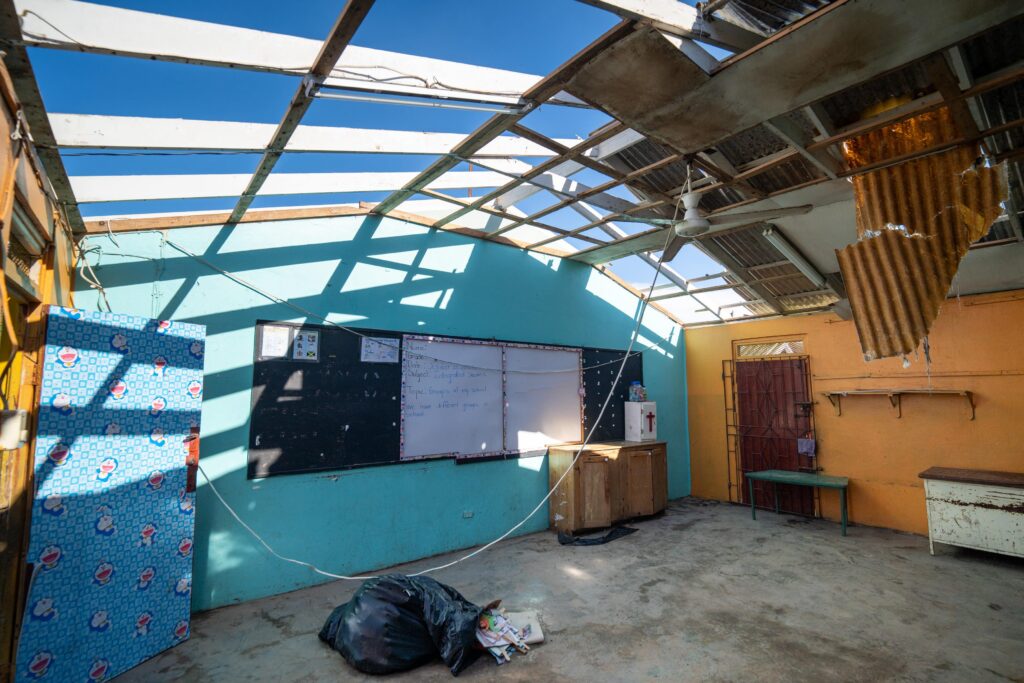
Unlike the economic contraction brought by the COVID pandemic, the current downturn is caused by real damage to the productive capacity of the country, especially in Western Jamaica. Assets that were damaged or destroyed include homes, business places, hotels, hospitals, schools, electricity transmission and distribution networks, water supply facilities and other infrastructure. 215,000 buildings sustained damage of varying severity, including approximately 190,000 homes of which 24,000 were completely destroyed.
The World Bank’s estimate, based on intense aerial studies, is that the physical damage to the assets of the country, both public and privately owned, is US$8.8 billion (J$1.36 trillion). That is approximately 40% of Jamaica’s GDP. The Planning Institute of Jamaica (PIOJ) has more recently indicated that when economic losses and various additional costs are included, the total loss to Jamaica from Melissa is US$12.2 billion (J$1.98 Trillion), or approximately 56% of GDP.
In other words, we have been hit very hard, and we need to fight even harder to get out of the slump. Early investment in recovery is needed to turn the negative cycle occasioned by Melissa’s destruction into positive economic growth. Some may be familiar with the proverb Early Money Is Like Yeast, which encapsulates this truism.
The time to aggressively pursue recovery from the Melissa disaster and to set the platform for higher levels of sustainable growth is while the fiscal rules are suspended. Now is the time to drive GDP growth, as it will be more challenging once the maximum two-year suspension of the fiscal rules comes to an end. The law does not permit any further extension.
At that point (i.e. in the fiscal year commencing April 1, 2028), the fiscal rules will again chip in. The fiscal rules will then require years of tight fiscal policy to generate higher primary surpluses that can bring the public debt down to the 60% of GDP by the legislated deadline. This will clamp down on expenditure on infrastructure and other public goods. Having stripped the cupboard bare with the sell-off of NMIA’s and SIA’s future revenues, no major forward sale is planned that can provide additional space at that time.
So, with the fiscal rules being temporarily suspended, now is the time to really focus on driving recovery and growth. However, this is not the strategy that the Government is pursuing. The Government’s housing repair programme (ROOFS) is J$10 billion for the current 2025/26 fiscal year. That is less than one-third of 1% (0.3%) of GDP.
A J$500,000 grant to households rendered homeless by the storm, while no doubt welcome, is also clearly inadequate to rebuild those homes.
The same is true for the close to households who suffered major damage and are receiving $200,000 grants towards their repairs, and the $75,000 for those who suffered less major damage. Welcome, no doubt, but clearly insufficient to repair the major damage to those homes.
These grants are limited to those households that have been assessed by the Ministry of Labour & Social Security, and the numbers suggest that it will not cover 100% of those who suffered total loss or major damage.
As J$5 billion has been allocated to those whose homes have to be totally rebuilt, it implies support for only 10,000 households out of the 24,000 homes that were totally destroyed.
Similarly, with J$4 billion allocated to those needing major repairs and J$1 billion allocated to those needing less extensive repairs, this implies support for only 33,333 households out of the 166,000 households that are estimated to have suffered damage needing repairs across those two categories.
The upshot is that there is a real need for much more extensive investment in restoring decent habitable shelter to Jamaicans who suffered housing damage, much of which is uninsured. Homes that receive only partial repairs and are not restored to full habitability will mean families that are hobbled by unplanned housing repair costs for months and years to come. This will only reduce their disposable income on the ordinary needs of life, and feed into further economic malaise, the various manifestations of poverty, and worsen the growing problem of mental illness.
The ROOFS programme also appears to ignore the element of reliance in its design. Merely handing out grants of amounts which are manifestly insufficient to cover the cost of adequate repairs guarantees that households resort to the least-cost approaches to effecting their repairs.
This is clearly short-sighted, as Jamaicans should be using construction materials and techniques that will make their homes more resilient to future climate disasters than they were before. Where is the guidance and supervision to ensure that basic but effective techniques to ensure greater resilience are followed? Where is the monitoring to ensure the use of bolts, straps and other relatively low-cost construction inputs that provide greater resilience to hurricane winds and rains?
That was 2025/26. What are we to expect from the Budget for the coming 2026/27 fiscal year?
Despite this massive hit to the economy and the growing despair and anger of the many thousands of Jamaicans who really need help, the budget for the coming year allocates a contingency of J$30 billion for capital expenditure on recovery from Hurricane Melissa. That is less than 1% of GDP.
The Budget also brings a tax package of J$18 billion, at a time when the economy is reeling from Melissa and the war in the Middle East threatens to drive up the cost of living. This is not a Budget to drive economic recovery.
The Government’s February 2026 Fiscal Policy Paper projects negative real GDP growth of 0.5% of GDP for the upcoming 2026/27 fiscal year. This is not surprising, as the tax package will reduce disposable income and further constrain consumer demand.
This aspect of the Budget will therefore be pro-cyclical in its effect, suppressing consumer demand and re-enforcing the downward spiral of the economy.
This could not come at a worse time, when the war in the Middle East is driving up oil and gas prices. This will flow through into higher prices for consumers here in Jamaica. The combination of the post-Melissa hardship, the Middle East War and the Government’s tax package is a toxic cocktail. It will be bitter medicine for the Jamaican people. The Prime Minister needs to tell the people what his plans are for protecting the society from this impact, especially those who are still struggling to get their lives back together after Melissa.
This Problematic Tax Package
As expertly outlined by our Spokesperson for Finance, the Government was not forced into this tax package. It was not forced into continuing to extract funds from the NHT. There are other options and a betta way forward.
Our Finance Spokesperson has drilled down and shown in detail that by focusing on the needs of the post-Melissa economy rather than unimaginative bookkeeping solutions, the Government could have avoided imposing J$29.4 billion of new revenue measures (J$18.1 billion of new taxes and J$11.4 billion of NHT extraction) on the Jamaican people for the coming 2026/27 fiscal year.
As he has shown, there is a better way. The impact on the debt-to-GDP ratio of financing the gap without resorting to additional taxation is minimal, at a mere 0.44%. Our approach would leave more money in the pockets of the Jamaican people and more resources in the reserves of the NHT, to help reverse the negative GDP growth that Jamaica is now suffering, and drive recovery at a faster rate.
Looking at the specific tax measures, they are problematic. J$10.1 billion of the tax package is on sweetened beverages and will mainly come out of the pockets of low-income households. Similarly, the $3.6 Billion increase in the Environmental Protection Levy (EPL) will be borne by consumers.
Jamaicans are already facing hard times, with a cost-of-living crisis after the Melissa disaster, and it will be made even worse by the tax package the Government is imposing on the people. These revenue measures will have an inflationary impact, pushing up the cost of living for the Jamaican people at a time when the cost-of-living spikes due to the war in the Middle East.
As our Finance Spokesperson pointed out, despite the way in which they have been sold to the public, neither of those taxes is designed in a way which will improve public health or support environmental causes.
The tax on sweetened drinks is imposed on the volume of liquid, not on the amount of sugar, in the container, and therefore provides no incentive for beverage manufacturers to reduce sugar content. Furthermore, the mere fact that the Government intends to collect this tax means that it intends for the beverages to be purchased so as to generate the tax, not to reduce consumption.
This bottle of water contains 500ML, and it costs J$100 in the corner shop or on the street. Two of these bottles of water make one litre and cost J$200. A litre of gas is J$185 at the pump. Water costs more than gas! If we really want to encourage healthy consumption, remove GCT from water and other healthy alternatives so that people can afford to buy them.
The EPL has nothing to do with environmental protection. Despite its name, it goes into the Consolidated Fund as general revenue like any other tax, and is not earmarked to fund expenditures to protect the environment.
Furthermore, the announced change to the EPL will favour importers and make local manufacturers less competitive. As it stands now, the EPL is applied to 100% of the CIF value of imports, but is applied to 75% of the sale price of locally manufactured goods. This differential recognises different positions occupied by importers and manufacturers in the local supply chain. Importers add their profit margin to the CIF value, and there may then be additional margins added by distributors and retailers. Applying the EPL to 75% of the sale price of locally manufactured goods seeks to level the playing field, as the manufacturers’ sale price includes all the value added of their input costs and their profit margin.
The Government is now going to apply the EPL to 100% of the sale price of locally manufactured goods, in addition to increasing the EPL from 0.5% to 0.8%. This means that the cost burden of the EPL to local manufacturers will be greater than it is to importers, favouring imports over local manufacturing of competing products. This is a major design flaw in the new tax, which needs to be corrected.
In her Revenue Measures Ministry Paper #17, the Minister of Finance said that the Government is putting GCT on Digital Services and Intangibles purchased from overseas providers by consumers in Jamaica. It says this is projected to raise J$300 million in the last quarter of the upcoming 2026/27 fiscal year, and J$4.2 billion in fiscal year 2027/28. Then, in her Budget speech last Tuesday, the Minister has spread confusion and muddied the waters by seeking to justify this new tax as protecting local retailers. How can imposing GCT on digital services help local retailers? This is policy incoherence. In 2024, the Government already provided an incentive for imported goods that are purchased online, by doubling the Customs Duty threshold from US$50 to US$100.
Draining the NHT
This year, we celebrate the 50th anniversary of the establishment of the National Housing Trust, a transformational institutional innovation of the late great Prime Minister Michael Manley.
Sadly, the budget for the coming fiscal year 2026/27 again includes non-tax revenue of $11.4 Billion, in the form of a transfer of resources out of the National Housing Trust (NHT) to the Government’s coffers.
We must recall that this was originally introduced in 2013 as a temporary 4-year measure ending in 2017. It was necessary at the height of Jamaica’s debt crisis, when Jamaica was required to achieve a primary surplus of 7.5% to turn the economy on a path to debt sustainability. It achieved that objective, and Jamaica was able to discontinue its borrowing relationship with the IMF in 2017.
Despite those circumstances, the then Opposition vehemently criticised it at that time. They even likened it to a bank robbery, and its leader Andrew Holness (now the Prime Minister), said that he would never let it happen. He said he would ring fence the NHT to prevent its resources from being taken by the Government. He committed to reversing it should he become Prime Minister.
Those words were utterly false. Under his watch as Minister responsible for the NHT, this Government has passed legislation twice to extend it over its 10 years in office. Indeed, since it came to office in 2016, this Government has withdrawn $114 Billion from the NHT as non-tax revenue. This continued over that period despite Jamaica needing to increase the construction of affordable houses by 15,000 per year to satisfy the unmet demand, and despite Jamaica having left the IMF borrowing programme since 2017.
Now the Government has announced in its Throne Speech that it will extend the annual extraction from the NHT for a further 5 years to March 2031, meaning that the financial base of the NHT will be reduced by a further $57 Billion over the next 5 years.
At a time when Jamaica’s housing stock in the Western parishes has been decimated by Melissa, these are resources which should be deployed by the NHT to rebuild resilient homes for the many thousands of households who suffered varying degrees of damage to their houses. This is not the time to be drawing the money out of the NHT to balance the Government’s fiscal accounts.
With a mere $30 Billion, less than 1% of GDP, allocated in the budget towards Melissa recovery expenditure for the coming 2026/27 fiscal year, the NHT should be empowered and mandated to play a much greater part in restoring resilient shelter in Western Jamaica. This is not the time to be depleting the resources of the most important housing institution in Jamaica.
Empowering communities to lead the Reconstruction
In the context of the need to drive recovery, I am concerned that the allocation of $100 Billion for Central Government capital expenditure in the coming 2026/27 fiscal year is unlikely to be spent, given the chronic strictures of the procurement rules and other bottlenecks that have been impeding effective execution of capital projects year after year.
It would be more effective to channel a part of these resources through the Municipal Corporations and agencies that operate at the community level (such as SDC, NWC, RADA and NSWMA) in executing relatively small but urgently-needed tasks in the aftermath of Hurricane Melissa.
These resources should be deployed to undertake the removal of fallen tree debris, restoring pedestrian walkways and footpaths, restoring fences around publicly owned properties, repairing catchment tanks, cleaning of intakes to springs, cleaning of side drains and culverts, repairing of broken retaining walls and other small structural repairs, and the like.
Tax Compliance, Not New Taxes
In the quest for greater fiscal space to fund investments to drive national development, there is also another revenue strategy which urgently needs to be pursued.
The design of a tax system determines its performance more than its statutory rates. Where systems are fragmented, revenue leaks. Where systems are integrated and digitally verified, compliance becomes automatic.
PwC’s Preliminary Review of the Budget highlighted the importance of increasing tax compliance “so that everyone bears their fair share rather than the burden falling on those who meet the moment and pay their taxes as part of their civic duty”.
The next stage of Jamaica’s economic reform should not be about increasing tax rates. That is the lazy, unimaginative approach being taken by this Government. We say no to that. It is bad economics and will be damaging to the economy and the Jamaican people in our current circumstances. The next stage should be about ensuring that the taxes that are already on the books are fully and fairly realised.
A revenue system should be judged by how much of what is legally due is actually collected consistently, efficiently, and equitably. Where leakage persists, compliant businesses and consumers shoulder a disproportionate burden. Where enforcement is episodic, fairness erodes. Where systems are fragmented, borrowing costs rise, and compliant taxpayers suffer.
In my March 2024 Budget presentation, I said this to the current Minister of Finance’s predecessor:
“Minister, the current 15th March deadline is pretty rough on everyone who has to file their taxes. Getting the past year’s accounts audited and then preparing the tax returns, all by the 15th March, is really too much of a crunch. An April deadline could ease the pressure significantly. It’s time for a change.
Other countries have later deadlines, which helps with their budgeting and financial planning. Why not take a leaf out of their book? It would give taxpayers who file more time to get their taxes right, and would improve the accuracy of tax filings. It also improves compliance, by allowing a more reasonable deadline. It would be a step towards a stronger, more stable economy.”
I am encouraged to make some further recommendations today, because in February this year we passed legislation partially implementing that recommendation.
I say “partially”, because that change in the filing deadline from March to April only applies to taxpayers which are corporations. Individuals and professional firms that operate as partnerships still have to file by the 15th March. We should streamline it so that everyone benefits from the more sensible and practical April filing date.
The success of the tax amnesty in the first quarter of 2025, which collected J$10.5 billion in outstanding taxes, illustrates the benefit of providing taxpayers with attractive mechanisms for coming forward voluntarily to settle outstanding tax matters and regularise their tax affairs. I support the call for a voluntary structured tax settlement programme to be developed and implemented in Jamaica.
Jamaica also needs to seriously pursue a structural integration of systems so that compliance becomes automatic rather than discretionary. Some estimates suggest that the improved realisation across key revenue categories could yield J$60 billion annually, without increasing statutory rates.
Our Finance Spokesperson provided a telling example of how J$8.6 billion of this can be achieved in the coming fiscal year.
General Consumption Tax (GCT) is Jamaica’s largest indirect tax, projected to generate J$330 billion in the upcoming fiscal year, with the related Special Consumption Tax (SCT) projected to generate $113 Billion. The system requires businesses to collect these indirect taxes at the point of sale, hold it temporarily, and remit it later. That time lag creates opportunity for under-reporting, inflated input credits, nil returns despite commercial activity, and fraudulent refund claims. Enforcement relies heavily on audits after the fact, and these are costly and necessarily selective and unevenly applied.
Many countries have addressed this not by raising rates, but by redesigning architecture. Electronic invoicing systems are now standard across much of Latin America and parts of Europe and Asia, requiring invoices to be digitally validated in near real time. Every transaction is time-stamped. Every input credit must match a verified supplier invoice. Returns are auto-populated from validated data.
The shift is transformative, as it moves the system from post-event enforcement to transaction-level verification.
The documented increase in revenue collections from implementing these systems ranges between 5% and 15%, depending on the level of previous compliance. For Jamaica, even a conservative projection of a 2% improvement in effective GCT and SCT realisation would yield J$8.6 billion annually.
No GCT or SCT rate increase required. Just better system design. The Government will likely tell you it isn’t assured and can’t be done. Well, I am here to tell you that with political will and effective management driven by dynamic and energetic leadership, it could and should be done, without delay.
I will share some other examples of how to optimise revenues over the next three years without increasing taxes, as we seek to finance a strong recovery from Melissa on the basis of building back betta.
I move to income tax, which is the largest tax type, projected to yield J$342 billion in the upcoming 2026/17 fiscal year. In this case, leakage flows from artificial loss positions, profit declarations that bear little resemblance to import volumes or sector margins, weak withholding adherence, and payroll inconsistencies. The fundamental issue is structural – tax filings are treated as isolated submissions, rather than nodes in an integrated economic data network.
A modern compliance system would automatically link income tax declarations to:
• GCT turnover data
• Customs imports
• Payroll filings
• Beneficial ownership records
• Director compliance histories
• Municipal approvals
For example, if a company imports J$150 million in goods but declares J$20 million in turnover and a tax loss, the system should flag the anomaly automatically.
A 5% improvement in effective income tax realisation would yield J$17 billion annually.
Again, this is not about raising tax rates. It is about aligning data.
Customs duties are projected at J$78 billion for the upcoming 2026/27 fiscal year. While this is a significant revenue source, the importance of international trade taxes extends beyond the port.
When imports are undervalued or misclassified, GCT on imports is understated. Profit margins are distorted. Income tax collections decline. Sector comparisons become unreliable.
Digital valuation tools and automated inland reconciliation can address this source of revenue leakage. Import data should inform expected turnover bands and profitability benchmarks automatically. Outliers should be visible in real time. A 10% reduction in customs leakage would yield J$8 billion annually, while reinforcing inland compliance.
Municipal building approvals represent hundreds of billions of dollars in economic activity annually, yet they are disconnected from tax reporting systems. A developer may construct a J$600 million project while filing minimal GCT returns or declaring limited income.
Connectivity is needed. Once a building permit is issued, the approved project value should be logged in the tax system, and returns should then auto-populate a project disclosure section. Expected material purchases, contractor invoices and payroll should be benchmarked. It is estimated that correcting 5% of under-reporting in construction-related activity could yield J$3 billion annually.
In 2024, more than 5,000 work permits were approved in Jamaica, yet permit issuance is not systematically reconciled with payroll filings or statutory contributions. If a company holds 10 active work permits but files payroll for only 10 employees, the discrepancy should trigger an automated review. Fixing this could generate J$250 million annually, reinforcing a simple principle that every compliance node must connect.
In summary, if well executed and taken together, these systemic reforms could yield additional revenue per year of close to 2% of GDP, without increasing taxes.
That is not incremental reform. It represents an additional fiscal space of 10% of GDP over five years. It is achievable not by increasing the tax burden, but by being smarter in how we utilise the architecture of the tax system.
Reform to improve the integrity of the tax system is not punitive. It promotes economic fairness. It protects compliant businesses from being undercut by non-compliant competitors. It narrows bureaucratic discretion. It shrinks the space for corruption. It strengthens investor confidence. It increases fairness.
Jamaica does not need higher tax rates. It needs systems where invoices validate themselves, where payroll reconciles with permits. Where imports reconcile with profits. Where building approvals inform tax returns. Where risk detection becomes structural rather than episodic.
Revenue integrity should be a priority on the fiscal agenda, rather than burdening the population with new taxes in an economic slump. The opportunity is measurable, international precedent is clear, and the fiscal dividend would be substantial.
Climate Justice: Jamaica Must Use International Law
The massive Category 5 Hurricane Melissa is now estimated to have caused loss and damage to Jamaica amounting to US$12.2 billion (or 56% of Jamaica’s GDP), setting Jamaica back for many years to come. The cost that lies ahead to rebuild and insure against recurring Category 5 and stronger storms will be very heavy, also.
The question arises: Can and will Jamaica bear alone this massive cost for destruction to which it contributed so little?
Category 5 Melissa was not happenstance. It was not an accident. It was the result of decades of certain Member States of the global community stubbornly resisting scientific consensus that their carbon-releasing activities were leading to catastrophic changes in the global climate. They chose to continue substantially unchanged, allowing their fossil fuel-based economies to continue unabated, while effectively exporting the climate-related costs to less developed and vulnerable nations, including Small Island Developing States like Jamaica.
In earlier times, Jamaica was known to have one major hurricane (that is, Category 4 or above) roughly every 40 years. However, in the 37 years since Hurricane Gilbert in 1988, Jamaica has experienced 4 such systems. There were two Category 4 hurricanes (Ivan in 2004 and Dean in 2007), and then two Category 5 hurricanes in successive years (Beryl in 2024, and the catastrophic Melissa in 2025). Hurricanes Ivan, Dean and Beryl caused loss and damage to Jamaica of US$1.079 billion.
Outside of some important voluntary contributions from third parties, Jamaica bore the cost of the expenditures relating to these disasters. Financing, mainly through loans, incurs interest and capital repayment, as well as some conditionalities.
Jamaica has had to absorb those costs substantially on our own, partly because (i) the link between CO2 emissions and climate change was not firmly established; (ii) the legal, scientific, negotiating, technical, and administrative capabilities were not in place, and (iii) the international legal framework was still in negotiation.
Hurricane Melissa has created a potentially game-changing shift. Among other things:
- Melissa did not follow the historical pattern of these major systems. Melissa was a tropical storm system which, while meandering slowly and stationary in the Caribbean, intensified rapidly in these waters where sea temperatures have reached 1.4 Degrees above preindustrial levels, and then moved directly to Jamaica. It is generally accepted that Melissa’s peculiar intensification and power were a climate-related phenomenon.
- Hurricane Melissa struck Jamaica about 4 months after the International Court of Justice had issued a unanimous Advisory Judgement that States can be held liable for damages caused by Climate Change.
Jamaica has been a minimal emitter of greenhouse gases that have caused global warming, yet we are bearing the pain from the irresponsible and selfish actions of others. This is fundamentally unjust and unprincipled.
As a major victim of the effects of climate disasters, Jamaica cannot remain docile and just passively assume a mountain of additional climate-related debt that will fetter and postpone our national development for decades to come. Our country has a duty to lead in its advocacy for fair and just compensation from those states which have put us, and others like us, in this position of extreme vulnerability.
Jamaica, in our own interests and out of a duty to other vulnerable countries like ours, which will continue to bear the loss and damage resulting from climate change, should now assemble a team of the most experienced legal experts to prepare a legal brief on the possibility of recovering compensation for the loss and damage inflicted on us by Melissa.
The legal brief should consider the prospects of a case being taken to the International Court of Justice, relying on the responsibility of certain countries for the global temperature increases that resulted in the damage wrought by Hurricane Melissa. A decision of the International Court of Justice on this issue would be binding on the States found to be liable for the overheating that triggered Hurricane Melissa. This decision, which would be of considerable economic value for Jamaica, may possibly be obtained pursuant to the contentious jurisdiction of the International Court.
Alternatively, but in the same solutions-oriented spirit, the Government of Jamaica should assume a leadership position to encourage the United Nations General Assembly to seek the International Court’s opinion on the levels of compensation that major contributors to global overheating may be called upon to pay for loss and damage caused to individual countries by changing weather patterns.
In the matter of loss and damage caused by the climatic effects of global warming, surely the law and equity are on the side of small, developing states that have not contributed in any significant way to this phenomenon. It is the states which are responsible for major fossil fuel emissions who are causing loss and damage from monster hurricanes such as Melissa. As these major states of emission have caused the damage, it is fitting that they should make reparation for it.
This is in keeping with general principles of State Responsibility in International Law, as well as rules implicit in various treaties on climate change and justice in force today.
Unprincipled Realism
While on the topic of international relations, I noticed the Prime Minister’s exhortation to fellow Caricom Leaders to adopt a foreign policy of “principled realism”. I wondered uneasily to myself what that potentially self-contradictory concept means to him, but it wasn’t long before its first manifestation emerged when the Jamaican Government unilaterally terminated the 50-year Cuban medical assistance programme.
The Foreign Minister, having told Parliament that this decision had “nothing to do with” pressure from the US, a few days later had her Ministry subsequently issue a statement affirming that it is “widely known” that the US has publicly raised concerns with the programme, before articulating unconvincing reasons as the purported justification for the Government terminating a programme which has done so much to help Jamaicans to have access to quality health services and the termination of which has left a massive, unfilled gap in health care delivery, especially in under-served areas.
For the record, we thank the Government and people of Cuba for their 50 years of valuable and selfless service to the Jamaican people, and we join with other Jamaicans who regard this so-called “principled realism” and act of spineless capitulation to external pressure, at the expense of the Jamaican people.
Building Back Betta
It has been five months since Hurricane Melissa devastated our island home. A storm of unforgiving force, Melissa carved her name into the history of our nation. While the most impacted parts of the island were from Manchester heading West through St Elizabeth and Westmoreland on the South Coast, and from St Ann heading West through Trelawny, St. James and Hanover on the North Coast, other sections across Central and Eastern Jamaica also suffered serious damage. When you visit the badly affected areas, the evidence of Melissa’s wrath remains very much before our eyes.
Today, I do not come to this House to merely catalogue the damage, though the numbers are sobering. I come to speak about something more powerful than the storm. I come to speak about the spirit of the Jamaican people.
I have walked through the rubble and debris in Black River and Whitehouse. I have stood in flooded, carcass-littered fields in St. Elizabeth and Westmoreland. I have listened to traumatised ladies in the shelter at Petersfield High School, walked with families devastated housing schemes of Edmund Ridge, Estuary and Catherine Hall in St. James, and talked with mothers in Hanover whose homes lost their roofs. Their lives have been dealt a serious setback, but their hope remains intact.
I have seen what the official reports do not capture: the incredible bravery of so many unsung heroes in the passing Category 5 storm who risked their lives to save the elderly and the weak; neighbours sharing their last meal; churches who lost their roofs still willing to provide a helping hand to those in need; communities caring and sharing, not as individuals, but as one.
I also saw the spirit of Jamaicans who were not affected directly by the storm, but who stepped up in a massive way. They filled barrels, boxes, planes, bags, trucks and cars and headed to the worst-affected areas to help. Our entertainment community were beacons of hope and help, like Shaggy, Sean, Spice, Buju, Bounty, Shenseea, Russian, Kemar, Romeich, and so many more. NGO’s like Food for the Poor, Hanover Charities, World Food Kitchen and several others have played a massive part, helping to fill gaps that the State did not respond to. And then there are our extraordinary Jamaican people, at home and abroad, who lent a helping hand week after week to their brothers and sisters during a very frightening and difficult experience. We all say Thank You!
A storm can take a roof or blow down a house, but it cannot break the spirit of a determined and resilient people. Our people remain unbroken, and so too does our resolve. We will not simply rebuild what was. We must build back betta than before.
This is not a slogan. It must be a covenant: a solemn commitment that the hardship our people have endured will not be wasted and allowed to repeat itself again. We must use this moment of crisis as a catalyst for transformation. The homes we rebuild must be able to withstand the next major storm. The roads we repair or restore must not wash away with the next serious flood.
Our Party is committed to policies and programmes that will build an economy that works for every Jamaican, not just a privileged few. In this post-Melissa period, every policy that I outline today, every programme that I propose, is measured against one question: does it help us build back betta than before?
The State has a fundamental responsibility to the people of Jamaica midst the devastation and loss suffered by so many. Resilience without resources is mere rhetoric. The people need more than speeches. They need prompt and effective action. They need a government that shows up, that fixes what is broken, and that plans not just for the next election but for the next generation.
The Fiscal Foundation: Stewardship in Stormy Weather
Let me address the question that responsible minds are asking: how do we pay for recovery while maintaining fiscal discipline?
I have been in Parliament long enough to know that promises without numbers are mere noise. The PNP understands that every dollar spent must be generated by sustainable sources of revenue and fully accounted for. It was a PNP administration that enacted the Fiscal Responsibility Framework in its current form. It was the last PNP administration that stabilised this economy which others had left it in ruins. We do not abandon fiscal discipline in a crisis. We apply it with greater discernment and precision. Because building back betta than before requires not just vision, but the credibility to finance that vision responsibly.
The hurricane has damaged our infrastructure, but it must not damage our future. We must manage our resources with the care that a good mother manages her household, knowing that recklessness today means greater problems tomorrow.
However, in a time of sharp economic downturn after a calamity that has damaged the nation’s productive capacity, fiscal responsibility does not mean excessive fiscal conservatism. It means judicious fiscal decision-making. It means sensible prioritisation. It means ensuring every dollar we spend on public works creates lasting value, not mere temporary relief that washes away with the next heavy rains. That is what building back betta than before demands.
The current administration has presented its estimates. But I must ask: where is the vision for recovery and reconstruction? Where is the strategy to guarantee that the houses we rebuild will stand for generations?
The PNP is offering not just criticism but a credible alternative. Resilience built in, not added on. And this must be done while protecting the fiscal gains that Jamaicans have sacrificed so much to achieve.
BUILDING BACK: OUR PILLARS OF RECOVERY
Energy: Power for the People
There is no development without energy. Jamaica’s economic development is being retarded by the high cost of energy. Jamaicans pay some of the highest electricity prices in the region. This is not a fact we must accept; it is a problem we must solve.
There will be no affordable energy without competent, bold leadership. To power our recovery and a more productive and competitive economy, we must build back betta than before.
The current licence with the Jamaica Public Service Company expires in 2027. The next licence must be negotiated with one overriding objective: to reduce the cost of electricity for Jamaican households and businesses. This is central to building back betta than before.
The transition to renewable energy must be accelerated, as Jamaica is blessed with ample sources of solar, wind and other renewable energy. They are cleaner and cheaper. As the current war raging in the Middle East shows, Jamaica remains way too vulnerable to external shocks that cause sharp, painful and economically debilitating spikes in the price of the oil and gas that we import to fuel our imbalanced energy sector.
You should have been issuing utility-scale requests for proposals every two to three years, ensuring a steady pipeline of new generation capacity. This modern, forward-looking approach is how we would build back betta than before.
You also need to seriously tackle the social dimension of energy poverty. Tens of thousands of Jamaican households remain informal consumers, living in fear of fires and disconnection. Our electricity empowerment programme would help low-income households regularise their connections, with support for rewiring, inspection, and solar panel installation. This is not just about reducing theft; it is about restoring dignity and security at home. It is about bringing everyone into the light, safely and affordably. That is building back betta than before.
Healthcare: Healing our People
Jamaica’s hospitals in the public health system are in a shockingly bad state. Corridors are filled with patients, vital equipment either does not exist here or is not in working order, and staff are doing the work of three people with the resources of one.
The crisis in our public health system has now been compounded by a decision of this Government to terminate fifty years of fruitful partnership with the Republic of Cuba. For the past half a century, Cuban healthcare workers have served side by side with our own Jamaican professionals in our hospitals and clinics under a bilateral agreement that facilitated this cooperation. At a time when our emergency departments are overflowing, when our operating theatres sit idle for lack of staff, and when our nurses are emigrating in record numbers, this government has chosen to send away approximately 150 Cuban doctors and nurses who were on the ground, working in our public health facilities, serving our people. That is not building back betta than before.
Why not roll out a National Health Insurance Scheme, beginning with full coverage for our most vulnerable: children from birth to eighteen years, seniors sixty-five and older, and persons with disabilities? This expansion of coverage should be a cornerstone of building back betta than before.
You should prioritise functioning diagnostic services in every public hospital. No patient should have to wait for an ambulance to transport them elsewhere for a CT scan. No parish should lack basic radiology capacity. We would ensure that every parish hospital has diagnostic equipment that is working, maintained properly and staffed adequately. That is what a modern health system looks like. That is building back betta than before.
Prevention is better than cure, and prevention requires accessible primary care. You should bring healthcare closer to the people who need it most. We would be upgrading community clinics, extending opening hours and installing better equipment. That is building back betta than before.
You need to restore morale in the health service by restoring respect for those who deliver it. You must compensate health care workers fairly, provide them with housing support through the National Housing Trust, and ensure that they have the tools you need to do your job. A stronger, more resilient health system requires a stronger, better-supported workforce. That is building back betta than before.
Education: Building Minds, Building Futures
A nation that does not properly educate its children cannot achieve its development goals. Jamaica has a crisis in education, with well-documented unacceptable underachievement at the primary and secondary levels, leading to a low rate level of tertiary-level qualification that helps to keep our economy weak, unproductive and uncompetitive.
Hurricane Melissa has made the education crisis worse. Damaged schools, poor access roads, disrupted families and heightened economic pressures have pushed absenteeism to unacceptable levels. Thousands of our children cannot attend school five days a week because they cannot afford transportation or a daily meal. This must be addressed head-on.
Importing 110 old buses for J$1.4 billion for rural student transportation without following competitive procurement procedures has, within a few months, been shown to be a very bad decision, if not worse. We told you so from the beginning. Now, after J$1.4 Billion in purchases and another J$871 Million in operating expenses, you say they are switching to new buses. What a tangled web you weave.
Our plan would have given the people the Rural Initiative for Delivering Education, which we call R.I.D.E., to provide transportation subsidies, initially for 20,000 vulnerable primary and secondary students who are outside the JUTC network. We would be partnering with vetted licensed transport operators and schools to deliver a cash-free, transparent system with the objective of ensuring that no child is left at home because of transportation challenges. That is building back betta than before.
A hungry child cannot learn. An under-nourished student cannot concentrate. You should be ensuring that every child who needs a meal receives one, every single school day. We would be rolling out the Ensuring Adequate Sustenance for Education programme (E.A.S.E.) to expand school nutritional support to 245,000 children. That is building back betta than before.
You should be making sure the children learn, not leaving so many to suffer in illiteracy. Our plan would be to tackle the systemic underperformance by investing in teacher training, smaller classes, and modern learning techniques and materials. We would relentlessly prioritise the fundamentals of reading, writing, arithmetic, and cognitive skills.
You should be addressing the historical deficits of self-esteem, self-love, personal discipline and a sense of responsibility for others. You should be ensuring our children understand who they are, the greatness of their past and their potential, and what it means to be a citizen of Jamaica. We would be tackling adverse social behaviours head-on by embedding the teachings of the Rt. Excellent, Marcus Mosiah Garvey, in the national curriculum and restoring civics education. We would be expanding programmes for children with special needs.
A respected and motivated teacher is a retained teacher, and a retained teacher is a gift to our nation that keeps on giving for generations. Where is your teacher retention plan? You should be encouraging teachers to stay in the system by providing student debt reductions and motor vehicle concessions that increase with years of service. You should be prioritising our teachers when it comes to NHT housing allocations. You should negotiate package deals for teachers to get free internet service as a tool of their trade. You should be valuing our educators by practical policies that improve their quality of life is part of building back betta than before.
Only about 21% of the eligible population is enrolled in tertiary education, and only 15% of the total workforce holds a formal tertiary-level qualification. Jamaica cannot move up the value chain and create an economy that delivers wealth for all our people without expanding access to tertiary education.
You should be doing something about this, but you are failing the people. We would be rolling out the First-in-Family scholarship programme, providing full scholarships for the first person in a family to attend university or college. With the benefit of that investment in their socioeconomic upliftment, they could then help their brothers and sisters to do the same.
Education should lift people up, not weigh them down. Too many graduates are suffering under the weight of student debt. You need to do more for them. We would have capped Student Loan Bureau repayments at a manageable percentage of the borrower’s income. We would have suspended the payment obligation during periods of unemployment, without penalty. We believe that creating accessible transitions from education to employment is building back betta than before.
Agriculture and Food Security
Hurricane Melissa did not only destroy homes; it damaged livelihoods. Our farmers, already struggling with low technology and limited financial and technical support, lost crops, livestock, greenhouses and other structures, and months of invested labour and capital.
But in every crisis, there lies opportunity. The opportunity before us is to transform Jamaican agriculture into a modern, resilient, productive sector. That is how to build back betta than before.
You need to get more serious about building agriculture as a pillar of the economy. Investing in our farmers is building back betta than before. We would have established an Agricultural Development Fund, financed by a reallocation of a portion of existing import taxes on food, investing the food import taxes in our own production.
We would use it to support land preparation, irrigation, storage, and marketing for local farmers. We would be reducing post-harvest losses from 30% to 20% or less within five years. We would be expanding irrigation from the current 18% of arable land to at least 25%. Water security enhances food security. That is building back betta than before.
You should be deepening and strengthening the linkages between farmers and consumers. The school feeding programme should prioritise locally grown nutritious food. Hotels and restaurants should be encouraged and supported to buy Jamaican. Special Economic Zones should be established for agriculture, focusing on export crops where we have a competitive advantage: for example, yams, spices, orchard crops, and medicinal cannabis. Creating these linkages and markets would be building back betta than before.
In my 2024 budget presentation, I spoke to the need for greater transparency and rationality in how import permits are allocated. Imported produce that competes with local farmers raises serious issues of fairness, as the playing field is not level when farmers in North America and Europe benefit from massive state subsidies alongside other advantages such as economies of scale. The system of granting import permits is also conducive of corruption.
At that time, onion imports were causing losses to farmers at a time of ample local supply. It is distressing to read in the media, once again, of a large onion farmer thinking of giving up agriculture and going into another profession because of the market being undermined by cheap imports.
This is not just bad policy. It is infected with nepotism. I have seen the customs declaration for an imported shipment of 1,300 bags of onions brought in by a communications company owned by a JLP activist and former MP. The system of granting import permits needs to be overhauled and put on a transparent footing, with priority being given to importers that represent and support the affected farmers, rather than politically-connected margin-gatherers.
Remittances and the Future
In the context of this discussion on food security, it is also worth pointing out a peculiar vulnerability of the Jamaican economy, which is our abnormal dependence on remittances.
Remittances now provide some US$3.5 billion of financing to the Jamaican people each year. With 100% retention in the local economy and the direct support it provides for lower-income families, this is the largest, most important and most impactful source of foreign exchange available to Jamaica.
Remittances are a vital buffer in times of crisis. During the pandemic, when the other large foreign exchange earner (tourism) dried up as international travel ceased, our balance payment remained largely unaffected, and the exchange rate remained stable because of the increase in remittances, which effectively rebalanced the current account.
Similarly, after Melissa struck, in December 2025, net remittance flows of US$315.3 million represented a 13.6% increase over the same month in the prior year, helping to fund the revaluation of our currency, which has helped to keep inflation below what the BOJ had originally projected after the storm.
Even in normal times, remittances help to sustain our current account balance and finance our imports, including US$1.4 billion of food imports, which amount to nearly 20% of total imports.
We must big up and give thanks to the Jamaican Diaspora for their commitment to their home country and to the families back a yard. Their role in our economy is fundamental, and they deserve to be treated as worthy partners and facilitated in their participation in national development.
At the same time, we must acknowledge that, over the medium to long term, remittance flows are vulnerable to adverse shocks. We are seeing this with the recent 1% tax on certain remittances and the intensification of deportations from the US. As generations evolve from persons who were born here to their descendants whose ties to Jamaica are less direct, it will also have an impact.
This means that, in building back betta, we must be mindful of the strategic imperative of reducing our dependency on imported food and energy and driving a fundamental shift towards greater production to meet our population’s needs for energy and food.
Shelter with Dignity
The images that emerged after Hurricane Melissa will stay with us for years: families sifting through rubble, children sleeping in school rooms and community centres, elderly persons exposed to the elements.
Housing is not just about shelter; it is about dignity. And too many Jamaicans have been denied that dignity for too long. When we rebuild, we cannot rebuild the same vulnerable structures. We must build back betta than before.
The housing deficit stands at nearly 200,000 units, yet only 2,300 homes have been built annually by the NHT over the past decade. 21% of our population lives in informal settlements. This is not merely another statistic; it is a national failure of epic proportions.
You should be incentivising development in our deep rural communities. You should be offering relocation grants to teachers and healthcare workers to serve in these areas. We would be building at least 500 new houses per term in rural constituencies, and we would prioritise public sector workers and persons with disabilities. That would build back rural communities betta than before.
You must end the annual extraction of J$11.4 Billion from the National Housing Trust. Our Spokesperson for Finance has shown how we would finance this in a fiscally responsible way. That money should once again be used for housing, not for plugging the Government’s annual fiscal accounts. The NHT should deploy those resources as part of a massive resilient housing restoration drive for families who are still suffering from inadequate shelter after Hurricane Melissa. Returning the NHT to its core purpose would help to build back betta than before.
Creating new, affordable homeownership is the only way we ensure that Jamaicans who are toiling day and night to get ahead actually have the opportunity to own their own home. You are failing as a government to meet the affordable housing needs of the people.
That is why we would be building 50,000 affordable houses over five years on public lands, and we would exclude the value of the land from the purchase price to make ownership more affordable and accessible.
That is also why we would have established a Young Owners Deposit Fund to provide grants of $500,000 to first-time homeowners under forty-five years of age who have contributed to the NHT for at least two years.
It is why we would be granting new home-buyers a 3-month grace period after their home purchase, before their mortgage payments begin, giving them breathing room to fix up and furnish their new home.
It is why we would have rolled out the Rent-to-Own programme so that self-employed and informally-employed Jamaicans can become homeowners. After six months of consistent rental payments, they would qualify for a NHT mortgage. We would also allow a portion of rent to count toward their deposit, creating a clear pathway from tenancy to ownership. That would be building back betta than before.
For public sector workers, we would restore the specially reduced interest rates on their NHT loans. We would apply a preferential 40% debt service ratio, allowing them to qualify for larger loans. Recognising their service with tangible support is the right thing to do in building back betta.
Land: Ownership and Justice
Land is the source of wealth. Land ownership is a cornerstone of national identity. Yet too many Jamaicans live on land they do not own, unable to access credit, unable to build equity, unable to pass anything to their children.
You need to address the conditions faced by hundreds of thousands of Jamaicans who live in informal settlements. We would be regularising informal settlements across Jamaica, completing all unfinished Operation PRIDE schemes, and upgrading older communities with proper sidewalks, drainage, and green spaces. We would be replacing zinc fences with concrete walls, not just for cosmetic reasons but for living in dignity.
We would call this our PORTIA Programme, in honour of Jamaica’s first female Prime Minister. She always stood up for those who needed help. Transforming our communities with proper infrastructure is building back betta than before.
Land policy must create intergenerational security for the Jamaican people. Families who have built homes and lived on land for generations should not live in fear of eviction. The law and the State must provide an accessible pathway for them to become owners. You are doing nothing about this.
Our land policy would change it. We would ensure that when it comes to land ownership, we build back a betta, more cohesive society than before. We would amend the law to reduce the period required for adverse possession of Crown lands from 60 years, initially to 25 years.
Even while we are in Opposition, we are determined to move this forward. We have done the preparatory research and drafting work. We have prepared the Bill to implement this vital social justice reform. It will amend three existing pieces of legislation: the Limitation of Actions Act, the Registration of Titles Act and the Cadastral Mapping and Tenure Clarification (Special Provisions) Act. I will be tabling this as a Private Member’s Bill after the Budget debate, and seeking support for it from both sides of the aisle.
Where possession is well-established, but the 25-year threshold has not yet been met, we would also facilitate purchase and titling at affordable prices with concessionary payment terms.
This is social justice, which is a fundamental aspiration of our political movement. That is building back betta than before.
After ten years in government, what have you done about beach access in Jamaica? More and more beaches are being taken away from the public. Our people are crying out for access to the beaches of this island. You have been dragging its feet on this issue for years. Your policy is stuck in the usual multiple announcements phase.
We would use the law to guarantee public access, while balancing legitimate tourism and private interests. No Jamaican should be barred from the foreshore. Restoring our people’s connection to our natural heritage should be part of building back betta than before.
The Roads that Connect Us
Hurricane Melissa left Jamaica’s already appalling rural road network in an even more deplorable condition.
Farmers in St. Thomas cannot get their produce to market. Children in Portland struggle to get to school. Patients in St. Elizabeth suffer in trying to reach health centres. Fixing the road network is an urgent national priority. It must be done properly, to build back betta than before.
It must place climate resilience at the core. That means proper drainage systems, not pitchy-patchy repairs that don’t stand up to the next heavy rain. It means culverts and drainage systems are designed for current climate conditions.
After ten years, this Government has failed to deliver a comprehensive road maintenance plan. Now it says it wants to create a One Road Authority. We are not against streamlining responsibilities and promoting best practices and quality assurance. However, local authorities must be empowered to execute robust road repair and maintenance programmes in each parish.
We would treat road maintenance as a permanent commitment by establishing a Divisional Road Maintenance Fund and allocating at least J$15 million per division annually for local road maintenance, to be administered through the local authorities.
Special provision needs to be made for farm roads. When a farmer cannot get his yam to Coronation Market, or when a truck cannot reach a rural agro-processing centre, it undermines food security and we all pay the price. The road from the farm to the fork must be passable, reliable, and resilient. We would include a further amount (at least $5 million annually per division in rural areas) to maintain farm-to-market roads. That would be building back betta than before.
This approach would avoid the pitfalls of centralised bureaucracy. It would empower local people, with local knowledge, to fix local roads on a timely basis. This places accountability where it belongs: in the hands of local communities and their local representatives. That would be building back betta than before.
Cultural and Creative Economy: Heartbeat of our Nation
I turn now to the cultural and creative economy, which is not merely an economic sector but the very heartbeat of our nation.
The contraction in tourism, the closure of hotels and restaurants, and the cancellation of cultural tours since Melissa has disrupted the cultural economy of the tourism belt. Community recreation and entertainment, the fish fries and round robins that keep our communities alive, have taken a hit.
Over recent months, we have also had to say farewell to too many of our cultural icons. The great Jimmy Cliff, who helped to make reggae music an international genre and carried a message of liberation to the world stage, has left us. We have lost two truly great musicians in Sly Dunbar and Cat Coore. Max Romeo and Cocoa Tea, two much-loved voices of our genre, have passed. These were not only entertainers. They were architects of our national identity, ambassadors of our culture, and chroniclers of our lived experience. We honour their memory.
It is in this context that I renew my call, made in this House repeatedly over the last two years, for the conferral of the Order of National Hero on the Honourable Robert Nesta Marley and the Honourable Louise Bennet Coverley.
Bob Marley is not just Jamaica’s most famous musician; he is a global symbol of One Love, unity and resistance to oppression in all its forms. His legacy continues to grow and inspire all people of the World. He is deserving of our highest national honour. His eightieth birthday has passed, and the Government must act.
Miss Lou’s pioneering performances and poetry in the Jamaican language provided deeper consciousness and self-affirmation of our cultural identity, and uplifted our national confidence. She should be recognised as our second female National Heroine.
In building back betta, you must ensure that our artists, musicians and creatives have access to financing, training and markets. Right now, they are too often on their own. We would establish a $1 Billion revolving Creative Economy Fund to support our creative practitioners in entertainment, the arts, fashion and culture. Investing in our globally-competitive cultural assets would build back betta than before.
The current system for obtaining permits for entertainment events is fragmented, frustrating and often unfair, especially in communities that are stigmatised. The system needs to be made simple, transparent and fair. Why haven’t you fixed this? We need less talk and more action. Our plan would establish a single-window, one-stop permit system for entertainment event applications.
We will build back the cultural economy betta than before, because when we invest in our culture, we nourish the heart and soul of Jamaica.
We recognise the importance of Culture and Creative Industries in general and the entertainment sector in particular, in providing livelihoods and driving commerce at the base of the economy.
Micro, Small & Medium Enterprises: Driving the Economy
If you want to gauge the buoyancy of Jamaica’s economy, look at the stock market under this Government. They have presided over five years of dormant valuations, sluggish listings, with diminishing returns and wealth.
But what about the market vendor, the corner shop owner, the mechanic, the hairdresser, the small contractor? These should be the real engines of our economy, but they are struggling. You must empower MSMEs with concrete, practical support.
Jamaica’s informal economy has been estimated at 40% of the overall economy. This inhibits national development. Informality limits the scope for business expansion. These businesses are often excluded from the financial system and opportunities to build market share. This contributes to Jamaica’s weak economic growth.
The informal economy is large not because Jamaicans want to be outside the system, but because the barriers to formalisation are very high and the incentives are unreachable. The costs of compliance when MSMEs seek to formalise, both in terms of fees and effort, are burdensome. Too many of Jamaica’s bureaucratic systems are business-unfriendly. Even Government programmes for MSME support that are announced and funded year after year repeatedly have failed to have the desired impact. Their design and requirements fail to take the limited capacity of MSMEs into account.
You must lower those costs and remove those barriers. That is what we would be doing. We would offer a three-year tax holiday for businesses once they formalise their operations, and would also provide discounted government registration, permit and licensing fees for doing business throughout the same period. That would build back betta than before.
The government spends billions of dollars annually on goods and services. Small businesses should get their fair share. The law to allow this has been in place since 2019, but nothing has been done to make it happen. Seven years later, you say you will do it now.
This cannot just be mere talk, and more of the same. You should be proactive in pushing for the arrangements to favour MSMEs. Earmark of 15% of government contracts for MSMEs, and actively monitor that target to ensure that it happens. That is what we would be doing. That is building back betta than before.
Our young people have ideas, energy, and talent. They need capital and mentorship. What are you doing about this? It seems to be way too little. We would establish a revolving J$1 Billion National Youth Innovation Fund to support youth-led tech and creative startups. Empowering our youth to innovate and lead would be build back betta than before.
Workers’ Rights: Dignity of Work
The labour movement worked to build modern Jamaica. From the struggles of 1938 to the trade unions of today, workers have fought for every right they enjoy. But those rights are under threat. A stronger, fairer economy for workers is what it means to build back betta than before.
The abuse of contract work arrangements has become a matter of national shame. Workers in some industries are employed for years, sometimes decades, on repeating short-term contracts that deny them the benefits and protections afforded to permanent employees. This undermines the families’ long-term security and weakens social cohesion in our society, It must end.
You seem happy to leave things as they are. We would not do so. We would ensure that genuine workers receive genuine rights, regardless of the legal form of their contracts. We would be passing comprehensive legislation to eliminate these abusive contractual arrangements. That is building back betta than before.
Jamaica needs to promote productivity as the cornerstone of a strong economy. If you work extra hard, you should keep what you earn. What are you doing to incentivise greater national productivity?
We would remove taxes on overtime pay for persons earning up to J$6 million dollars annually. We would remove tax from tips and gratuities for hotel workers and others in the hospitality sector. We would establish Joint Industrial Councils in sectors with high employment but low union representation, bringing employers and workers together to negotiate basic standards on pay and conditions that will attract workers to those industries. That would build back betta than before.
No Jamaican in full time employment should be living in poverty. We would task the Planning Institute of Jamaica with developing a framework for transitioning from a minimum wage to a living wage, tied to the actual cost of living and adjusted annually for inflation. That would build back betta than before.
While doing these important things for the workers, we would not leave out the employers. In taking on the risks of business, they create employment opportunities for our people. They tell us that one of their biggest challenges is finding the skilled workforce that their business needs.
Our economy generally, and reconstruction after Melissa in particular, requires skills that have been depleted by years of migration and the mismanagement of the national training system.
This Government has failed to come to grips with the productivity gap. Productivity has been in persistent long-term decline in Jamaica, at an average annual rate of nearly 0.9%. This problem must be addressed. Sustainable economic growth cannot move to the next gear without a skilled workforce to drive productivity.
We do not believe in importing workers when Jamaicans here can do the work. On the other hand, where skills are needed to build the economy that are not available here, it holds back investment and growth.
Our system of work permits needs to efficiently, transparently and inexpensively facilitate the filling of skills which, based on objective evidence and analysis, are insufficiently available locally. We would implement a digital system for work permit applications to streamline the process for overseas skills, as has been done successfully in Grenada.
While this will help to drive economic growth in the short term, importing skills cannot be a substitute for building and retaining local capacity. Businesses who employ persons from overseas must put in place apprenticeship arrangements to ensure the transfer of skills to local workers, so that when the overseas employee’s contract is up the skills are available here.
Our plan would also incentivise the building of local capacity by providing a matching grant (dollar for dollar) to businesses which invest in training programmes. This would be funded out of HEART but would utilize the best form of training, which is hands-on, on-the-job, practical experience immersed in the work discipline of an actual business environment.
Social Protection: Caring for the Vulnerable
The quality of a society should be measured by how it treats its most vulnerable members.
Our senior citizens, most of whom have spent their working lives in building this country, too often struggle to access their pensions on time. Persons with disabilities face barriers in transportation, housing, education, employment and daily life. Survivors of domestic violence seek shelter and find waiting lists.
What are you doing about these things? Strengthening our social safety net should be a critical part of building back betta than before.
We would prioritize the timely delivery of pension payments and increase the tax exemption on pension income, recognising that our seniors have paid their dues and deserve to live with dignity.
We would be making a real positive change. We would establish a National Disability Fund, allocating $1 Billion dollars annually to support persons with disabilities. This Fund would be providing assistive technologies, improve accessibility, and support organisations that serve the disability community.
We would increase PATH benefits for pregnant mothers, ensuring adequate nutrition during pregnancy.
We would establish support centres in every parish for survivors of domestic and gender-based violence, providing safe haven, counselling, and legal support.
We recognise the important, unsupported social outreach by churches and faith-based organisations to assist vulnerable Jamaicans, especially in underserved communities. We would establish the Faith-Based Community Transformation Fund, funded with J$1 billion annually, to support the programmes of churches and faith-based organisations that strengthen families, promote economic resilience, and build community cohesion.
These are measures which would build back betta than before.
Sustainable National Security
All well-thinking Jamaicans welcome and celebrate the significant fall in murders in Jamaica over the past two years, after eight years of questionable policies, including using States of Emergency as a routine policing tool, that has been rules unconstitutional by the Constitutional Court. I once again want to extend congratulations to the Commissioner of Police and those brave and selfless police officers for this significant achievement.
The policy of focused deterrence has brought results. However, few people are comfortable with the very high level of police fatal shootings, sometimes in circumstances where there are no living witnesses other than the officers involved. Sustained success in law enforcement requires the support and buy-in of the local population, and this will be at risk if there is a feeling that accountability and justice are being sacrificed.
This is why I once again call for the introduction of body-worn cameras, especially on special operations, when many of the controversial fatal shootings take place. Body-worn cameras have been successfully used overseas and are now the norm in several jurisdictions. The JCF will benefit from the enhanced confidence this will bring among the population that they are there to serve and protect.
Clean Slate: A Second Chance
Thousands of Jamaicans are trapped in a cycle of debt that prevents them from moving forward. They owe property taxes, traffic tickets, water bills, and student loans. Interest and penalties have often grown larger than the original debt. They cannot see a way out.
Providing a genuine second chance to these Jamaicans so that they can start over again, is a powerful way to build back betta than before. We should offer them the chance for a Clean Slate.
We would give people some room to restart and recover. We would forgive outstanding interest and penalties owed to the government on these debts. We would provide a moratorium period for repayment of principal.
This is an investment in economic activity. When people are freed from the weight of unpayable debt, they can start back their lives. Most often, they benefit from learning where they went wrong before, and avoid repeating past mistakes. Many will start businesses, buy homes, and contribute to the economy.
Clean Slate is not just compassionate; it is economically sound. It is another block in the foundation for building back betta than before.
Advancing Gender Justice and Women’s Empowerment
Women are the backbone of our economy and society. They run our markets, create new businesses as entrepreneurs, staff our hospitals, lead our classrooms, shape corporations, and hold our families together.
Yet the data shows starkly that systems and structures of our society are failing women in significant respects. One in four women will experience intimate partner violence in her lifetime. Women earn less than men for equivalent work. They are overrepresented in informal employment, without access to pensions, health insurance or housing loans. They bear the primary burden of unpaid care work, which limits their ability to participate fully in the economy.
And when disaster strikes, as it did with Hurricane Melissa, women and girls are disproportionately affected, facing increased risks of violence, displacement and economic insecurity.
What are you doing about this? Concrete, measurable action is needed.
We would tackle gender-based violence as the national emergency it is. We would launch a national mobile application for the immediate reporting of gender-based violence, integrated with emergency services and local shelters.
We would establish Special Victim Support Centres in every parish, providing safe havens, counselling and legal support for survivors.
We would complete the long-outstanding review of the Domestic Violence Act and implement its recommendations to protect women against domestic violence, stalking, cyber harassment and digital abuse.
We would strengthen the economic empowerment of women. Our three-year tax holiday would help women-owned enterprises to step out of the shadows and into the formal economy. Earmarking 15% of government contracts for micro and small businesses would create new opportunities for women entrepreneurs. Our Clean Slate programme, forgiving interest and penalties on debts owed to government, will disproportionately benefit women as they are overrepresented among micro entrepreneurs and informal workers. And our policy to remove tax from overtime pay for persons earning up to $6 million dollars annually will put more money in the pockets of working women.
Our policies on ending the abuse of short-term contracts and the establishment of Joint Industrial Councils in sectors where union representation is low, such as tourism and retail, would benefit women who are predominant in these sectors.
We would seek to enhance women’s participation in political life. For the first time, over 30% of our candidates in the last general elections were women. We will work with all political parties, civil society and the Electoral Commission to explore mechanisms for increasing women’s representation in national and local government.
These measures are part of a comprehensive approach to gender justice that recognises that when women rise, Jamaica rises. When women are safe, families are safe. When women earn, communities prosper. When women lead, governance improves.
Because building back betta than before means building back fairer, building back with justice, and building back so that every Jamaican, regardless of gender, can live in dignity, security and hope.
That is our commitment. That would build back betta than before.
Closing
In six months, Jamaica has endured a ferocious hurricane that has tested our national resilience and will. The war in the Middle East will reverberate to our shores, threatening supply chains, pushing up prices, and making our daily lives even harder. The coming months and years will require many decisions that will test our judgment. This is not the time for lazy thinking and complacency in how the country is governed.
As we have shown in this Budget Debate, there is a better way that things can be done, from the design of the Budget itself to the prioritisation of things that can make Jamaica stronger and make life better for our people.
As this Budget Debate has shown, there is a genuine alternative to the status quo, an alternative that actively builds on the solid foundation of fiscal stability and brings hope to our people. Jamaica’s economy does not need to just drift slowly along as the dreams of our people take them overseas.
Now is the time to build back betta. It is not just a slogan. It is a call to action for Jamaica to step up its game, do the things and make the changes that will bring a positive difference to our reality.
We have put in the time and effort to show that there is a better way forward for Jamaica. We are ready to confront and overcome the challenges and deliver strong and inclusive national development.
Yes, it is possible to build a Jamaica where every child can learn, where workers can earn value for their effort, where business can grow, where each family can own a home, and where every citizen can live with dignity.
May God bless the people of Jamaica and this beautiful land we call home.
Thank you.


Comments