Pamela Redwood | A Region Adrift: Caribbean leadership must rise or be judged by history

/ Our Today
administratorAt a time of profound global disorder marked by geopolitical tension, economic instability, and deep uncertainty small island states stand on the frontlines of vulnerability.
This is precisely the moment that demands strength, unity, and strategic leadership across the Caribbean.
Instead, what is unfolding within CARICOM is deeply troubling.
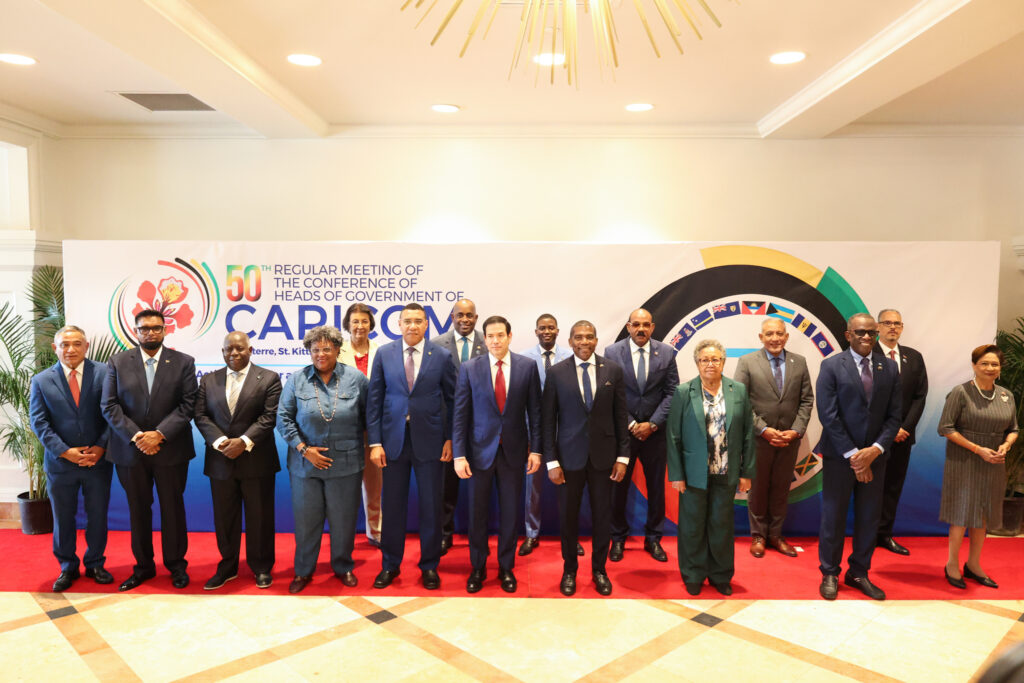
The current rift and public discord among regional leaders is not only unfortunate it is dangerous. It reflects a breakdown in focus at a time when clarity of purpose is essential. What the people of this region are witnessing is not leadership, but distraction; not unity, but fragmentation; not vision, but noise.
And let us be honest, this is far below what is required of those entrusted with guiding the Caribbean through one of the most critical geopolitical moments in modern history.
The world is shifting rapidly. Alliances are being redefined. Economic pressures are tightening. Climate threats continue to intensify. For small island developing states, these are not abstract concerns they are immediate and existential realities. In such a climate, unity is not a luxury. It is survival.
Yet, instead of a coordinated regional response, we are seeing what can only be described as immature and unnecessary exchanges an infantile display that undermines confidence in leadership and weakens the region’s collective standing on the global stage.
This is a failure of responsibility.
The people of the Caribbean expect more and they deserve more. They expect leaders who can rise above ego and political theatrics. Leaders who can share critical ideas, craft unified strategies, and prepare their populations for what lies ahead. Leaders who understand that their role is not to divide attention, but to focus it on the urgent work of safeguarding the region’s future.
Where is the shared vision for economic resilience?
Where is the unified voice on global geopolitical tensions?
Where is the plan to protect Caribbean people from the shocks that are clearly coming?
Silence on substance, and noise on triviality.
This is how regions fall behind. This is how vulnerable states become exposed and irrelevant in the calculations of global power.
Leadership is not about words, it is about direction. It is about discipline. It is about the ability to bring people together, especially when circumstances demand it most. What is currently being displayed does not reflect the gravity of the moment. It reflects a troubling absence of maturity, urgency, and strategic thinking.
History will not be kind.
This is a defining moment for the Caribbean. Future generations will look back and ask whether their leaders rose to meet the challenge—or whether they allowed division and distraction to squander an opportunity to secure the region’s place in an uncertain world.
CARICOM must decide what it stands for. A serious, united regional force capable of protecting and advancing the interests of its people or a fractured body weakened by internal discord and diminished ambition.
The time for petty exchanges is over.
The time for ego-driven politics is over.
The time for small thinking is over.
This moment demands courage. It demands clarity. It demands unity of purpose.
Above all, it demands leadership.
And if those at the helm cannot rise to meet this moment, then they must understand this: the people are watching, the region is at risk, and history will record without mercy, who stood up, and who failed.




Comments