Pamela Redwood | Jamaica cannot afford to drift: A direct message to policymakers

/ Our Today
administrator
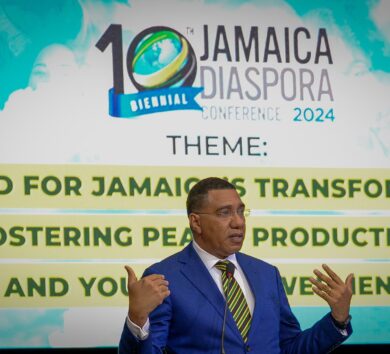
In recent budget presentations in the House of Representatives, both leaders spoke with confidence, recited figures, and defended their respective approaches.
But beyond the rhetoric and the arithmetic, a troubling reality emerged: a failure to confront the global moment with the seriousness it demands.
This is not a routine period in history. This is a structural shift in how the world functions. And yet, there was little in these presentations that meaningfully positioned Jamaica within that reality.
For policymakers, this omission is not minor it is consequential.
We are witnessing the reordering of global power, the weaponisation of trade and finance, persistent supply chain disruptions, and the acceleration of climate and technological pressures. These are not abstract developments. They will define our fiscal stability, our food security, our public health systems, and our national resilience.
To ignore this context or to treat it as peripheral is to govern with a dangerous blind spot.
Let us be clear: Jamaica does not have the luxury of strategic ambiguity. Small states are not insulated from global shocks; they are often the first to feel them and the least equipped to absorb them without deliberate planning.
And that is precisely what was missing.
Where, in these budget presentations, was the clear articulation of Jamaica’s geopolitical and economic positioning?
Where was the contingency planning for external shocks?
Where was the serious commitment to reducing structural vulnerabilities in food, energy, and healthcare
Where was the acknowledgement that “business as usual” is no longer an option?
Instead, what was presented felt inward-looking, focused on managing the present rather than preparing for the inevitable disruptions ahead.
This is not simply a matter of policy preference; it is a question of governance discipline. Policymakers are entrusted not only with managing resources but with anticipating risk and safeguarding the nation against foreseeable threats.
At this moment, that responsibility requires more than incrementalism.

It requires a deliberate pivot.
A pivot toward diversified trade and diplomatic engagement in a fragmented global system.
A pivot toward genuine food security, not aspirational language.
A pivot toward energy independence that shields the economy from external volatility.
A pivot toward strengthening healthcare and technological capacity as pillars of national security, not afterthoughts.
Most importantly, it requires intellectual honesty. The Jamaican people must be engaged with the truth: the world is changing in ways that will impact every household, every sector, and every institution.
Silence or superficial treatment of these realities does not protect the population it leaves them exposed.
Budgets are not just financial exercises; they are strategic documents. They must communicate not only how funds will be allocated, but how the country intends to navigate an increasingly unstable world.
Right now, that clarity is lacking.
This is a moment that demands leadership with foresight, courage, and precision. Not comfort. Not routine. Not political choreography.
If Jamaica is to withstand what is coming and position itself to benefit from what is emerging, policymakers must move beyond presentation and into transformation.
The world is not waiting.
And neither should we.
Send comments and feedback to [email protected].


Comments