
Revised National Water Resources Master Plan for Jamaica

/ Our Today
administrator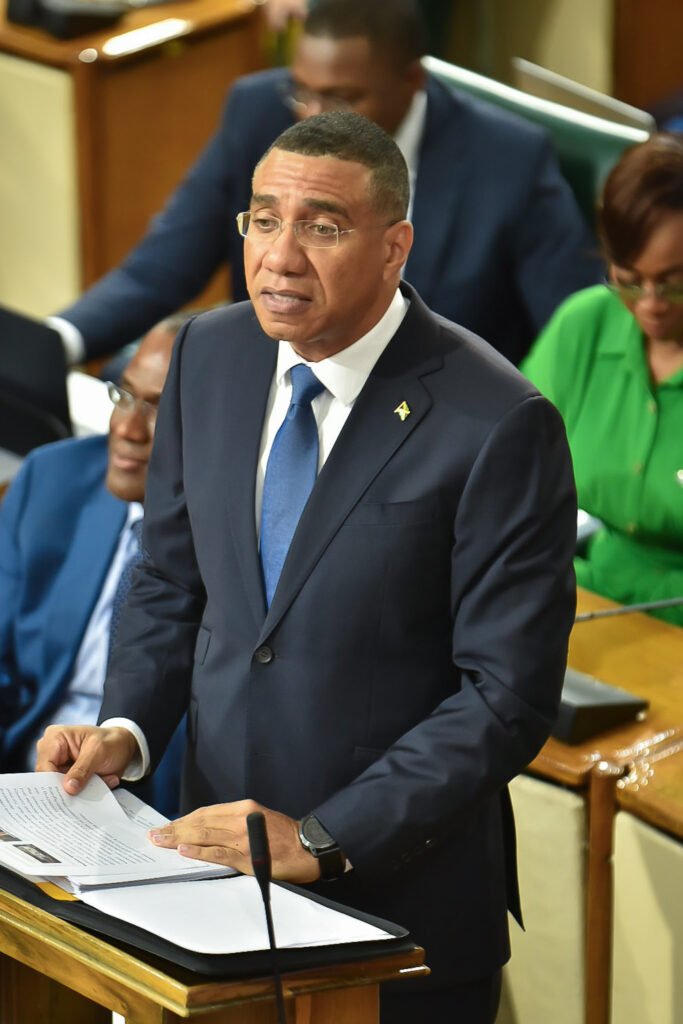
Durrant Pate/ Contributor
Jamaica now has a new water resources master plan, which was devised particularly in the context of climate change and represents a monumental step towards sustainable environmental stewardship.
The revised plan was tabled in Parliament yesterday by Prime Minister Andrew Holness, who stated that “the comprehensive plan acknowledges the critical intersection of water management and climate resilience, and provides a strategic blueprint to navigate the challenges posed by a changing climate.”
Holness announced a number of initiatives, such as the imposition of rainwater harvesting planning guidelines, which, he argued, will not only address immediate water security concerns but also lay a robust foundation for long-term climate adaptation.”
Stating that his Government is committed to the safeguarding and sustainable management of one of our most vital resources, the prime minister outlined some of the strategies for sustainable resource allocation, conservation, and equitable distribution. He contended that the plan lays the groundwork for a resilient and adaptive water infrastructure.
This move, Holness told Parliament, catalyses economic growth and development by ensuring a stable and reliable water supply for agriculture, industry, and urban centres.
Devising revised master plan
The master plan serves as a pivotal link between environmental sustainability, economic dynamism, and overall societal advancement and involves Rainwater Harvesting Planning Guidelines, as a crucial component. It represents an assessment of Jamaica’s water resources and demand based on the period 2016-2019, as mandated by Section 16 of the Water Resources Act, 1995.
The new National Water Resources Master Plan represents an update of both the completed 1990 and Draft 2005 Plans and takes into account the various changes in available data and monitoring techniques, demography, economic activity, and impacts of climate change. Holness advised the House of Representatives that various changes in the water resources and the environment, which have occurred since the previous plans, include:
· Changes in the legislative and institutional framework of the water sector
· Improved estimates of water resources with additional years of hydrological data and advances in technology that allow for better analyses
· Impacts of climate change on projected water demand and availability
· Changes in demographic growth, distribution, industrial and agricultural land usages, and the subsequent changes in water demand for all sectors.
Rainwater harvesting planning guidelines
The new rainwater harvesting planning guidelines is designed to improve water storage, usage, efficiency whilst taking account of conservation measures, which Holness declared are imperatives to reduce demands on existing sources and infrastructure, reduce costs, and reduce vulnerability to drought and the adverse effects of climate change.

“…We are now making national recommendations for all new residential, commercial, institutional (including schools), industrial and office buildings to be constructed with rainwater harvesting capabilities to augment potable and non-potable water supply, the prime minister disclosed in his statement to Parliament.
While Section 61 (a) of the Building Act 2018 in relation to buildings or building work gives the portfolio minister the power to make regulations “for water harvesting, including requiring provision to be made for the storage of rainwater run-off,” Holness said the Ministry of Local Government and Rural Development is now in the process of finalising regulations under the Building Act, 2018. This will include provisions for rainwater harvesting. These guidelines will provide the basis for the nationalisation of those regulations.
He added that the Government has implemented a number of rainwater harvesting projects through various ministries and agencies, such as the Ministry of Economic Growth and Job Creation, Ministry of Education and Youth, Ministry of Agriculture, Fisheries and Mining, Rural Water Supply Limited and the Rural Agricultural Development Authority.
According to the prime minister, “This investment is one of many that the Government is making in its quest for water resilience by 2030. Despite the known frustrations that we all feel when there are water restrictions, this Government is investing at an unprecedented rate in our water infrastructure. These investments include 21 major projects and 44 minor water systems being done this fiscal year by the National Water Commission.”






Comments