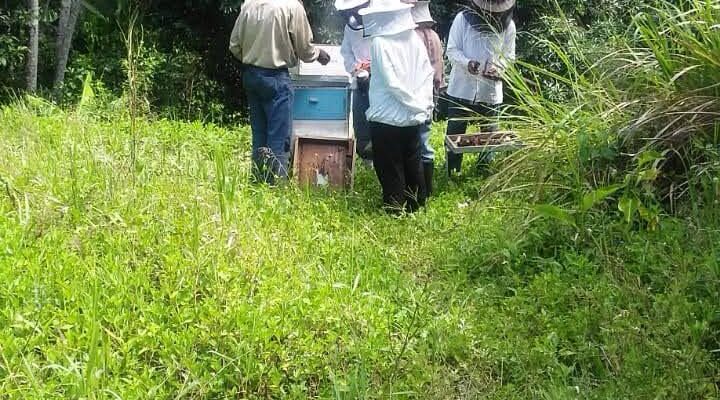
St Mary farmers working to bring sting back to apiculture

/ Our Today
administrator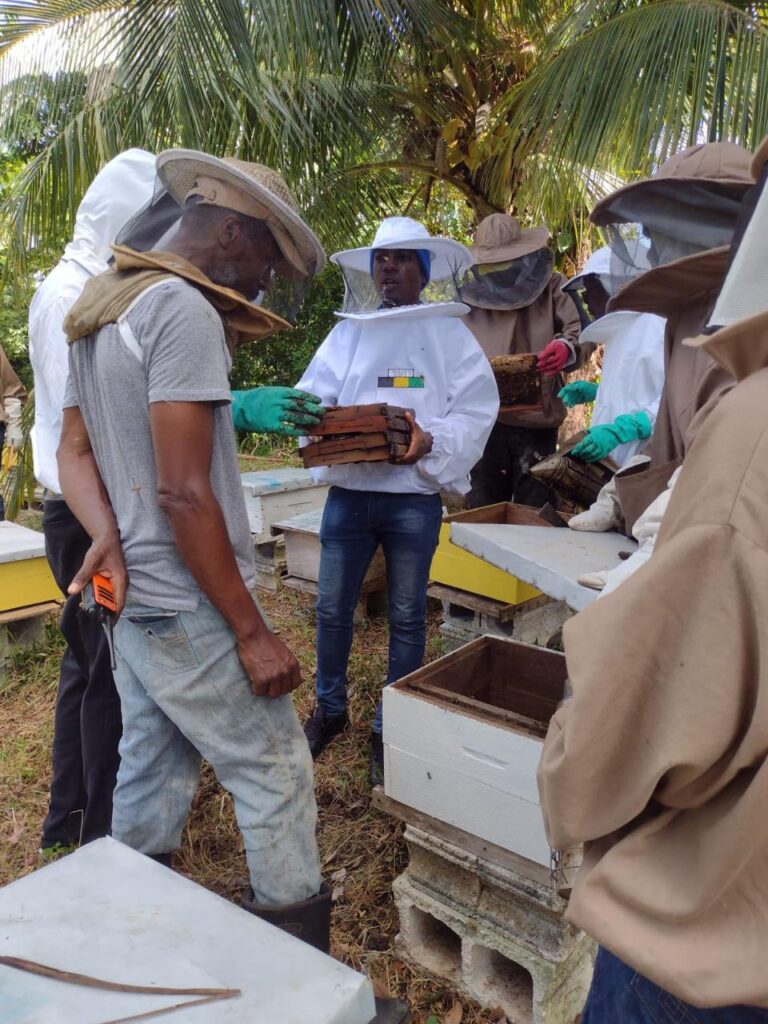
Sean A Williams/Contributor
Even as they feel underserved by the government, St Mary bee farmers remain upbeat about putting the sting back in the apiculture game.
Patrick Haywood, president of the St Mary Bee Farmers Association, while pointing to the complex and time-consuming nature of the honey production process, registered his disappointment in the state’s seeming lack of enthusiasm to focus more on the industry.
“They don’t [do enough],” he said bluntly. “There is no major investment in apiculture [and the most we see] is that in the dearth period and adverse weather events, the government provides sugar and replaces hives, which have been destroyed. Also, an apiculture officer, paid by the government, is assigned to each parish to give technical support,” he added.
The 72-year-old Port Maria native told Our Today the industry requires much more than what is being given to reach its full potential, adding that he and his 78-member association have a clear vision of how to bring the buzz back into their business.
“We need to see the official training of bee farmers and potential bee farmers. The government should also be involved in research and [greater] development in the industry,” declared Haywood.
St Mary beekeepers face a range of challenges, which, if not resolved, could put the local industry at risk.
“There is no concerted effort to plant trees in order to reap honey all year, as most of the properties [in the parish] are in bananas, coconuts, and cattle rearing.
“Also, we are unable to attract young people to the industry, although many schools here enter the 4-H Clubs’ annual competition. There are also too many chemicals being used in agriculture, plus there is no research facility in the parish, and entities that sponsor community groups do not engage the association,” Haywood outlined.
He said in his 10 years as president of the association, he has seen “very little” growth, and this is a worrying trend.
In response, Haywood shared that there is a move to collaborate with bee farmers in neighbouring Portland and St Thomas with the aim of potentially strengthening the base, but that plan is seen as “a work in progress”.
Meanwhile, Haywood claims the parish’s honey business is also being hampered by a constricted market with limited sale outlets, which impacts profitability.
“The beekeepers will sell the honey to visitors or export a few bottles to the USA, the UK, and Canada. They will also sell to local residents and a few health stores,” Haywood said.
For those wanting to enter the business, the master beekeeper warned that to create and maintain a viable apiculture operation it will require “substantial investment”.

“[It could involve] the planting of trees and [a programme] to prevent woodcutters from indiscriminately cutting down trees. Additionally, fifty thousand dollars can buy two hives, and another fifty thousand dollars for protective gear and equipment. But before we get here, this assumes that the land is available,” he explained.
Haywood shared that to have a successful bee farming business producing high-quality honey, some key components must converge.
“Ideally, the area should be accessible in all weather conditions, plus there must be a variety of flowering plants, which should be in a three-mile radius of the hives.
“Also, the area should not be prone to flooding and high winds, and there should be little or no use of chemicals. In addition, there should be a clean water source, and the apiary should be away from densely populated areas,” he said.
“[Importantly], a productive queen, which produces worker bees, which are good pollen and nectar collectors is also key, and one must have a dedicated team to constantly monitor the hive for pests and diseases,” Haywood added.
He stated that even though the eastern end of the island was spared the worst of Category 5 Hurricane Melissa, there was considerable damage to the parish’s honey-producing infrastructure.
“Seventy-five per cent of our members suffered some damage, while twenty-five per cent of that suffered major damage because of land slippage, flooding, falling trees, and heavy winds,” he outlined.
Haywood and team are waiting to see how and when the government will bring relief to them in capacity rebuilding.
In the aftermath of Hurricane Beryl in 2024, the Ministry of Agriculture and Fisheries allocated J$5 million in a support package for beekeepers.




Comments