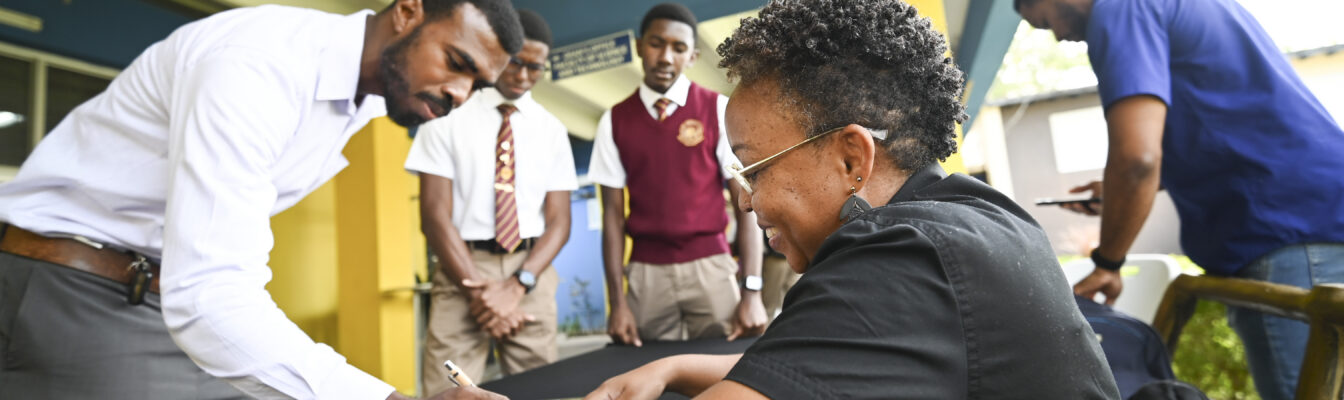
STEM educators give passing grade to JPS Foundation/UWI CAPE workshops
Josimar Scott / Our Today
author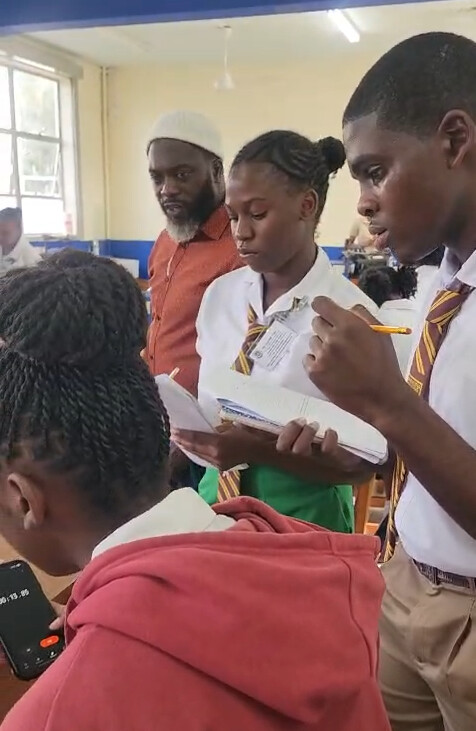
High school science educators Christopher Taylor and Rahsaan Smith know a good formula when they see it.
Both have commended The University of the West Indies, Mona, and JPS Foundation for hosting intensive workshops that helped their students to better grasp on problem areas in their respective science subjects.
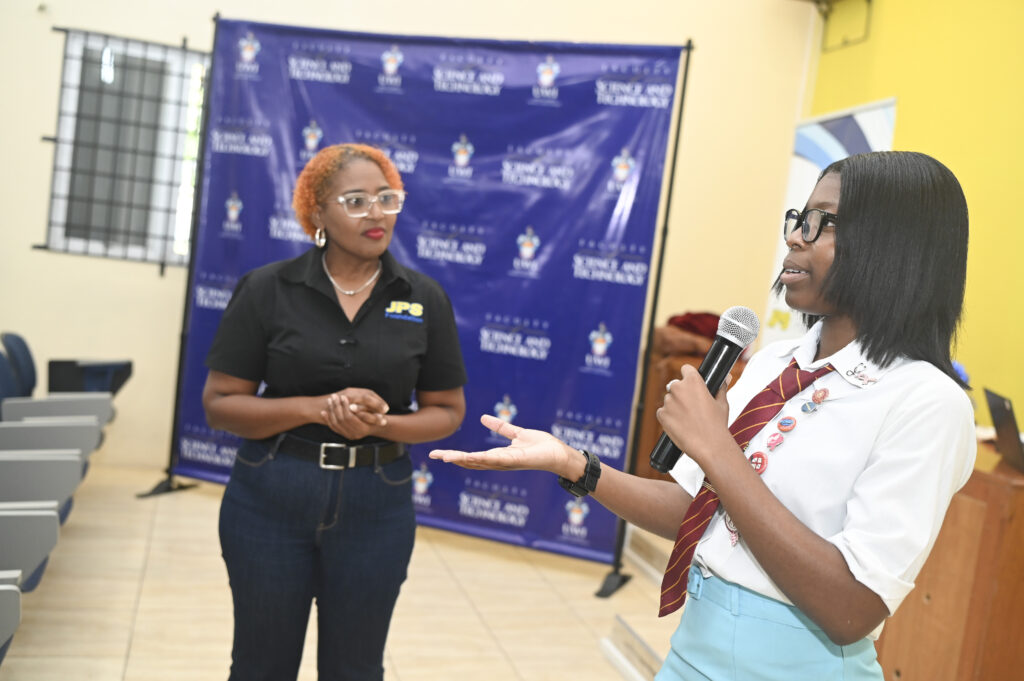
Each year The UWI hosts the Science, Technology, Engineering and Mathematics (STEM)-focused workshops on its Mona Campus in St Andrew – overseen by lecturers in the Department of Science and Technology – to help with the students’ preparation for the Caribbean Advanced Proficiency Exams (CAPE) in May and June.
For Taylor, a Manchester High physics educator, there is premium value in his cohort of students attending the workshops.
“Manchester High School has always benefited from these workshops, especially in the area of Unit 2 operational amplifiers in CAPE Physics,” explained Taylor, who has taught at his alma mater for 25 years, after graduating from the school in 1994.
“Even though I have been teaching physics for a while, I always rely on [The] UWI to provide the practical aspect and the hands-on simulation. Though I may have come across simulation exercises, I still love the idea of being able to take students outside of our classroom walls at Manchester and putting them into a university setting, and giving them a chance to feel what it is like to sit in a lecture theatre and use better equipment to carry out their labs,” he added.
Tracing his own love of science back to his youthful days at Spanish Town Primary, and later Manchester High, the 50-year-old Taylor recalled that “the concepts came naturally to me. I am a mathematically inclined person and so I would have gravitated towards the sciences.”
Now guiding this generation of potential STEM professionals in his classroom, Taylor said the workshops have proven immensely helpful in the learning process of his fourth to sixth form students.
“As a school and science department, the students pursuing STEM subjects at Manchester have definitely benefited over the years. Especially this year, with the passage of Hurricane Melissa, in which some schools have been damaged, the benefit of these workshops would be realised even more,” Taylor, who chaperoned 57 students to the workshop, shared.
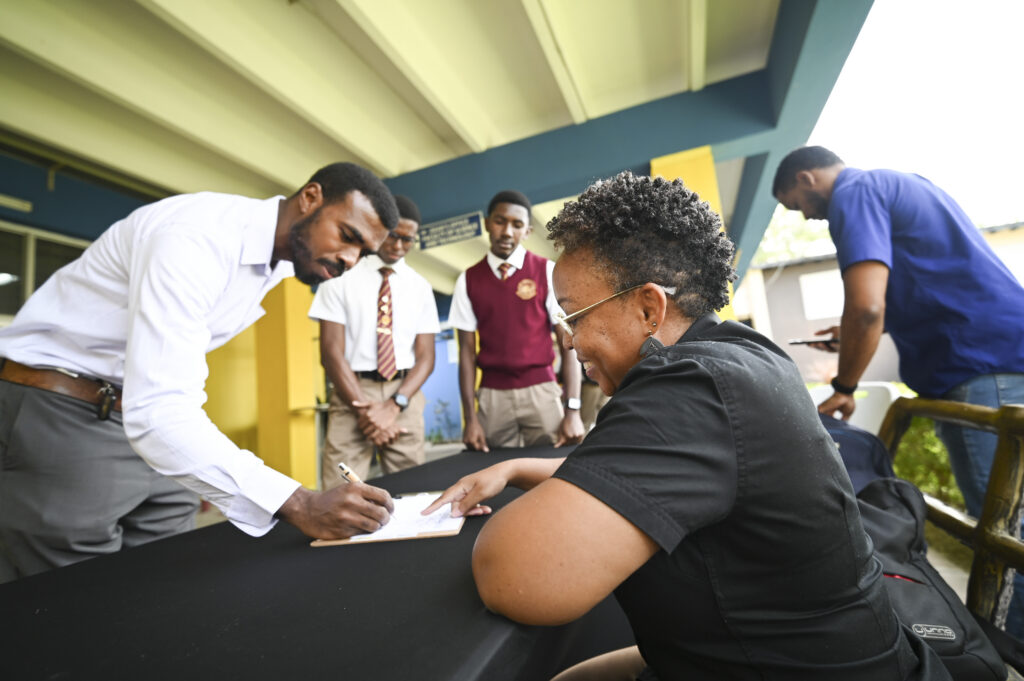
Similarly, for Smith, a chemistry educator at his alma mater, Wolmer’s High School for Boys, for the past 15 years, his students’ immersion in the workshops at The UWI’s Mona Campus also redounded to benefits.
“It gives them that experience in the lab. We know that some of the instruments at UWI would not be available in the high schools, so students have the opportunity to actually manipulate and conduct experiments that the school’s facilities would not be able to accommodate. That is one of the important things,” Smith said in a post-workshop interview.
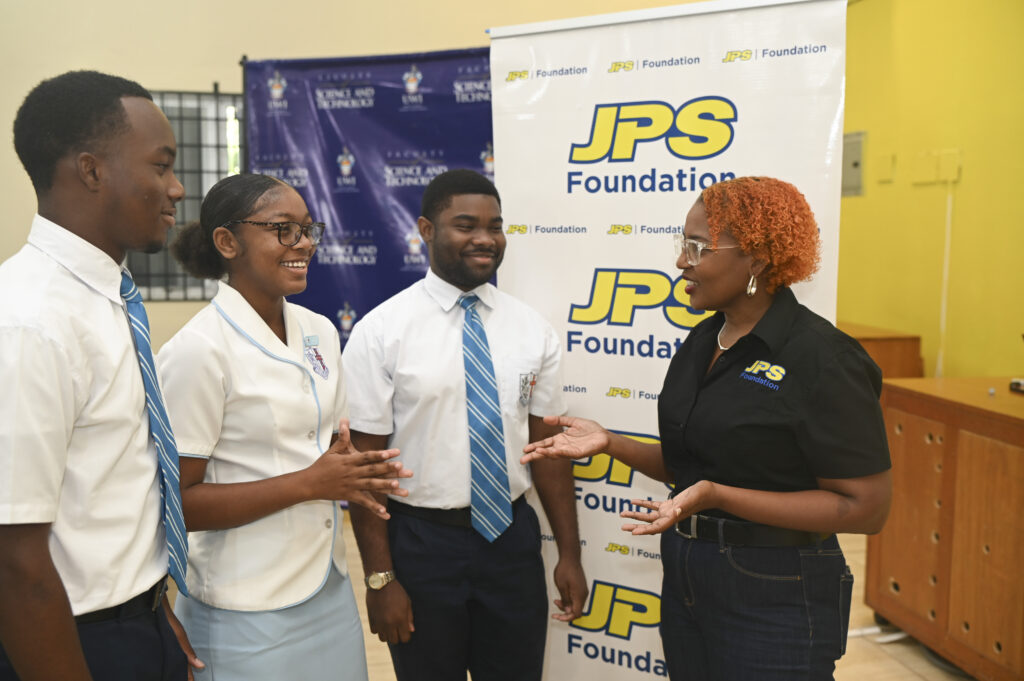
The CAPE/STEM workshops welcome final-year secondary school students from across the island who plan to sit for chemistry, physics, computer science, geography, and/or mathematics. The partnership is rooted in a memorandum of understanding (MOU) signed in 2023 between The UWI and JPS Foundation.
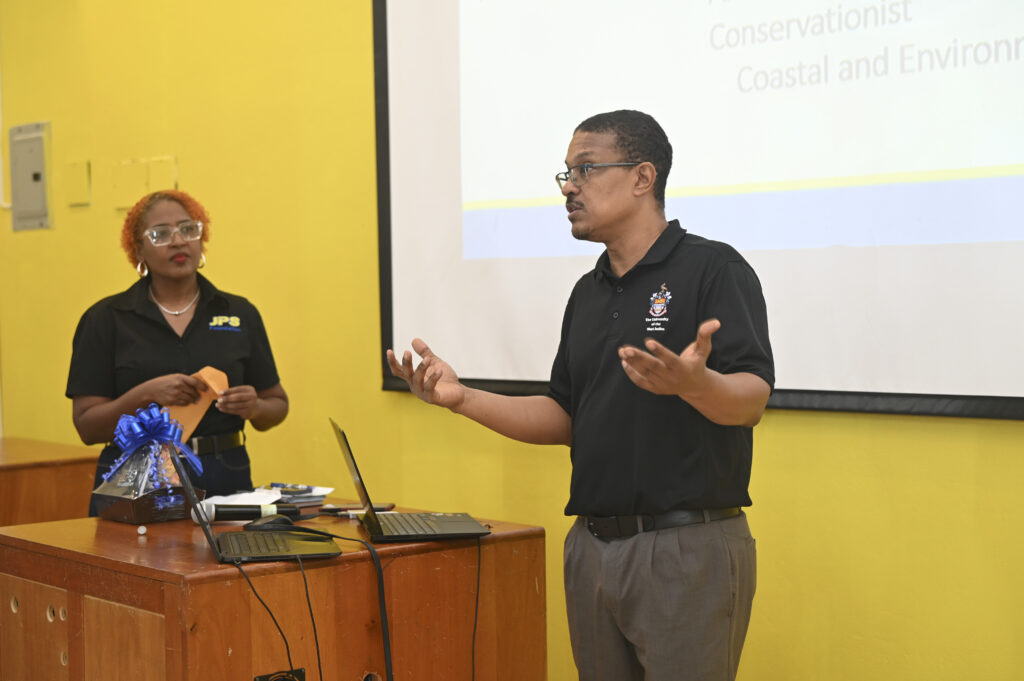
Total spend on the workshops, which are held over five years, amounts to $16 million. The funding facilitates a reduction in the workshop price to students, from potentially $5,000 to $1,500. The admission price is held at $1,500 for the five years.
Having registered 24 students from Wolmer’s Boys for this year’s iteration of workshops that ran from January 12 to 16, Smith sang praises for the eagerly anticipated annual event.
“They are generally always informative, in terms of giving students that experience in the lab… it is beneficial for them. After they would have done the presentations there [at UWI], we at school would be able to reinforce it because they would have had interactions, and even while they are going through lectures, they would have gotten a chance to do the experiments so they can relate to the content much better, so that is very good,” he stated.
The 39-year-old Smith teaches third-, fourth-, fifth- and sixth-form students for the current academic year. He is innately eager to impart his passion for chemistry to his pupils.
“One of the things that I love most is actually bringing the students from a place where they don’t know something to now being masters of it,” explained Smith, whose familial ties to science extend beyond the Heroes Circle institution.
Smith’s sister, who teaches mathematics at Excelsior High School.
“Seeing that change in their outlook and saying I know something I didn’t know, or they can link something they see in the classroom to something they see happening in the world and be able to understand how the theory is used in practice, is very fulfilling,” the educator shared.
Beyond the workshop, Taylor emphasises the importance of STEM in various career paths.
“I think the most important thing is that we don’t get to a stage where we [science teachers] are not relevant. We are always in high demand,” he reasoned.
“A lot of my friends have migrated or have gone onto different programmes overseas. I, myself, have taken a vacation and had to go to work at not just my institution, but other institutions in order to help out because there has been a shortage. The shortage has been for a long time, and I think it’s getting worse, so I enjoy being a science educator because it gives a level of relevance and importance not just in the education field, but the country as a whole. In addition, I get a chance to touch lives from various walks of life,” the Mandeville High educator outlined.
He championed STEM as a viable option for students contemplating their future careers.
“The whole idea of STEM has not been one that is new. It’s just that we have found fancy names for these things. We have always held that the sciences will provide solutions for almost every problem,” said Taylor.
“Irrespective of the area, science and technology has always been seen as the biggest discipline for problem solving, at the individual and community levels, the country and the world at large. STEM subjects are very important, especially in this modern era where technology, mathematics, and science are at the forefront, moving humanity ahead.”
More than 1,800 students from 41 schools participated in the weeklong workshops, according to final tabulations provided by The UWI’s science and technology faculty.
In addition to a large turnout of participants from both Kingston, St Andrew and St Catherine high schools, there were hundreds more STEM students from western parishes directly affected by Hurricane Melissa who attended. These include Munro College and BB Coke High in St Elizabeth, and Herbert Morrison Technical High and Montego Bay High in St James.




Comments