
Sunday Sips with HG Helps | A Champs to hail and to weep over

/ Our Today
administrator
Happenings at the National Stadium between March 25 and 29 will go down in history as representing a concoction of the worst in Jamaican athletic history, and the accomplishment of a fitting milestone.
At the end of quite a colourful five days of explosive action, Kingston College, celebrating 100 years of existence, raced away with the boys’ division, while Hydel High School scripted and executed the perfect strategy to reclaim the girls’ title at the annual ISSA Boys’ and Girls’ Athletic Championships.
But the plethora of false starts, caused, we are told, by virgin apparatus, which malfunctioned too often for anyone’s comfort, rewrote history in a most bizarre fashion.
At my count, there were 74 false starts and disqualifications, although I have seen other people suggest fewer, and some even more than my mathematical exercise determined.
For the first four days, the entire meet was in shambles, the most devastating blow being that of Calabar High School class one 100-metre sprinter Jamal Stephenson, who was found guilty, had his conviction overturned on appeal, but was told that he could not re-enter that ill-fated 100-metre race, as the final had been held without him, and medals had been handed out already to those who had contested it while he pushed for justice.

It would have been quite interesting if KC had won the championship by a mere five points.
The Boys and Girls Athletic Championship has always had problems with the starting of races over the years, most of it caused by incompetent officials who refuse to read the ‘Time To Leave’ sign posted outside the starters’ room. New equipment, we have heard, showed up the ignorance of the starting clan and their subordinates.
The broader issue of athletes preparing for a year, only for them to be greeted by a non-smoking gun that says they are out, must be addressed.
I have never been a believer that people should be punished for false starting. Well, maybe after one false start by an individual then sanctions could apply if the mistake is repeated. But when it comes down to the highly technical reaction timing, it is unfair to athletes.
Look at class four athletes, for example, and see how many of them have had their hearts broken because of the stringent starting methods that were employed. You are developing those youngsters, yet you put obstacles in place to hinder their growth. That has to be addressed.
Interestingly, you can question my mathematical capabilities if you choose to, but after the furore of the first four days, I counted not even one disqualification for a false start on Saturday’s final day of competition. Although with the benefit of thickish lens, I detected a twitching in some instances, especially the relays, which would have resulted in red card action on the four days prior. So what really happened on the last day that brought about such a humongous turnaround? Maybe we will learn only through the grapevine.
It was not good overall though, and organiser the Inter-Secondary Schools Sports Association has to handle itself better, even if it chooses to deflect responsibility to the Jamaica Athletics Administrative Association.

Free up school eligibility rules
And on the subject of the Inter-Secondary Schools’ Sports Association, that organisation has clamped down in recent years on the eligibility of athletes to participate at the event called ‘Champs’ and other sporting activities.
I have no issue with the insistence by ISSA that competing athletes must be averaging marks of 45 per cent at the low level in four subjects in order to compete, although that rule has been breached by students that I have known, with the full knowledge of their schools.
But limiting the number of students who can transfer to other schools, without having to ‘sit out’ a year of sports activities denies children of their constitutional rights, and I urge any school to take such a matter to court if they feel deeply hurt by it.
A highly talented boy, for example, who attends Penwood or Haile Selassie High, but cannot expand that talent due to limited or non-existent facilities at his school, would not get the chance to show what he is made of, even though we may all be looking at a potential World or Olympic champion.
How many schools in Jamaica have a full set of hurdles, for example? How many have to rely on grass-less tracks to perform?
So, if that boy and his parents/guardians decide to make a push for greener pastures, why should obstacles be thrown in his path?

ISSA must understand that this is not 1925 when it was fashionable to prepare oneself for prime jobs in medicine, law, education or engineering. The world has changed. Significantly so. Sport and sport-related activities have emerged as the fastest growing industry, and Jamaica, though bursting at the seams with an elaborate talent pool, is still not capitalising on it.
People have even gone as far as criticising the introduction of Africa-born athletes in the school system, when they should be lauding it.
When Jamaica sees students travelling from the motherland, wanting to develop their talent in a land that their forefathers were forced to travel so that Jamaica could be what it is today, it should be regarded as a major milestone.
As one who knows fully well about the coming of a former student of Kingston College, Ari Rodgers, and how he got to Jamaica and eventually played on a winning Manning Cup football, as well as ‘Champs’ teams, I can appreciate the effort that got him into the system here.
Rodgers was not ‘bought’ by KC as so many ill-informed have said. It was an uncle of his, based in the USA, who saw the talent in him while he grew up in Uganda and decided that the best place for the boy to flourish, was in Jamaica. He chose to ask KC if the youngster could get into the school, and, as we all say, the rest is history … he excelled in sport and academic work and proceeded overseas on a scholarship at Grambling State University in Louisiana and is doing well for himself.
Others learned of the situation in Uganda and other African states, and more young men followed, some even going to schools like Jamaica College and St Jago High School.
Jamaica has learnt and can learn much more from the Africans.
Portmore…To be a parish or not?
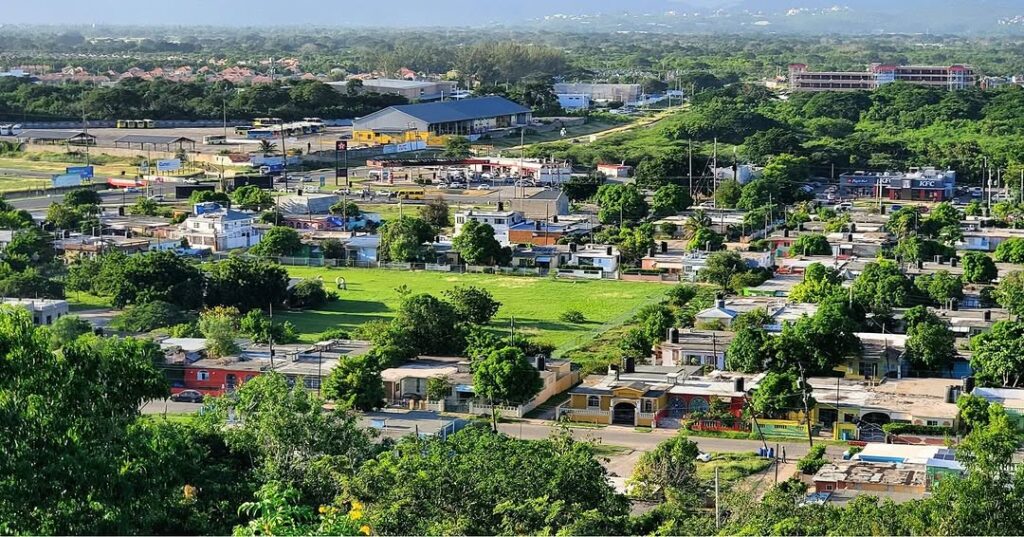
The governing Jamaica Labour Party (JLP) and the Opposition People’s National Party (PNP) have been at each other’s throat as the matter of whether or not Portmore, the sprawling suburb in St Catherine, ought to be Jamaica’s 15th parish.
Long ago, Jamaica had more parishes to choose from, than East Indian mangoes in St Thomas. But in later years, the number was condensed for various reasons.
When the English chased the Spanish out of town in 1655, they set up a structure of parishes, which included Port Royal as one, believe it or not, and up to the middle of the 19th century, the number of parishes had gone up to 22 at one stage.
But then started a decline, with 14 parishes being agreed before the end of 1867. Now, why in God’s name is there a need to increase the parish count, heading close to 160 years after the last reduction?
I still believe that Jamaica has too many parishes, and that we should be looking to reduce, perhaps to around nine, rather than increase the number. It would be better to manage fewer parishes, and even in this present dispensation, giving Portmore parish status when so many elements of infrastructure are out of place, is not saying much for development.
It is clear that partisan political reasons are at the core of the issue, but that should not be the case. What is in the best interest of the people who occupy the space ought to be the defining criterion.
When Trump ‘couldn’t care less’

Well, what did the world expect?
US President Donald Trump has expressed himself quite clearly, saying that he ‘couldn’t care less if his ill-advised tariffs on automobile prices result in a rapid rise in the price of vehicles.
Trump has imposed a 25 per cent tariff on imported vehicles, in a bid to force people living in the US to buy American-made autos, even if they don’t like what the local dealers are offering. Now what a shame, a United States president taking such a position in a bid to lure ‘outside’ manufacturers to make vehicles and parts in the US, instead of where they choose to.
As one of my American friends told me recently: ‘You ain’t seen nothing yet.’




Comments