
Sunday Sips with HG Helps | How bad is corruption with the hurricane relief efforts?

/ Our Today
administrator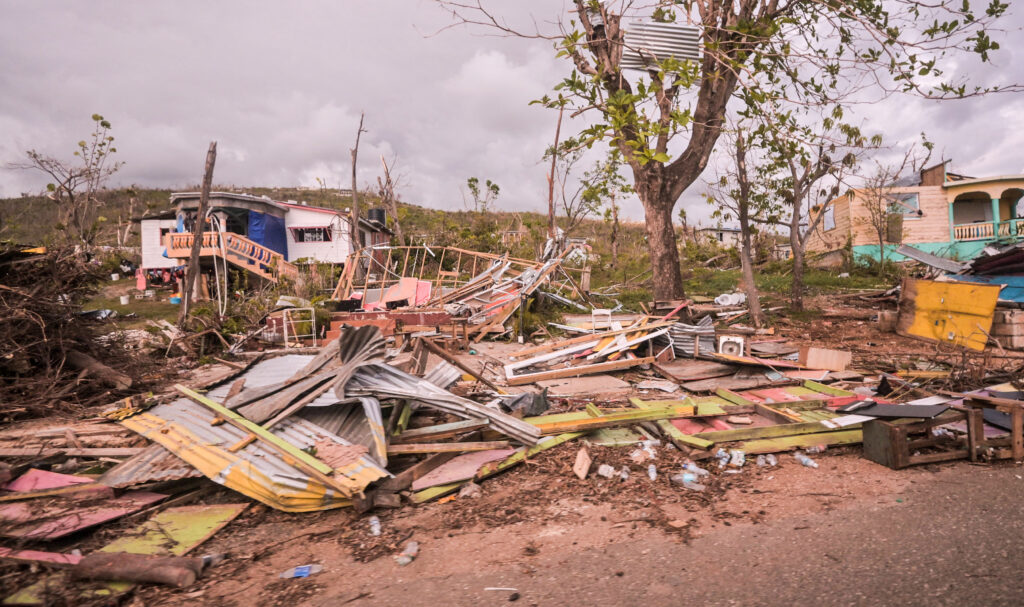
There is no doubt in my mind that everything is not ‘full hundred’ as far as the distribution of scarce benefits arising from the destruction caused by messy Hurricane Melissa on October 28 goes.
In many places you go to, you hear the problems that are associated with the distribution of things like care/food packages, tarpaulins, black water tanks, generators, fertiliser, seeds, among others.
Some will tell you that items are being dished out on a largely political basis, with supporters of the governing Jamaica Labour Party (JLP) leading the way in terms of the beneficiaries. It seems quite logical, because any ruling party which finds itself in this position would look out first and foremost for its people. That is reality, that is how Jamaica has been governed for decades, and although level-headed and fair people know that that is the wrong way, very few insist on addressing the practice, opting to remain silent so as not to ruffle any feathers.
Last week, I was party to a peculiar conversation in which a potential donor gave me her side of a story which suggested that she had tried to assist the process by offering an official who plays a role in the day-to-day running of the country, to erect some housing structures, working in tandem with an overseas-based organisation, through its owner. To her, it would be a howling success and would also serve its intended purpose of meeting the needs of people in badly hit communities.
According to her, the response she got from the individual with whom she spoke initially was one of excitement.

The plan was outlined, not in great detail, but with enough material to make a serious push towards execution. But things, she said, took a downward turn when she tried making follow-up links with the official. After trying to communicate with the subject for over two weeks, the individual answered the phone, and in the midst of the conversation, and a bid to find out just where things were from the official’s side, the question was posed by the official, according to my contact: ‘What is in this for me?’
There was silence for a full minute, my informant told me. It was a moment of shock. According to her, Jamaica was in its worst state ever, and someone wanted to exploit the system for personal gain, instead of focusing on the most relevant matter of trying to ease the burden on the displaced and suffering thousands.
I have not spoken to the individual. I have a telephone number to make direct contact. I have chosen not to, just yet, as the allegations made against that person are serious. A little more investigation is needed.
In the meantime, the focus of construction has shifted to another parish. Let us see how that goes.
A West Indies story of grit

No one who follows cricket ought to ignore one of the stellar examples of grit and determination exhibited by all-rounder Justin Greaves, and lower-order batsman and lead fast bowler Kemar Roach, both Barbadian cricketers, in the first of three Test matches against hosts New Zealand at Christchurch, which ended in an unexpected draw early last Saturday morning (December 6).
The visitors would have achieved a world record chase had they got the 511 runs that it would have taken to reel off such a milestone, but with the West Indies reaching 457 for six when the fairytale story climaxed, a 180-run stand for the seventh wicket by both men was the stellar attraction.
Only 54 runs were required for the greatest Test match victory of all time when the umpires called time, as history was not prepared to do any additional work.
Greaves, whom I have always felt should bat higher, perhaps even at number three in Test matches because of his solid technique, and the view that he plays the newer ball even better than the old, ended with an undefeated 202 on his historic journey – his first double hundred and second century in 12 Tests, while maintaining a reasonable average of 32.
Good too, that he had support from Roach, who took five wickets in New Zealand’s second innings, in a way that few would have imagined.
Roach’s maiden half-century of 58 not out cemented the draw, despite a few let-offs from umpiring decisions that could have sealed the deal long before, and a weakened Kiwi bowling because of injury. But that’s cricket. Sometimes you run with the luck.
At 37, Roach has had good times in cricket at the highest level. I got information recently that he is a cousin of the first West Indian to score a Test century and a double century for the West Indies soon after the regional team made that meek entry into global cricket in 1928.
Clifford Archibald Roach was born and raised in Trinidad & Tobago. He was a member of the team, led by Jamaican-Portuguese Robert Karl (RK) Nunes, a Wolmerian, that played in the historic Test match against England at Lord’s, London, in 1928. Nunes later became president of the Jamaica Cricket Association and the West Indies Cricket Board, all three appointments because of his skin, as he was not a standout as a wicketkeeper or batsman.
For father of nine, Roach, he hit West Indies’ first century (122) also his historic hundred, during the first of the four-match home series against England in Barbados in 1930, and followed with 209, in a big second wicket partnership with George Headley, as West Indies won their first Test match – the third in the series played in Guyana. Incidentally, Panama-born Jamaican Headley became an immortal in Guyana, with scores of 114 and 112. That remarkable series saw the West Indies selectors using four captains in the four matches played, and a total of 29 players wore the ‘whites’ during the series.
I injected the historical side of things because the Roach pedigree existed from the very pregnancy of West Indies earlier in 1928 in international cricket, fighting to become relevant in those early days, straight through thick and thin, to where the team has reached now.
The fight demonstrated by Greaves and Roach amounts to that shown by Clifford Roach, George Headley, George Challenor, Frank Martin, Jimmy Small, and others who started the battle in the early years.
The big deal now is that consistency by the current group is sorely lacking, and you just cannot compete when intermittency dominates.
The disaster of July this year, when they were routed for 27 in their second innings against Australia at Sabina Park, with pacer Mitchell Starc giving them a six for a nine, must never be repeated.
Greaves and Roach have shown what commitment can achieve. Let us now ‘Hope’ too that it continues, and I am sure that it can, once Cricket West Indies president Kishore Shallow does the right thing by leaving the game alone and invest his incompetence in his St Vincent & the Grenadines misguided political supporters; followed by the dismissal of all the weak links in the West Indies coaching chain, which includes head coach Daren Sammy.
Dressing in Jamaica

For years during the 1970s in particular, there was a big push to end the domination of clothing, which originated mainly in the United Kingdom, for Jamaica and its citizens.
Michael Manley, Jamaica’s fourth prime minister and its fifth leader overall, led the charge for islanders to ditch the two and three-piece suits, certainly for the Jamaican Parliament, for the Kariba (some spell it Kareeba) suit, a bush jacket type of wear, which did not require the use of a tie to be deemed ‘properly dressed.’
Of course, when Manley’s People’s National Party lost the 1980 general election to the JLP, things took a downward turn as far as the suits went. Manley, upon his return as prime minister in 1989, even ditched the Kariba and went back into the colonial garb, unlike others like Ben Clare and Donald Buchanan, who kept theirs.
The continued backward view that if a man does not wear a suit and tie to certain events, he is not ‘properly dressed’ is one of the silliest that I have heard. To put things into context, Jamaica embraced the jacket and tie selection from the colonial era, and even when the island switched after Independence to a neo-colonial gear, the view gained strength, judging from how people wore their formal clothes.
Yet, there is a health issue that nobody seems to care about: the heat factor, more so when air conditioning is not around. As times get even hotter these days, the subject should be placed on the agenda again. Why not encourage people to wear clothes that are climate-friendly, instead of dressing up in suits? I have so many suits in my possession that I am beginning to think that maybe I should organise an auction, for I do not know if I will ever wear them again, certainly not all.
Some prominent Jamaicans, for example, former Prime Minister PJ Patterson and current Chief Justice Bryan Sykes, have been pushing our roots by donning African-style clothing to many functions that they attend. That is my preferred choice of styling, and although my wardrobe is handily represented by the African wear also, I am sometimes in awe when I see samples of the men’s obviously vast collection, and I want to find out their origin.
A solution can be found to permanently park the jacket and tie. Let’s spend some more time deciding what can be done.
A fine man was Jimmy Cliff

When a man lives to age 81, it is a special achievement.
When one such man in question, Jimmy Cliff, gets there, you would love to see another 81 handed to him. Alas, that’s not how life goes, though, so the death of Cliff (born James Chambers), among many other things, was an outstanding singer and author, hit hard.
I last saw Jimmy between four and five years ago, upon his return from a trip to Brazil. The respect remained since he was introduced to me by legendary former Jamaica football coach Winston ‘Nava’ Chung, founder of Santos Football Club. Jimmy, at the time, committed to Chung that he was willing to put on a concert, the proceeds from which would go toward youth football development. I am not sure that ever materialised, but if it didn’t, I am certain that it was not Jimmy’s fault.
He was a fine man who loved Jamaica and his people. He, I strongly believe, will live on in eternal peace.





Comments