
Sunday Sips with HG Helps | Jamaican athletes and Turkey, what is Carnival for, a silent win for Jamaica, and women footballers look good

/ Our Today
administrator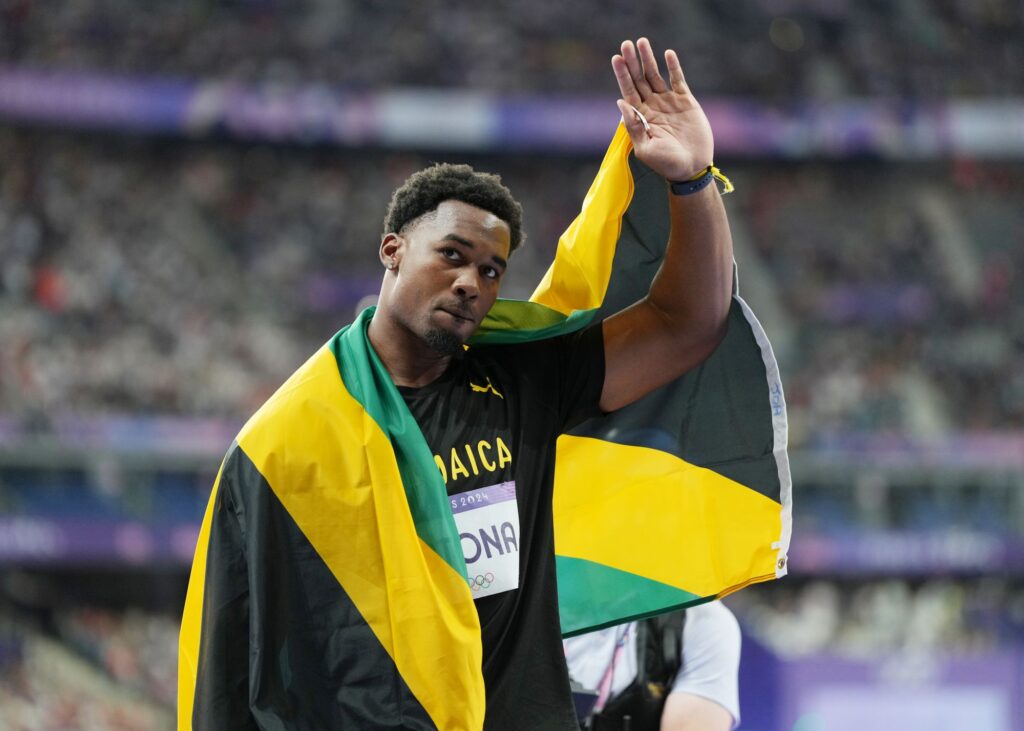
From Jamaica to Turkey: Hypocrisy at work
Preventing anyone born in country A from trying to become a citizen of country B, is vulgar and nasty. It came last week after World Athletics blocked a bid by four of Jamaica’s field events stars to emigrate to Turkey, a country of 88 million people, located across Asia and Europe, and ranked highly in the world by gross domestic product estimates.
Now, long jumper Wayne Pinnock, triple jumper Jaydon Hibbert, shot putter Rajindra Campbell; all former Kingston College star students, and discus thrower Roje Stona of Rusea’s High, are among 11 athletes from three other countries whose applications were rejected by WA’s Nationality Review Panel, as Turkey, now officially known as Turkiye, tries to build its squad for the 2028 Olympic Games in Los Angeles, USA, and beyond. My information is that two Jamaicans are living in Turkey already.
It would not be the first time that Jamaica would be losing athletes to other countries – a shining example is Merlene Ottey’s shifting to Slovenia. Bahrain and the USA have also profited.
Is it strange for people to emigrate to other countries to seek better lives? So many – in the millions – have gone on to places like the United States, the United Kingdom, Canada and several others to improve their lives, so why target the athletes?

In Jamaica, one of the things needed for you to survive is to be politically connected, so that you are always a part of the process when it is time to give out the political spoils – whether it be through contracts, getting the big jobs, or other factors. There are very few incentives here for sports personalities in particular, so what is wrong in them seeking better in other countries, as so many in various fields have done?
In the latest affair, if the athletes want a change, then allow them that change, as long as the receiving country is in full agreement.
A few questions will have to be asked about the role that the Jamaica Athletics Administrative Association has played in the rejection of the athletes by WA. In a statement issued soon after the revelation, the JAAA said that it remained “steadfast in its commitments to athletes”, adding that they remained members of the Jamaican fraternity.
But the organisation also said that it did not petition WA to block athletes from transferring allegiance. I believe that that is a barefaced lie.
I can never forget the fuss created by the president of the JAAA Garth Gayle, and vice president Ian Forbes and in media statements and interviews when it was confirmed that Turkey had reached out to the athletes. I strongly believe that the JAAA made contact with WA and begged the athletics’ governing body to do everything within its power to block the Jamaicans.
Evidence to the contrary would go a far way in convincing me that something is wrong with my head, and I really do not think that I am at that stage of my life just yet.

What does Carnival signify?
The organisers will tell us all, that Carnival brings in a lot of money for the national coffers, but is that all there is to it? The subjective conclusion that Carnival pumps in, often in excess of $6 billion to the Jamaican economy, comes only from teeth-skinning people who stand to benefit directly from the financial spinoffs, that people, from the wealthy to, believe it or not, those who cannot out a good breakfast on their tables each day, get so involved with.
But there is always a mission to be a part of the status quo, so whatever it takes for them to feel like members, then they will make the extra effort, even if it might result in the postponement or abandonment of other projects that, on the surface, may seem far more important.
Carnival, a culture that came originally from Europe, essentially to celebrate the end of winter, and later the non-eating of meat by religious leaders for a time, has expanded to embrace new meanings, many of which seem exceedingly disjointed.
Nobody can convince me that a woman ‘skinning out’ on a man, just any man, it doesn’t matter who, is the greatest entertainment for anyone involved. It is even more disgusting for men to be currying up on other men (and I have seen those still photos and videos) in full view of the public, as if that is a part of daily Jamaican life.

Equally, it is not so sweet too, for authorities to be blocking off roads when there are things like road marches; for people to be like jumping Jacks and Jills showing off costumes that make them look uglier than in natural life, throwing paint all over their bodies like cousins of the Joker and the Riddler in Batman comic strips and movies.
Some even hit the road in upgraded and matured styles of when they were born, and you may pose the question: Where are all the policemen, women too, when you need one to push for charges of indecent exposure? Maybe they are all too caught up in trying to convince people that they are standing firm in their belief that nothing is wrong with the practice.
At the end of all that, you still have to wonder what is the purpose is? What is there to celebrate? Is it for a major achievement that non-Carnival jumpers find it hard to believe? It just makes no sense.
I have been to Carnival in many Caribbean countries … including Trinidad & Tobago seven times, as well as Grenada, Guyana, St Kitts, Barbados, and St Vincent & the Grenadines… Vincy Carnival, which used to be dominated by a former top Jamaica athletics coach Michael Ollivierre, (stage name Lord Have Mercy), father of international artiste Protoje (Oje Ken Ollivierre).
There was never on one occasion that I travelled to Carnival directly. In every instance, they clashed with one activity or another – like covering cricket, football or attending a funeral.
Not all of them seem to have straightforward meanings, but in Barbados in particular, there was one that stood out. It is still called Crop Over, which clearly means a series of events to mark the end of another sugar harvest.
My good friend of many years, Wes Hall (now Rev Wes Hall), the former Barbados, Trinidad & Tobago and West Indies fast bowler, who fancied himself as a dependable late order batsman, until he faced some as fast as he was, served as a member of the Barbados Parliament and Cabinet and was at one time fully integrated in the staging of Crop Over. He insisted that I must visit Barbados for the event.
He was insistent on one celebration itself, called Kadooment Day held on the last day of Crop Over, held normally around late July into early August, if memory is exact. He was among those in earlier times who masqueraded in, to me, strange costumes, some of which seemed to be worshipping the devil. However, there were awards for those who had shone brightly in the sugar cane sector, like for those who led the way in harvesting the crop.
So, I visited, but at a time when Wes was fully into his church, so there was no chance of my seeing the usually chirpy individual in action during a march. It was then too, that I had the chance of realising true Barbadian feminine beauty – the hitherto unheard of, side of the women dressed skimpily, in a country that was quite conservative when it came to something like that.
The great difference then between Barbados and Jamaica was that there was substance behind Barbados’ celebration. Nothing had been achieved in Jamaica, except for promoters having a field day. And, the story continues to this day.
Silent victory for Jamaica over Barbados
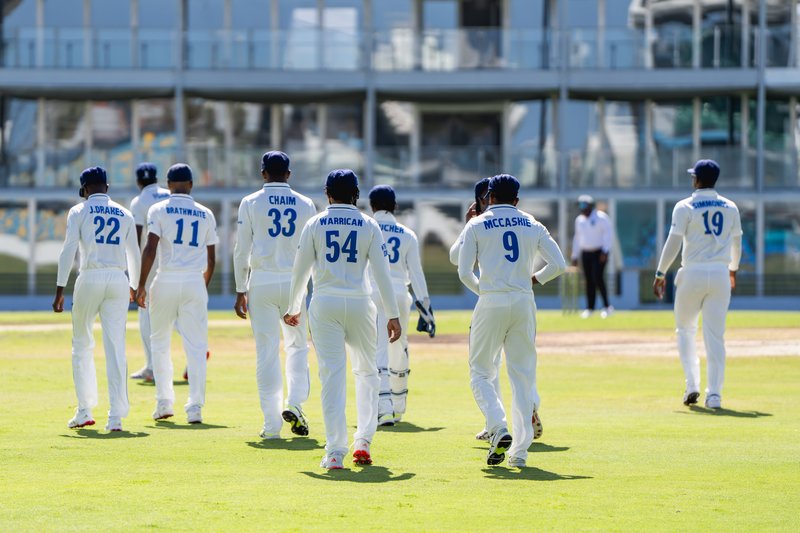
Jamaica recorded an amazing victory over Barbados in cricket at Chedwin Park, St Catherine last week in the regional four-day championship that left many fans wondering how come the match was such a well-kept secret.
Historically, a Jamaica v Barbados cricket match is a big thing … massive, especially if it is played in Jamaica. With limited players of star status these days, it is natural that fans will find other ways to use their time, instead of spending it on boring regional cricket, but it is incumbent upon the Jamaica Cricket Association to try and market it in the best possible way.
That was not done. The fact is though, that Jamaica’s batting lit up the place so well in a chase of 324 runs in a shade over two sessions on the final day, led by centuries from Kirk McKenzie, and captain John Campbell, despite the heroics of Barbadian Kevin Wickham who scored centuries in each innings of the match to become a rare immortal these days.
Performances like those that resulted in Jamaica’s seven-wicket win over the Caribbean’s best achievers in the sport, are what we want to see, but we need to hear about the potential of them happening first.
I also have a challenge with the competition’s new format, but that’s for another time.
Women look good for World Cup
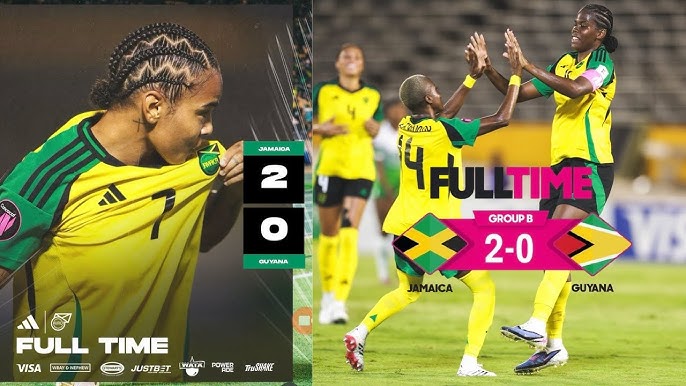
The national Women’s football team of Jamaica have cleared an important hurdle on the way to the Women’s World Cup next year, June 24 to July 25 in Brazil, with a 2-0 victory over Guyana late last Saturday to top group B of the qualifying series, having achieved maximum 12 points.
It’s now on to the final round in the Concacaf region, where Jamaica, alongside seven other teams, which also involves world beaters the United States, Canada, and Mexico, will vie for four World Cup spots, directly. There will also be two other playoff spots available for the region.
At this stage, Jamaica are looking good, unlike the men’s team which flopped big time. I have reason to think that they will make their third visit to the World Cup.





Comments