
Sunday Sips with HG Helps | Preparing for hurricanes, shutting down schools, PJ and Bruce, and a mature Holness and Golding

/ Our Today
administrator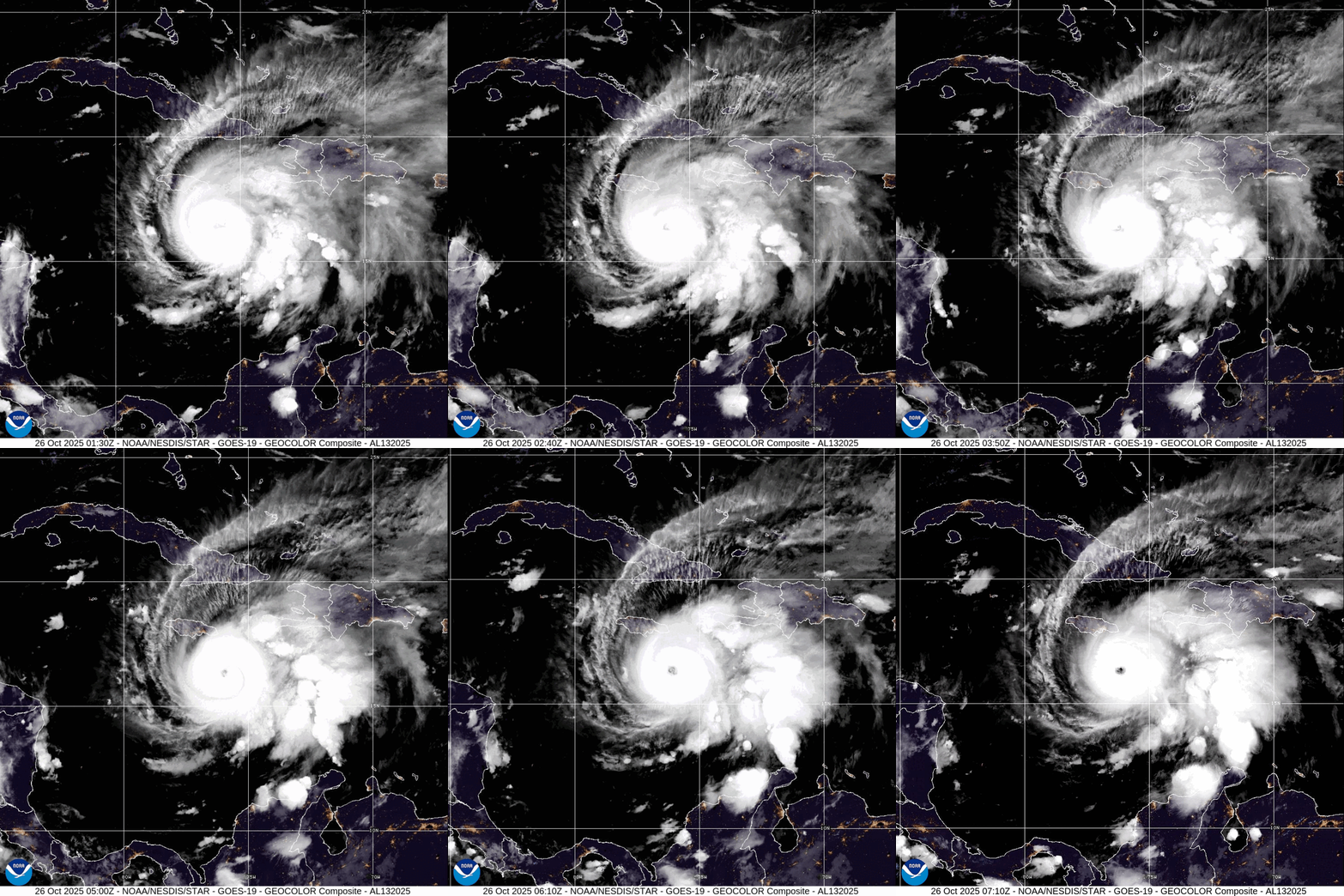
The worst has been predicted for Jamaica from Hurricane Melissa, akin to the havoc wreaked by previous hurricanes Charlie, Gilbert, Ivan, Allen, Dean and lately Beryl.
The devastation caused by Beryl last year, which left many families in limbo, is not something that should be stored as any highpoint of history, for to many, moreso the younger ones among us, it was the worst time of their lives, as they grappled to survive under perilous conditions that include lack of food, shelter, electricity, water, Internet, and the ability to move about freely.
Hurricanes and tropical storms are awful creatures which have absolutely no concern about human life. They do as they please, and there is very little that the people who suffer from their ‘dictatorship’ can do to stand up to their might, except to protect themselves as best as they can, which includes running away from the fight and relocating to areas in which direct contact may be averted.
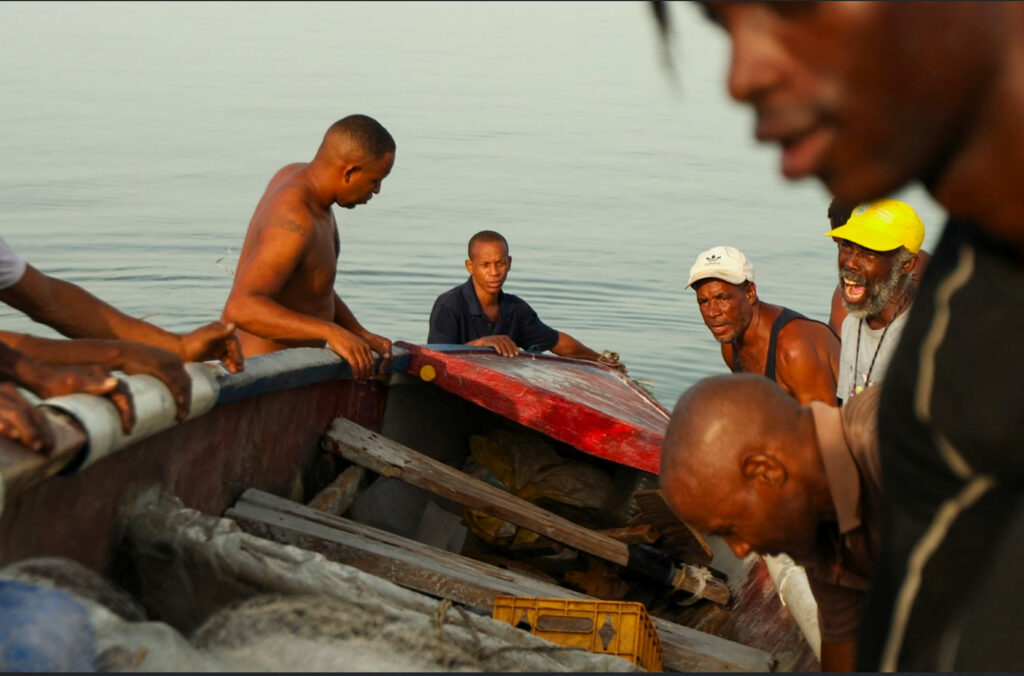
Weather systems cannot be prevented, but what can the people who are affected do to cushion the blows that are usually inflicted upon them? For starters, the emphasis on protecting and preserving the environment is of paramount importance.
Jamaicans do not care as much about the environment as they ought to. They throw garbage any and everywhere, so that drains become blocked and lay the foundation for flooding.
They litter the beachfronts as if they are decorating a space for a party. I participated in a beach cleanup once along the Palisadoes coastline some years ago, and vowed never to do it again, because people would simply continue to throw things where they are not supposed to.
In standing up to a hurricane or storm, a country’s housing stock is critical. There are far too many structures that are vulnerable to such weather systems, and, for the most part, they are the first to succumb to the pressures.
Michael Manley, the ultimate political visionary, knew what he was doing when he introduced the National Housing Trust almost 50 years ago in 1976. The trust has served its purpose, to a point, but has flopped in terms of delivering what was promised initially to contributors.
Instead, the focus of the trust nowadays, it appears, is to shore up the national budget, in a substantial manner too. That was never envisaged by Manley and the early implementors.
So, naturally, there remains a huge shortage of housing solutions, despite promises by the administration of the day to supply the market with adequate and affordable structures. The money that is used annually to prop up the budget could be used to go a long way in solving Jamaica’s housing challenges by building more houses.

When there are not enough structures around, people resort to substandard dwellings. Whenever the unwanted weather visitors turn up at the doorsteps, there is no way of stopping them.
Another focus of the political administration must be to maintain roadways in a manner that does not negatively impact when the weather is bad, and for leaders not to wait for major landslides to occur, to act. Unnecessary shrubbery, too, must be looked at and maintained. It’s like keeping a man’s hair under control, instead of allowing it to grow to levels at which it cannot be managed. I have already solved that issue with mine.
Funny enough, the challenges of climate change that face us are not entirely Jamaica’s doing. The bigger boys of the globe have contributed significantly to the negatives of climate change, from which a nation like Jamaica suffers. But there is no voice these days to push the protest … and in any way, Jamaica has no respect out there.
Be careful how schools are shut down
Two days last week were lost due to the Ministry of Education’s decision to close schools island-wide, in light of the potential coming of Hurricane Melissa.
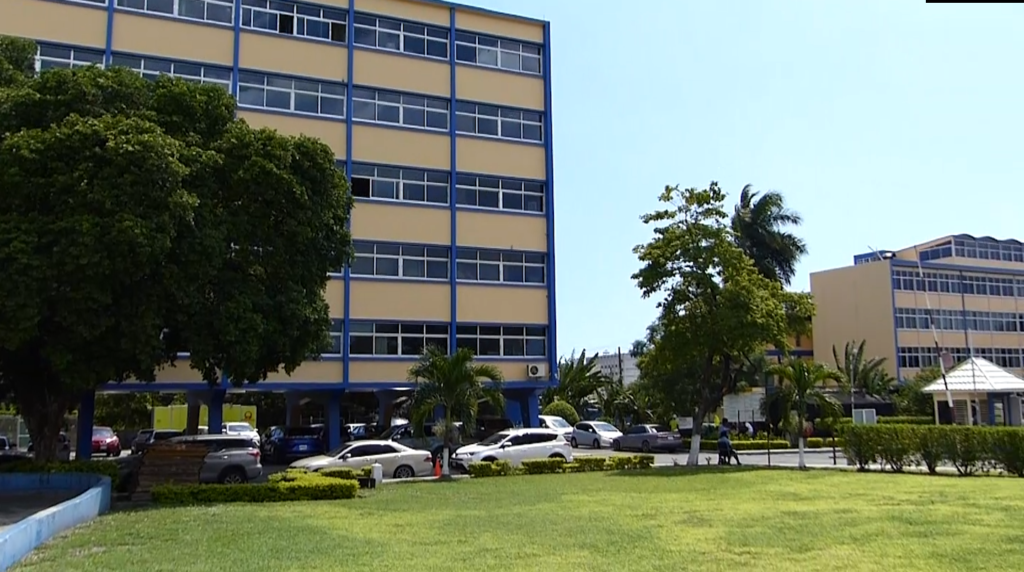
As it turned out, the ministry panicked, despite its position that it was a precautionary measure that it had taken. But all education ministry personnel had to do was follow the science, which would have clarified everything.
Even I, whom you could call a layman, knew that the effects of Melissa disrupting life across the island last Thursday and Friday would have been nil. The forecasts were showing that nothing would be affected until the following Monday into Tuesday, so locking down schools was not about taking precaution, it was about being silly.
Henceforth, the ministry must look at the information that is available and act upon it. When the shutdown was announced, I was shocked, for my information told me that there was no need to go that route. Time is precious these days for students and pupils, considering that many of them need it to develop their skills in the subject areas. It should not be wasted.
And yes, people will say that schools serve as shelters for those affected by storms or hurricanes, but we have not got to that stage. That is also another story, as I do not believe that any school should be used as a shelter, for there are too many implications to deal with afterwards.
Community centres, where they exist, must be so used. Church buildings may also be considered, and some have been utilised in the past, for those affected will not only benefit from meals provided, but from spiritual healing too. One of the challenges might be limited washroom facilities, but that is something that can be addressed going forward.
Hail those former Caribbean leaders
My attention shifted from the budding actions of unruly Melissa last week, to the signing of a peace declaration issued by former heads of government in the Caribbean, who were seeking to ensure that the region remains one of peace, and not the uncertain position that it has found itself in, what with the increased military presence, nuclear vessels and aircraft, among other things, starting to pile up.

I’m not sure who initiated the move to speak out, and as far as I know, it is an unprecedented move by those who drew their pens, instead of the sword, for the purpose.
Among those who effectively urged caution on the part of the United States were two men whom I have the utmost respect for in Jamaican politics, PJ Patterson and Bruce Golding, who both served as prime minister. Others are the former prime ministers of Antigua & Barbuda, Baldwin Spencer, and Kenny Anthony of St Lucia.
It was refreshing that the individuals decided to go that route, for we in the Caribbean region now lack leaders who have the balls to stand up to what is clearly wrong, save for Mia Mottley of Barbados, Ralph Gonzalves of St Vincent & the Grenadines, and to a lesser extent, Gaston Browne of Antigua & Barbuda.
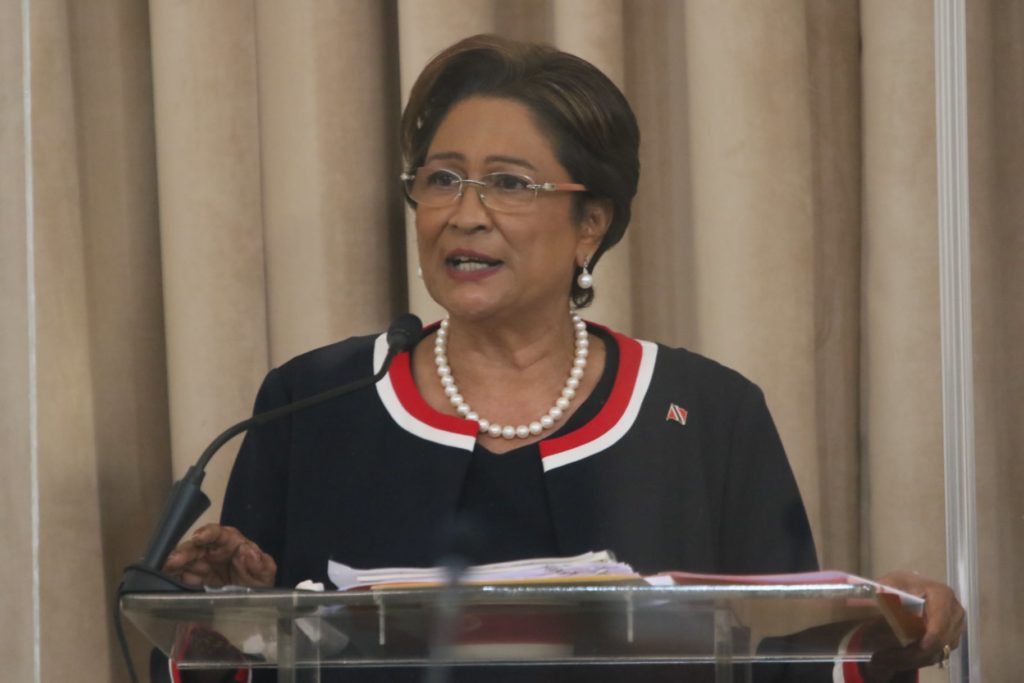
To say, in all of this, that I am deeply disappointed with the conduct of Prime Minister of Trinidad & Tobago, Kamla Persad-Bissessar, would be the understatement of the century. But I am not surprised by her conduct. Even one Calypsonian has released quite a catchy song about her actions.
The former leaders, though, deserve commendation. We are all aware of Patterson’s stance on such an issue, as he has always demonstrated a position of fairness and fair play in his leadership of Jamaica and the Caribbean Community spread across 1992 to 2006.
Golding, like Patterson, a brilliant mind, served much too short a time to be properly assessed (2007 to 2011) as the prime minister of Jamaica, but he took some positive positions that continue to benefit the region as a whole. He remains one of the most articulate individuals that I have known, and so it is easy for him to express himself in a manner which all can understand.
Spencer has always been among the progressive crew and well-loved by the proletariat in particular in his native land. So down-to-earth was he, that I almost got into trouble when he came to Jamaica to attend the funeral of former prime minister Hugh Shearer in July 2004.
While he was staying at the Jamaica Pegasus Hotel in New Kingston, I picked him up in my car and took him to do a live radio interview on KLAS Radio nearby, on politics and West Indies cricket.
By the time the interview was over, the station’s yard was swarming with policemen, who berated me for ‘taking away the prime minister’ without any security personnel. But where were they? And Spencer didn’t care, because he was used to moving around his country on his own anyway.
But maintaining peace in the Caribbean region was all part and parcel of Spencer’s objective, and he, too, facilitated many Caribbean nationals to settle in his country as a form of unity.
I met Anthony in Castries while he was campaigning as leader of the St Lucia Labour Party in 1997, and knew that he would be the kind of man who would serve the region with distinction and pride. He has not failed to do so.

Other voices must join the chorus. The Caribbean should remain a zone of peace, and the foolishness that is going on, in the name of stopping the flow of drugs into the United States, by killing people in boats whom we do not know to be guilty of trafficking, must end.
A sign of maturity by Holness, Golding
Soothing it was that Prime Minister Andrew Holness and Opposition Leader Mark Golding met late last week to discuss matters related to the then Tropical Storm, now Hurricane Melissa.
It does not matter who requested the meeting, whether it was an invitation from Holness to Golding or a request by Golding to link up. What it did was give hope for a public breakthrough in the maturity of the political leaders and their associates, which can only benefit Jamaica. I say public breakthrough, for privately, many of them enjoy good relations. It is only when they meet in Parliament or step onto the political platforms that they show varying sides of irregular conduct and acts of immaturity.
Let us hope that it will continue, particularly as it concerns Jamaica’s final appellate court, and the naming of more national heroes, which should include Bob Marley, Michael Manley, and Usain Bolt.




Comments