Voters now casting ballots in Barbados snap general election

Toriann Ellis / Our Today
author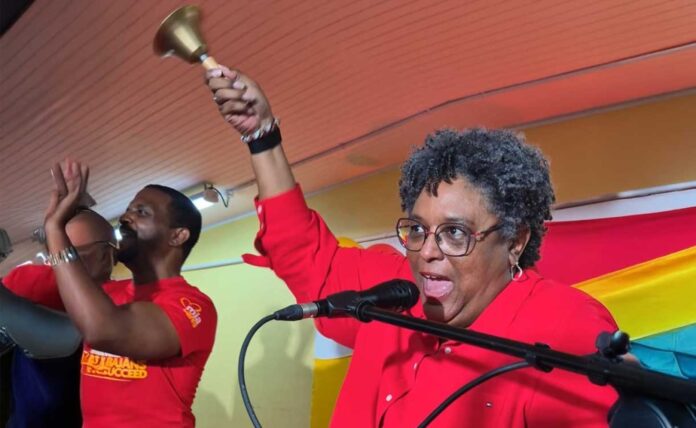
An estimated 271,205 voters have begun casting their ballots in Wednesday’s snap general election that Barbados Prime Minister Mia Mottley called a year ahead of schedule, as she seeks a third consecutive term in office.
While six political parties and 96 independent candidates are contesting control of the 30-seat Parliament, political observers say the contest is largely a straight fight between the island’s two oldest political parties—the governing Barbados Labour Party (BLP) and the main opposition Democratic Labour Party (DLP).
Polling stations opened at 6:00 am local time and are scheduled to close 12 hours later.
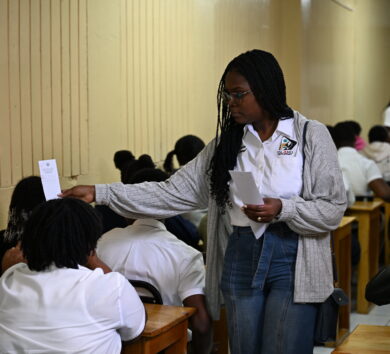
Supervisor of Elections Sherland Turton, in a statement headlined “Prohibited Devices,” said voters are assured of privacy when casting their ballots. She noted that polling booths “will be positioned so each voter will enter the booth with his or her back to the presiding officer.”
Turton also reminded voters that all communication devices, including smartwatches, smartphones and smart pens, are prohibited inside polling stations.
With the new regulations, she said, “There will be privacy, so that the secrecy of the vote will be maintained.”
For the first time in Barbados’ political history, the election is being monitored by observer groups from the Caribbean Community (Caricom) and the Commonwealth. Mottley had invited the observers in an effort to maintain the country’s long-standing reputation for democracy and integrity, while rejecting opposition calls to postpone the poll.
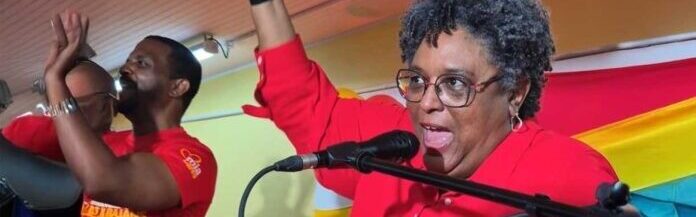
On Tuesday night, political parties made final appeals to voters ahead of the election. Addressing supporters, Mottley told BLP backers that “there will not be arrogance” in the party, which secured all 30 seats in the last two general elections.
DLP speakers, meanwhile, urged supporters to turn out in large numbers. “We have to restore the balance in this country, we have to go to the polls and allow our voices…and we declare we are taking back our country,” they said.
The Electoral and Boundaries Commission has reminded voters to bring their national identification cards to the polling station where they are registered. A valid passport or driver’s licence may also be used as official identification.
Employers have also been instructed to allow workers “a reasonable period of not less than one hour” to vote.
“Employers must not make any deductions from wages, salaries or any other remuneration, or impose upon any elector any penalty due to their absence for the period of voting,” the commission said.

Comments