
Women Leaders at MMC 2026 examine intentional balance, workplace realities, and redefining success

/ Our Today
administrator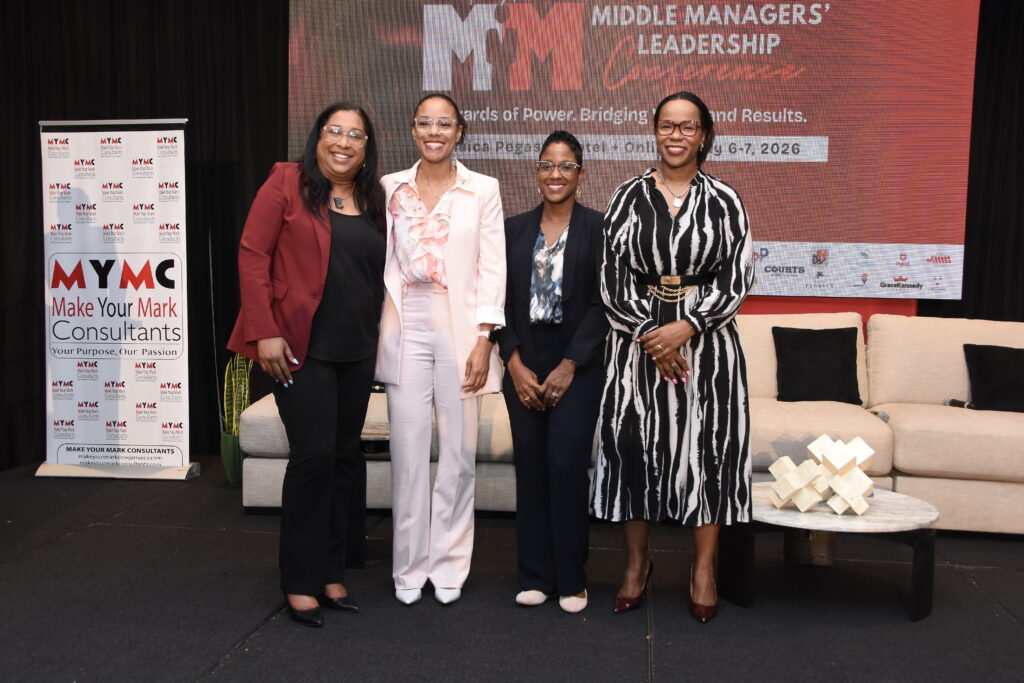
The question of how women navigate leadership while maintaining personal well-being, family life, and professional ambition took centre stage at the Women’s Panel during the 16th Annual Middle Managers’ Leadership Conference (MMC 2026), hosted by Make Your Mark Consultants on May 6–7 at the Jamaica Pegasus Hotel and online.
Under the theme “Power, Presence, and Personal Life: Can You Have it All Without Losing Yourself?”, the session moved beyond inspirational messaging to a more grounded examination of how women manage competing demands in high-performance environments, particularly within leadership and decision-making roles.
Rather than treating “balance” as a fixed ideal, the discussion interrogated how it is constructed in real time through priorities, boundaries, communication, and organisational culture. Speakers and panellists explored how leadership expectations intersect with personal responsibilities, and how women often find themselves negotiating both visibility and well-being in the workplace.
The panel featured Charmaine Daniels, Chief Executive Officer of the Digicel Foundation; Dr. Kasan Troupe, Permanent Secretary in the Ministry of Education, Skills, Youth and Information; Sanya Goffe, Partner at Hart, Muirhead and Fatta; and Tracy-Ann Spence, EVP – Chief Investment Officer, Sagicor Group Jamaica.
Across the session, a recurring theme was the need for intentional decision-making rather than reactive balancing of responsibilities. Panellists challenged the notion that success requires constant overextension, instead framing sustainable leadership as a function of clarity, prioritisation, and self-management.
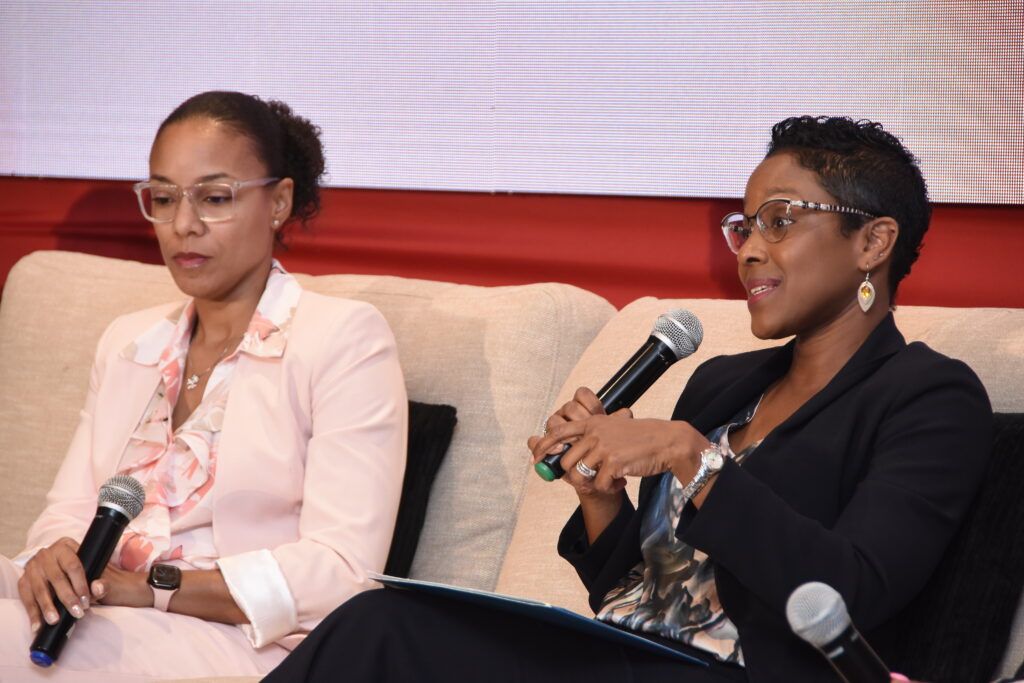
Sanya Goffe contributed a widely discussed metaphor comparing life responsibilities to juggling balls of different materials. She noted that while some responsibilities can be recovered if dropped, others, particularly health, relationships and personal wellbeing, carry irreversible consequences if neglected.
Her broader point centred on discernment and self-awareness in leadership roles, particularly for women managing both professional expectations and personal responsibilities.
“Balance is not about having everything perfect at the same time,” she said. “It is about knowing what requires constant attention and what can be managed differently at different stages.”
She also cautioned against equating high output with high performance, warning that over-functioning is often misinterpreted as excellence in organisational settings. According to Goffe, sustainable leadership requires boundaries, internal clarity, and the ability to separate identity from role or title.
The conversation also highlighted the role of workplace culture in shaping how women experience leadership. Panellists pointed to the importance of communication between managers and teams, particularly during high-demand periods when expectations, deadlines and workload intensify.
Tracy-Ann Spence emphasized that balance is not accidental but structured. She noted that leaders must actively plan, prioritize, and clearly communicate expectations to ensure alignment within teams and avoid breakdowns in trust or performance.
Her contribution underscored the operational side of leadership, showing how planning, transparency and communication directly influence both productivity and employee wellbeing.
The panel further examined persistent workplace dynamics affecting women in leadership, including bias, perception gaps and the pressure to continually validate competence. Speakers encouraged women to assert their contributions with confidence while ensuring that recognition is tied to measurable performance rather than informal perceptions.
A consistent thread throughout the discussion was the importance of peer support among women in professional spaces. Panelists noted that leadership environments can often become competitive rather than collaborative, and encouraged a shift toward more intentional mentorship, solidarity, and professional reinforcement.
A reflective exercise titled “Let’s Get Real!” introduced a metaphorical discussion in which panelists identified themselves as different types of bags, symbolizing the roles, responsibilities and tools individuals carry in life and leadership. The exercise prompted reflection on how much individuals hold simultaneously and what must be consciously managed, shared or released.
One of the most personal interventions came from Dr. Kasan Troupe, who reflected on her upbringing in a single-mother household under constrained financial circumstances, where shared living conditions shaped early resilience and perspective.
She encouraged participants to view their journeys through a wider generational lens, noting that leadership success often carries impact beyond the individual and into families and communities.
Dr. Troupe also urged attendees to avoid living with regret, instead focusing on growth, contribution and the ability to use personal progress as a foundation for broader social and economic mobility.
By the close of the session, audience reflections reinforced key themes including the importance of intentional self-care, understanding organizational power structures, improving emotional resilience in leadership roles and learning to navigate advancement without self-erasure.
Taken together, the discussion at MMC 2026 reflected a shift in how leadership conversations are being framed, less as aspirational ideals and more as lived, operational realities shaped by structure, culture and personal agency.The Women’s Panel ultimately positioned ambition not as a contradiction to well-being, but as something that requires structure, discipline, and conscious design to be sustained over time.



Comments