Young people urged to adopt disciplined financial habits

/ Our Today
administrator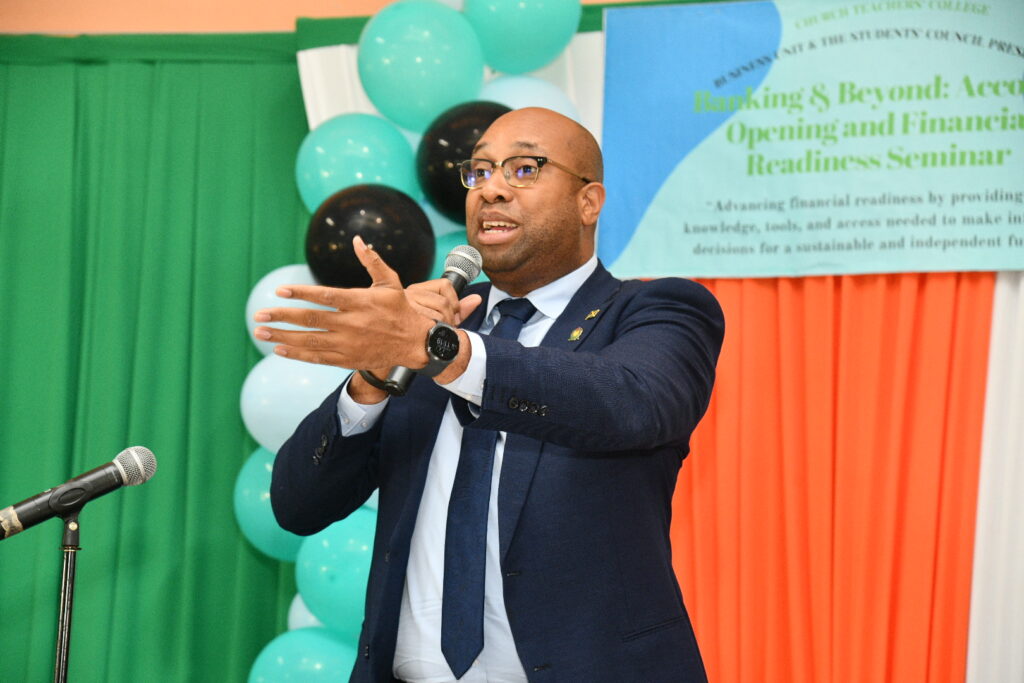
Minister of State for Industry, Investment and Commerce Delano Seiveright has called on young Jamaicans to adopt disciplined financial practices and actively engage with the formal banking system to secure their financial future.
Addressing a financial readiness seminar at Church Teachers’ College in Mandeville, Manchester, on March 26, he cautioned students against relying on unregulated investment schemes.
Stressing the importance of engaging with credible, registered financial institutions and professionals, he referenced cases where individuals have been lured into unrealistic high-return ventures, warning that such decisions often result in financial loss.
“It is critical that you use established and approved entities when investing your money,” he said, encouraging students to start small with stocks, bonds, and other legitimate financial instruments while building trust in formal systems.
Highlighting the state of financial inclusion in Jamaica, the state minister pointed to data indicating that a significant portion of the population remains unbanked.
He said that banking should be seen as a gateway to broader financial empowerment, and having a bank account not only fosters discipline but also creates a financial history, improves access to credit, and supports long-term planning rather than mere survival.
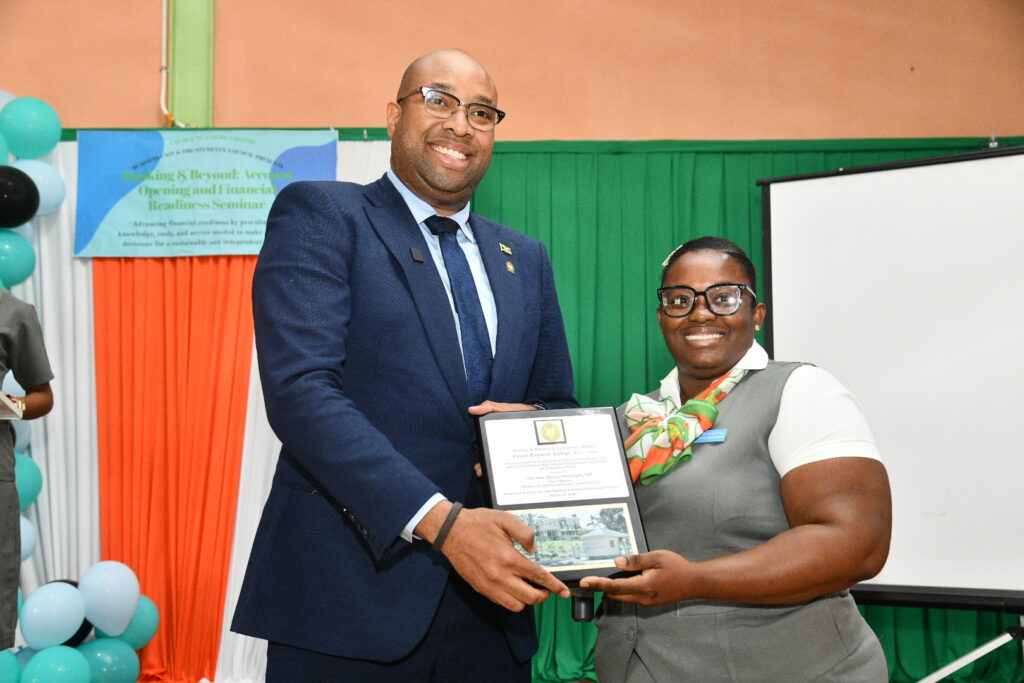
He emphasised that financial readiness extends beyond opening accounts to understanding budgeting, interest rates, credit management and risk, and encouraged the students to make informed, rather than emotional, financial decisions and to develop habits such as tracking spending and documenting transactions.
“Financial readiness is about practical knowledge and self-management,” he noted, adding that the skills are essential for achieving stability and independence.
Seiveright placed financial preparedness within the context of Jamaica’s ongoing recovery from Hurricane Melissa, noting that the recovery phase presents opportunities for those who are disciplined and organised, as major reconstruction efforts will generate employment and entrepreneurial prospects across multiple sectors.
Seiveright pointed out that while the projects include highways, ports, and hospital improvements, their real impact lies in the spin-off opportunities they create.
He urged young people to position themselves to benefit from contracts, subcontracting, and service provision linked to these developments, particularly within the micro and small business sector.

In addition, the state minister encouraged students to adopt an entrepreneurial mindset, even as they pursue traditional careers such as teaching.
He underscored the importance of having multiple income streams, noting that rising global living costs make reliance on a single job increasingly unsustainable.
Students were advised to explore side businesses, freelance work, and other income-generating activities, while reinvesting earnings to build long-term wealth rather than prioritising immediate gratification.
The state minister also addressed the growing influence of artificial intelligence (AI), describing it as a transformative force reshaping industries and the future of work. While acknowledging its benefits in improving productivity and efficiency, he warned that individuals must develop critical thinking, emotional intelligence, and adaptability to remain competitive.
The session was held under the theme ‘Advancing Financial Readiness by Providing the Knowledge, Tools, and Access Needed to Make Informed Decisions for a Sustainable and Independent Future’.



Comments