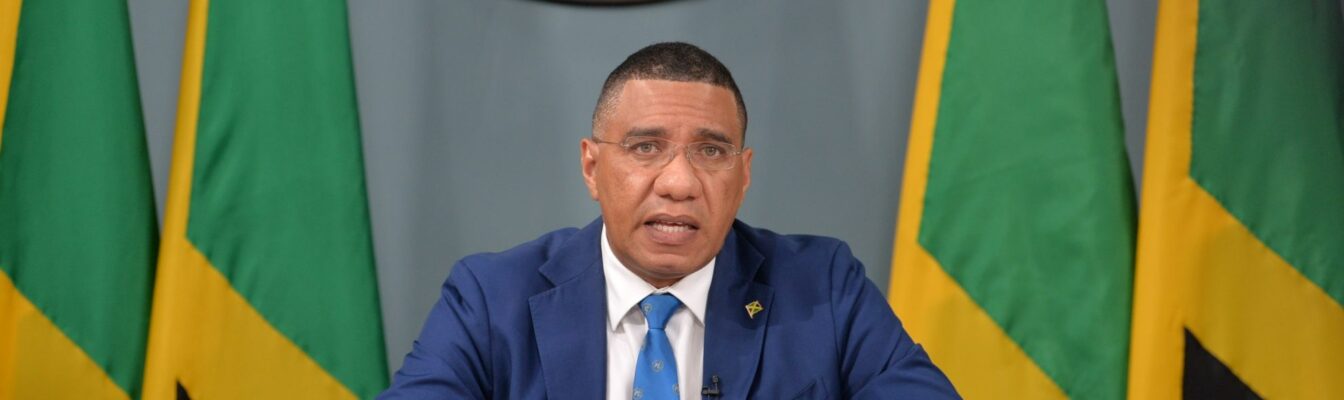
PM Holness takes Golding and Bunting to task for benefiting during FINSAC era but….

Al Edwards / Our Today
administrator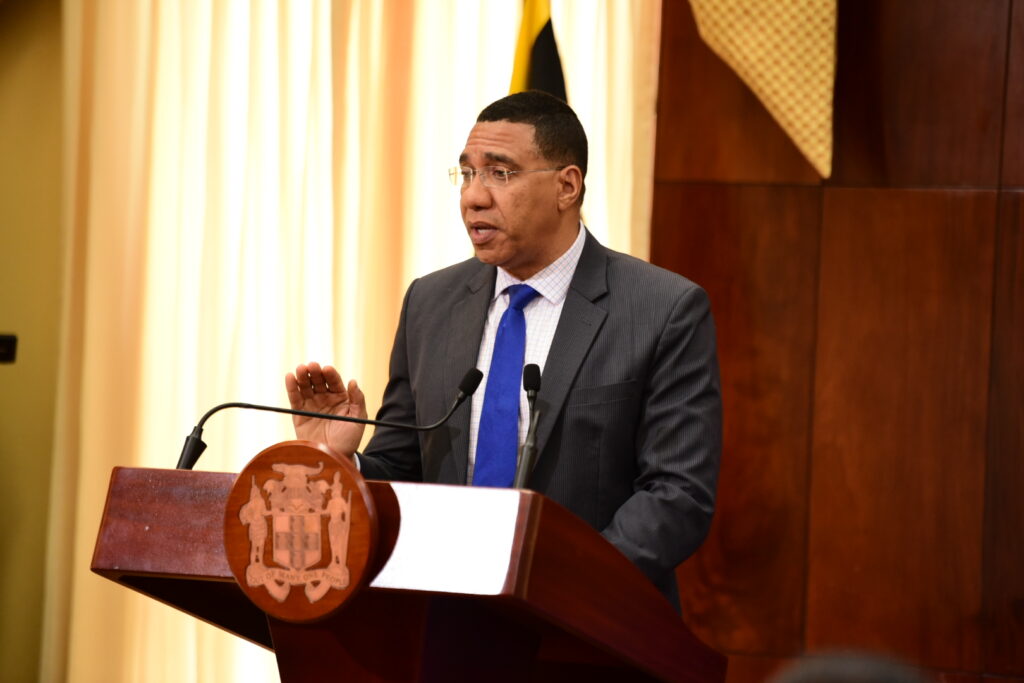
The FINSAC era of the 90’s was a terrible time for Jamaica and decimated the financial sector and a generation of entrepreneurs.
It cost the country 40 per cent of is GDP ($120 billion) and made many fearful of starting businesses in due to crippling interest rates.
Prime Minister Andrew Holness has recalled that time this week and pointed the finger at senior leaders in the PNP now, waiting in the wings to take power who benefited and prospered during that challenging period.

In other words, they were the authors of Jamaica’s doom while profiting from it and should never be allowed to enrich themselves again.
Politically this is a counter to the Integrity Report’s findings on the Prime Minister’s affairs and accusations of illicit enrichment.
Speaking earlier this week he said the PNP at that time destroyed the entrepreneurial class and that many got fat on Government paper not bothering with productivity and growing the economy through industry. This led to few productive enterprises, little employment, just people buying up Government Paper which the Government at the time was obligated to pay them back at high rates.
This is in stark contrast to today where more businesses are coming onto the scene from various sectors and the Holness administration is actively encouraging productivity
“There is no mystery as to why it is that as the Jamaica Labour Party came in the unemployment moved from as high as 13 per cent to now 4 per cent. You know why?”

“It’s because investors now have to do real investment that employs people and government borrowing is not crowding out real investment. These are some of the fundamental changes that have happened in our country. I am determined to ensure that we don’t fall into the rut we fell in when the country was destroyed in the 70s, rebuilt in the 80s and then for 18 1/2 years we fell into a lull,”said Prime Minister Andrew Holness.
Leader of the Opposition Mark Golding and Opposition Spokesperson on National Security, Peter Bunting were among the lead principals of Jamaican investment house Dehring Bunting & Golding (DB&G). The young men who formed DB&G went on to prosper, building a successful business. It did well both during and after the FINSAC era so much so that after 14 years it was sold for US$100 million to Scotiabank after its was formed with just US$1 million. DB&G spawned a generation of young hip Jamaican bankers who were both innovative and enterprising. It played the hand it was dealt at the time and came up trumps.
Some say DB&G prospered under an accommodating Minister of Finance but that may very well be a case of sour grapes. Today, everybody wants to know how one makes their money, not just simply acknowledging one is successful. This applies to the Prime Minister as well.
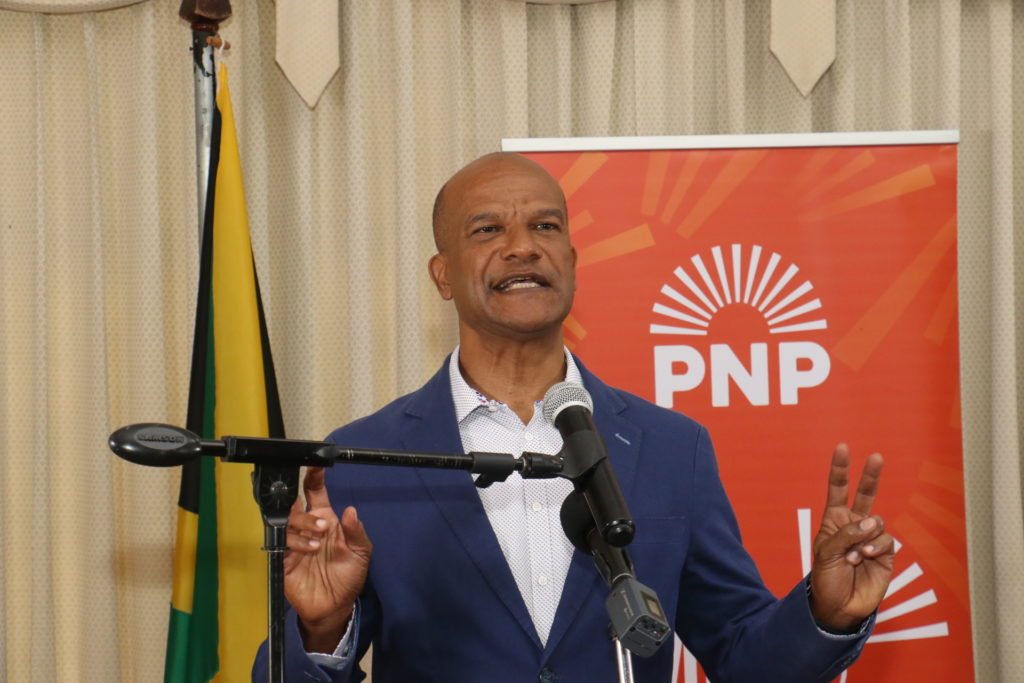
Earlier this week, Peter Bunting quipped, it’s common knowledge how he made his money but not so, as far as the Prime Minister is concerned.
You get the feeling the two main parties are now in campaign mode and the mud-slinging has begun in earnest.
Speaking to Young Jamaica at UWI this week, Prime Minister Andrew Holness bellowed: “ Which rich man was the recipient, the beneficiary of the greatest transfer of wealth from the poor to the rich in this country? You tell me who!
“People who are seeking to lead the country now, benefited, they became millionaires and billionaires on the backs of the people when they carried out an economic policy called “the high interest rate policy” which helped to drive up the debt. One of their own MPs described it as the greatest transfer of wealth from the poor to the rich. I have no doubt that is what they want to come back to do to the Jamaican economy.

“I have no doubt they want to come and get wealthy on the backs of the poor. I will not allow that to happen again in this country.”
It is hoped that Jamaica never again returns to that dreadful time. Many Jamaican financial houses sank – Century, Eagle, Mutual Life, Workers’ Bank, and Island Life just to name a few.
But some survived and went on to thrive and are beacons of Jamaican excellence. These include DB&G which transitioned into Proven, JMMB, Mayberry and Barita. It is vitally important that there are finance houses founded and headed by Jamaicans in which citizens can repose trust in.
Today some of the aforementioned are mainstays on the financial scene having come through those turbulent times. Investment houses like JMMB and Proven have extended their footprint across the Caribbean and are flying the Jamaican flag high.
Something good did come out of the wreckage and it is hoped that these Jamaican investment houses and banks will continue to prosper for a long time, employing talented and hard-working Jamaicans.
It would be a travesty if Jamaica had a financial sector dominated by foreign players.





Comments