Jamaicans waiting with bated breath for today’s unveiling of new tax package for 2026/27

/ Our Today
administrator
Durrant Pate/Contributor
All eyes will be on the parliament today, as Jamaicans are waiting with bated breath for the unveiling of the tax package that will be levied on them for the upcoming 2026/27 financial year.
The Andrew Holness administration has proudly proclaimed that for successive years it has presented a “no new tax national budget”.
The government had previously gone eight years and 10 consecutive budgets without imposing any new taxes, but owing to the damage caused by Hurricane Melissa last October and the dire need for recovery, funding is a top priority.
The price tag of Melissa has been placed at just over US$8.8 billion in assessed physical damage, which is equivalent to about 41 per cent of Jamaica’s gross domestic product (GDP), forcing the government to implement a tax package for the new fiscal year, which starts April 1, 2026.
This level of damage and expenditure for recovery makes the Category 5 Melissa the most costly natural disaster in Jamaica’s history.
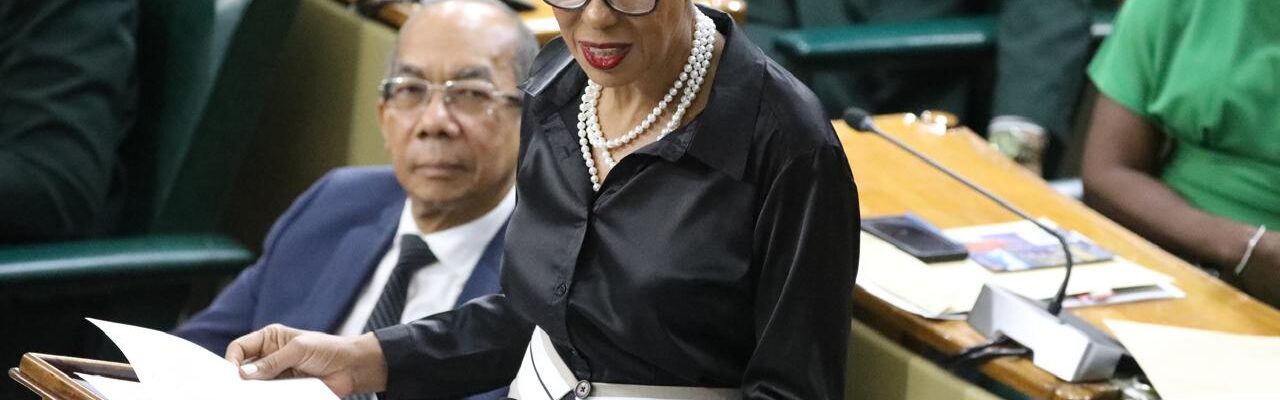
Finance Minister Fayval Williams confirmed late Wednesday that new tax measures will be included in Jamaica’s upcoming national budget, which will be tabled in parliament this afternoon.
In her statement to the nation on Wednesday evening, ahead of today’s budget tabling, Williams said the hurricane not only pushed reconstruction and public service demands upward but also slowed economic activity in key sectors, reducing government revenues.
“It must be noted that the impact of the hurricane has reduced our revenue, as economic activity slowed in certain sectors. That creates a fiscal gap that we cannot ignore,” she said, noting that the new revenue measures would be necessary to help close it.
Emphasising that the government is seeking to balance post‑disaster recovery with fiscal discipline, a hallmark of Jamaica’s economic strategy over the past decade, the finance minister admitted that borrowing will still play a part in the financing strategy.
However, it would be limited and targeted at capital investments in infrastructure, agriculture, logistics and digital systems—areas that can expand productive capacity and strengthen resilience.
“We could choose to finance the entire deficit through borrowing. But Jamaica has already travelled that path with negative outcomes….We have lived through the debt trap before—decades of high debt, high interest payments, and limited fiscal space,” Williams explained.
The minister is adamant that equity will guide the design of new tax measures, with efforts underway to address anomalies in the current tax system and protect vulnerable households and businesses from undue burden. The full details of the new revenue measures are expected to be outlined during the Budget debate, which starts next month.




Comments