News
| Nov 23, 2022

UNICEF study shows kids make up 40% of Haiti’s cholera cases

/ Our Today

administrator
Reading Time: 2 minutes
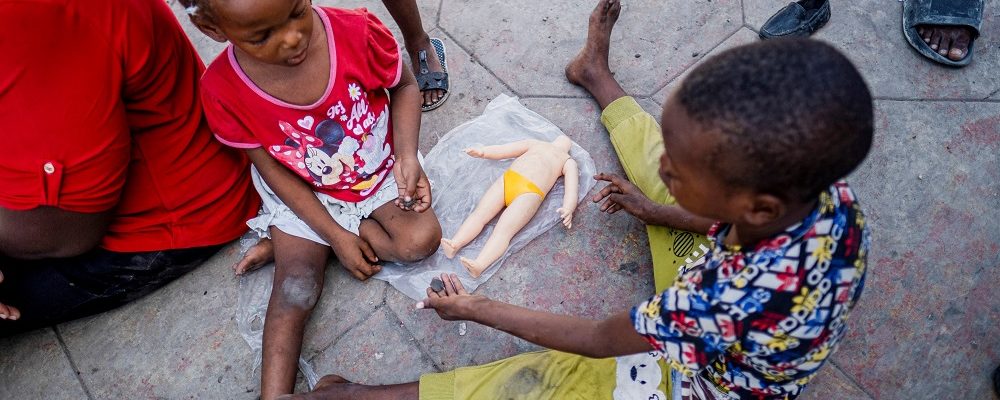
Children play with a broken doll at the Hugo Chavez Square where they shelter from gang war violence in Port-au-Prince, Haiti October 16, 2022. (File Photo: REUTERS/Ricardo Arduengo)

(Reuters)

Some two in five of Haiti’s growing number of cholera cases are among children, the United Nation’s children’s agency warned today (November 23), saying youth suffering from severe malnutrition ran three times the risk of dying from the bacterial disease.

Haiti, the poorest country in the Americas, has suffered a series of disasters in recent years, including a presidential assassination last year followed by a massive earthquake.

Cholera remerged in the Caribbean island nation early October after around three years without reported cases, amid shortages of food and clean drinking water triggered by a gang blockade of its main fuel port.

“I was shocked to see many children at risk of dying in the cholera treatment centres,” UNICEF emergency programme director Manuel Fontaine said in a statement following a four-day visit to Haiti, which shares the island of Hispaniola with the Dominican Republic.

Fontaine pointed to a “triple threat” of malnutrition, cholera and armed violence, the first two a “lethal combination, one leading to the other”.

“Amid widespread armed violence and insecurity in large parts of the capital, humanitarian teams are walking on eggshells.”

UNICEF emergency programme director Manuel Fontaine

Usually spread through contaminated water, cholera causes diarrhea and vomiting and killed some 10,000 people in a 2010 outbreak that has been blamed on a UN peacekeeping force.

The disease affects both children and adults and can kill within hours if untreated.

Though life-saving treatment is simple and affordable, Fontaine said it was hard to access areas of the capital: “Amid widespread armed violence and insecurity in large parts of the capital, humanitarian teams are walking on eggshells.”

The Pan American Health Organization this week reported 216 deaths from the disease, 961 confirmed cases and a further 12,016 suspected ones, largely around the capital Port-au-Prince.

It also confirmed a second imported case in the Dominican Republic, a four-year-old boy from Port-au-Prince.

Comments

What To Read Next

News JAM Apr 1, 2026

Reading Time: 2 minutesYoung Jamaica, the youth arm of the governing Jamaica Labour Party (JLP), has called for the resignation of East Central St Andrew Member of Parliament Dennis Gordon following revelations made during a recent session of Parliament’s Public Accounts Committee (PAC).

“Young Jamaica, take note of confirmation during yesterday’s Parliament’s Public Accounts Committee (PAC) that JACDEN Limited is among the multi-million dollar beneficiaries of what a recent report from the Auditor General revealed to be the unlawful and inappropriate use of the tax exemption status of the University Hospital of the West Indies (UHWI),” the youth arm said in a statement.

News JAM Apr 1, 2026

Reading Time: 3 minutesThe Ministry of Health and Wellness (MOHW), in collaboration with the Pan American Health Organisation/World Health Organisation (PAHO/WHO), recently concluded a two-day After-Action Review (AAR) workshop held from March 24–25. The workshop aimed to strengthen Jamaica’s preparedness and response systems following the impact of Hurricane Melissa.

After-Action Reviews are a standard tool in emergency management, used to assess response efforts, capture lessons learned, and improve coordination, planning, and operational systems for future events. Importantly, aligning the AAR process with the International Health Regulations (IHR) ensures that the evaluation of public health emergencies meets globally recognised standards, strengthening Jamaica’s ability to detect, assess, report, and respond to health threats in a timely and effective manner.

News USA Apr 1, 2026

Reading Time: 2 minutesThe US Citizenship and Immigration Services (USCIS) has announced a series of strengthened screening and vetting measures aimed at enhancing national security and public safety, particularly for applicants from high-risk countries.

In a statement released Tuesday (March), USCIS said its review of pending workloads and benefit applications revealed that prior screening measures were “wholly inadequate.” According to the agency, many applicants for naturalisation and lawful permanent residence were not sufficiently vetted, creating risks to national security and public safety while undermining the integrity of the immigration system.