Caribbean Partnership wins UN award for climate adaptation innovation

/ Our Today
administrator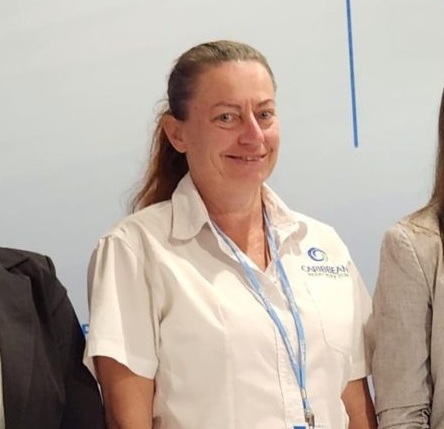
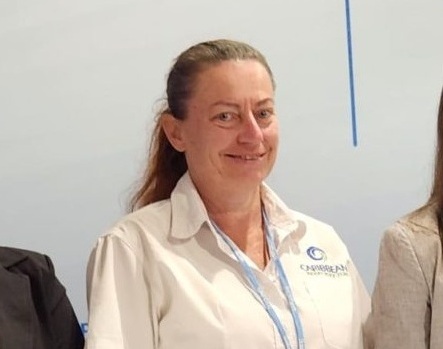
The Caribbean Biodiversity Fund (CBF) has been awarded the prestigious United Nations Small Island Developing States (SIDS) Partnership Award 2025 for its Ecosystem-based Adaptation (EbA) Facility, which helps Caribbean communities harness healthy ecosystems to adapt to climate change.
The Facility is a CBF project supported by the German Federal Ministry for the Environment, Climate Action, Nature Conservation and Nuclear Safety (BMUKN) through the International Climate Initiative (IKI) and KfW Development Bank. The CBF appreciates not only the German investment but also their readiness to continue support for EbA approaches in our region.
Selected from partnerships worldwide, the EbA Facility was recognised in the Environmental category for its measurable climate adaptation impact, strong community leadership model, and proven potential for replication across vulnerable island nations.
Nature as Infrastructure
Since 2016, the CBF through the EbA Facility, has committed over USD 45 million to 34 projects in 14 Caribbean countries, resulting in the improved management or protection of over 60,000 hectares of coastal ecosystems from coral reefs that buffer communities against storm surges to mangrove forests that stabilise shorelines and support fisheries.
More than 36,000 people, including over 16,000 women, have directly benefited through projects that simultaneously address climate adaptation, biodiversity conservation, and sustainable livelihoods.
“CBF designed the EbA Facility to demonstrate what effective climate adaptation in the Caribbean looks like. It is locally led, scientifically sound, and economically inclusive. This UN recognition validates an approach we’ve long believed in that local island partners, communities themselves, hold the solutions to practical climate resilience,” said CBF CEO Karen McDonald Gayle.
Caribbean Innovation Going Global
EbA Facility grantees are pioneering techniques reshaping marine conservation across the region, with innovations rapidly spreading between islands. In the Dominican Republic, AI-assisted coral rearing facilities have been developed. Sexual coral reproduction methods have already been transferred from the Dominican Republic to Cuba in peer-to-peer learning, where partners created a national coral spawning calendar. Jamaica is advancing economic “silvicultural” approaches to coral mass propagation, while Eastern Caribbean teams are piloting “Assisted Gene Flow” models for exchanging coral genetic material to prevent local extinction.
In Saint Lucia, what began as community resistance to vetiver grass planting transformed into nationwide adoption by the national water company. The community-level success proved the technology’s effectiveness for infrastructure protection, illustrating how locally-engaged adaptation can scale to institutional change.
A Model for Global Replication
The UN SIDS Partnership Award, established by Member States in 2021, recognises partnerships aligned with the ABAS (the Antigua and Barbuda Agenda for SIDS). Winners are selected by a judging panel appointed by the UN General Assembly President based on SMART criteria: SIDS specific, measurable and monitorable, achievable and accountable, resource-based and results-focused, and timeline-bound with transparency.
“This award confirms what is possible when efficient financing meets committed international support and strong local action—when scientific rigour aligns with community ownership, long-term financing supports adaptive management, and local innovation is amplified by regional knowledge sharing. This award recognises not just what we’ve achieved, but the transformative potential of this model to build a resilient future for Small Island Developing States worldwide,” said EbA Facility Program Manager Dr Ulrike Krauss.
The CBF EbA Facility operates through competitive calls for proposals that reward innovation, collaboration, and co-financing. To date, grantees have leveraged an additional USD 6.4 million in co-financing from public and private partners.
Building Networks for Lasting Impact
Beyond funding, the EbA Facility has cultivated lasting knowledge networks connecting 40 current and former grantees and their partners through an EbA Network, while the Caribbean Coral Health Forum engages over 100 practitioners. Regular webinars, field visits, and peer exchanges enable rapid transfer of effective solutions across Caribbean islands.
With a fifth call for proposals recently concluded and operations continuing through 2030, the EbA Facility is expanding its reach across the Caribbean at a critical moment as climate impacts intensify and demand grows for proven, scalable adaptation solutions.





Comments