
CARICOM priorities reparatory justice, security cooperation, CIPSF

Toriann Ellis / Our Today
author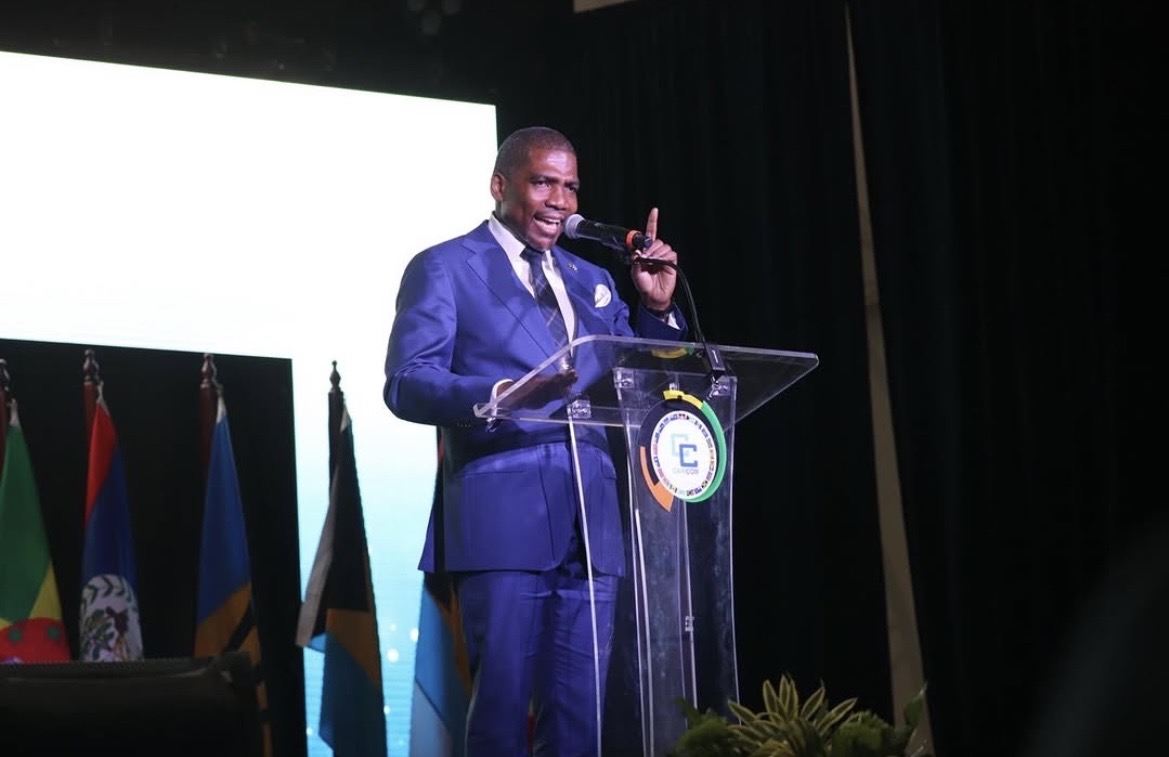
At the closing of the 50th Regular Meeting of the Conference of CARICOM heads of government, chair of CARICOM and prime minister of St Kitts and Nevis, Dr Terrance Drew, reaffirmed the region’s commitment to reparatory justice and CARICOM’s collective commitment to advancing security cooperation and institutional strengthening across the region; and endorsed the draft Community Industrial Policy Strategy and Framework (CIPSF).
Reparatory Justice
Prime Minister Drew announced that heads of government have tasked the prime ministerial subcommittee on reparations with reviewing the revised CARICOM Ten Point Plan for Reparations, a landmark manifesto, and advising on priority actions for upcoming global engagements, including the Commonwealth heads of government meeting in Antigua and Barbuda this November and other strategic forums in 2026.
The Ten Point Plan, endorsed by heads of government in July 2014, continues to serve as the guiding framework for negotiations with European nations. Developed by the CARICOM Reparations Commission (CRC) under the leadership of Professor Sir Hilary Beckles, the plan outlines a comprehensive path toward justice and healing for the Caribbean.
In November 2025, the CRC made history with a groundbreaking mission to the United Kingdom, strengthening partnerships and launching a joint programme of public education and engagement. This milestone visit underscored CARICOM’s unwavering determination to keep reparations at the forefront of international dialogue.
With renewed energy and strategic focus, CARICOM is amplifying its voice on the global stage and ensuring that the call for reparatory justice resonates across countries and generations.

Regional Security
On regional security, heads of government commended the high-level representative on law and criminal justice on Prime Minister Drew’s fourth report on regional security
Leaders also emphasised the importance of legislative and policy reform across the Community. Prime Minister Drew stated:
“They noted the progress made on drafting model legislation and policy papers on criminal justice and legislative reform.”
In addition, CARICOM welcomed international collaboration to enhance policing systems:
“They welcome the offer from the United Nations Development Programme (UNDP) to work with CARICOM to expand and implement a Police Record Management Information System,” added the CARICOM chair.
Community Industrial Policy Strategy and Framework (CIPSF)
Minister Drew also announced that the heads of government reaffirmed the need to foster market-led, internationally competitive and sustainable industries that promote both economic and social development across member states.
Suriname, which has responsibility for industrial development in the CARICOM Quasi Cabinet, spearheaded the development of the CIPSF. The Policy is grounded in the Revised Treaty of Chaguaramas and is intended to promote the development of entities ranging from large to micro businesses.
The document proposes a collaborative model between regional governments and the private sector, targeting 12 industrial ecosystems alongside five cross-cutting enablers.
The 12 eco-systems at the foundation of the Policy are: Agri-Food, Fisheries and Processing; Construction; Culture and Creative Industries; Digitalisation; Education and Human Capital Development; Energy; Health and Wellbeing; Mobility and Transportation; Micro, Small and Medium-sized Enterprises; Non-Food Manufacturing; Research, Development and Innovation; and Tourism.
The CIPSF is well-positioned to make a substantive contribution to renewed economic diversification and cultivating indigenous growth and prosperity by addressing both established industrial sectors and emerging innovative fields and technologies.



Comments